
Refining rounded rubble stone masonry techniques
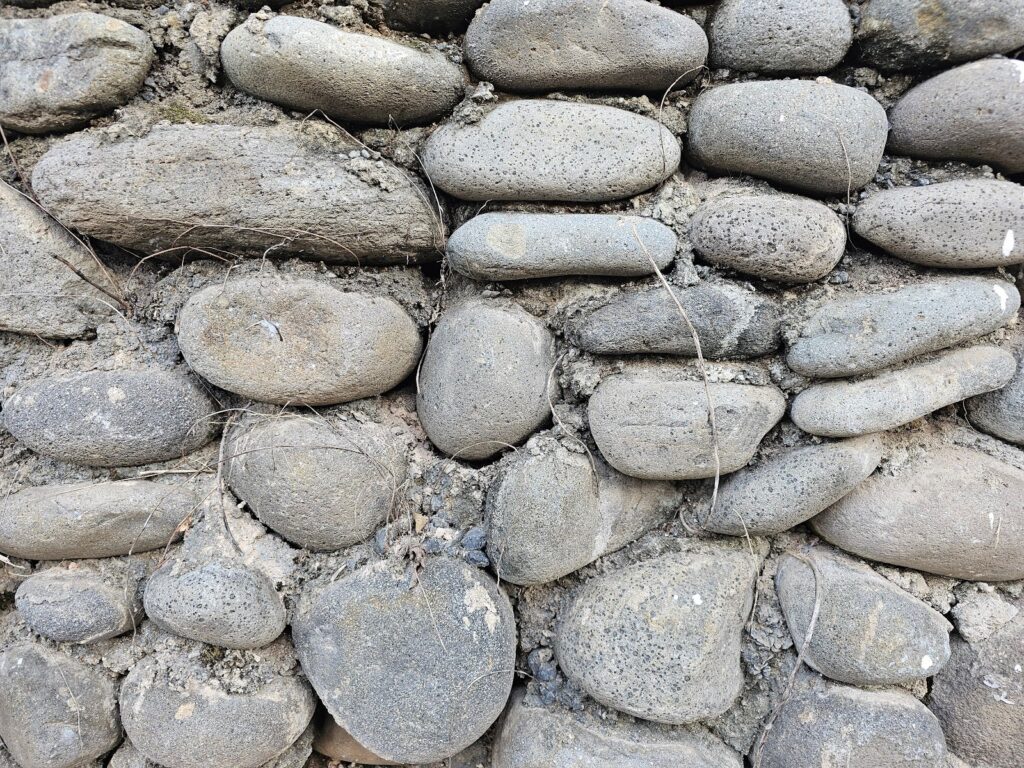
Interestingly, at some parts of the wall, but not at all locations, they’ve installed those small little pebbles in between the rocks to cover up the large open spaces of mortar that is typical at the joints between the adjacent stones.
The area of a similar but different wall, shown below, is very distinct. Here, in this photo below, instead of leaving the joints relatively recessed, which keeps the joints small in comparison to the overall amount of stone facing exposed to the surface of the wall, they have filled those joints in to almost the horizontal depth of the vertical face of the stone. That creates a much larger mortar joint at the face of the wall between the stones. It’s not really clear whether it looks better or worse in one way or the other, but it’s definitely different.
This type of installation, as shown below, is also probably much stronger because it gives a greater depth of the mortar which works as an interlocking connector between the stones. The mortar holds the stone in place, both through a type of adhesion, but also by inserting a stabilizing element that removes the space required for movement or destabilization between the stones.
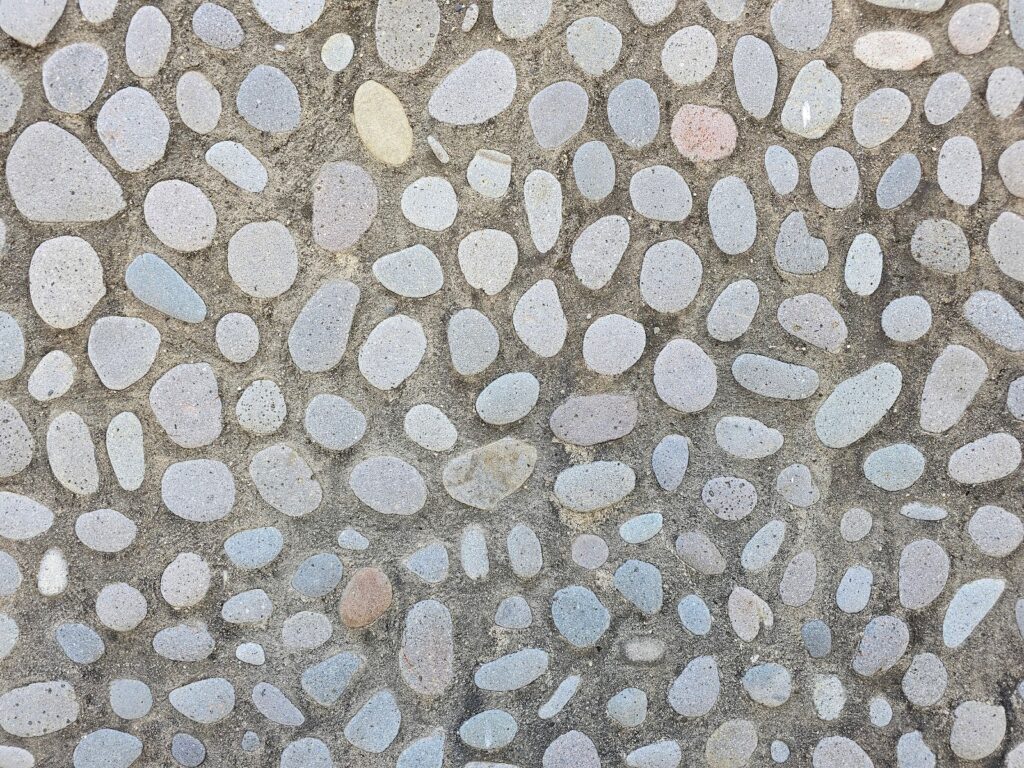
Although these walls are very similar to the walls we looked at last week, at some level of granularity they start to feel different than just regular masonry. For example, imagine you could have a sliding scale and digitally control or modify the size of the stones in the wall. This would change the ratio of cement mortar versus aggregate, but if the cement or mortar comes all the way out to the exterior face of the larger stones, it starts to become a little bit like a monolithic concrete wall.
The sand, used in making the mortar, with the cement, is also an aggregate, like the stone, but just much smaller. On a particulate or even molecular level, there’s not much difference between the sand and the stones. The biggest difference is the size.
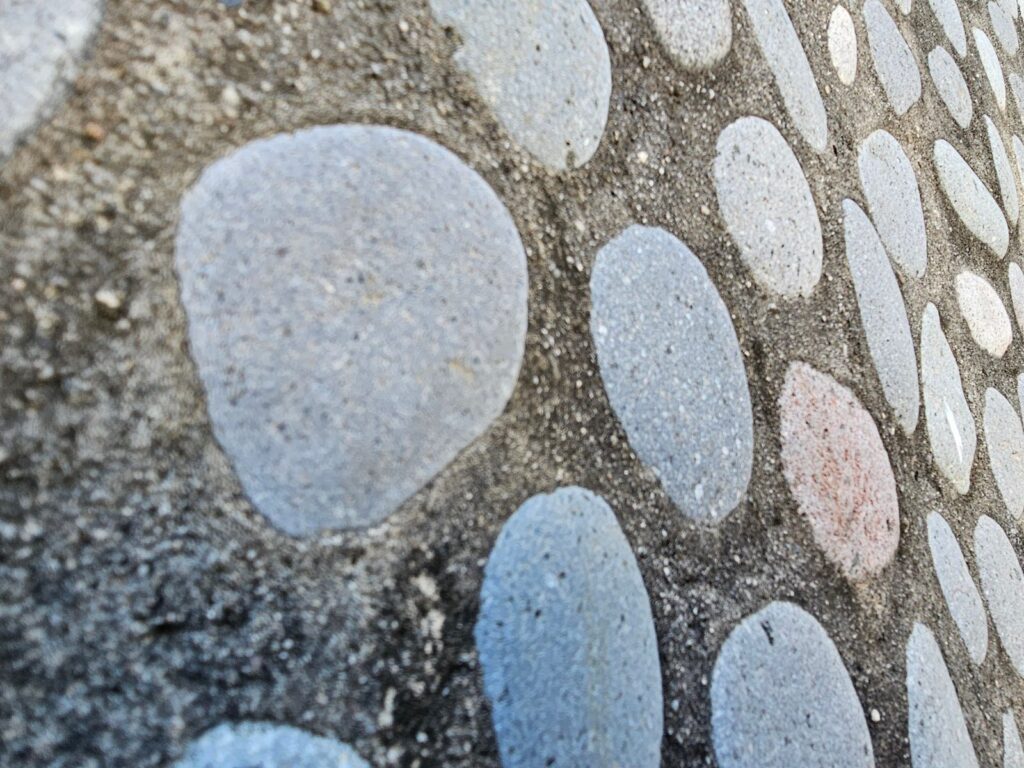
In the most typical types of concrete, used here on the East Coast of United States in everyday type building components like walkways and structural shear walls or columns, generally, the aggregate is up to about one inch in diameter, yet much smaller in most mortars. Here in this mortar, you can even see some of the larger specs of sand. In some cases they’re white and they visually stand out. Here in Washington DC the historic walls were generally built with a lime based mortar.
Unlike the portland mortars today, the lime mortars were mixed by hand and the chunks of lime would often be not completely mixed and you can still see some of those larger chunks at the face of the aged in historic deteriorated mortar joints. Similarly, you can see the large pieces of sand or small pieces of stone in the mortar joints, in the picture below.
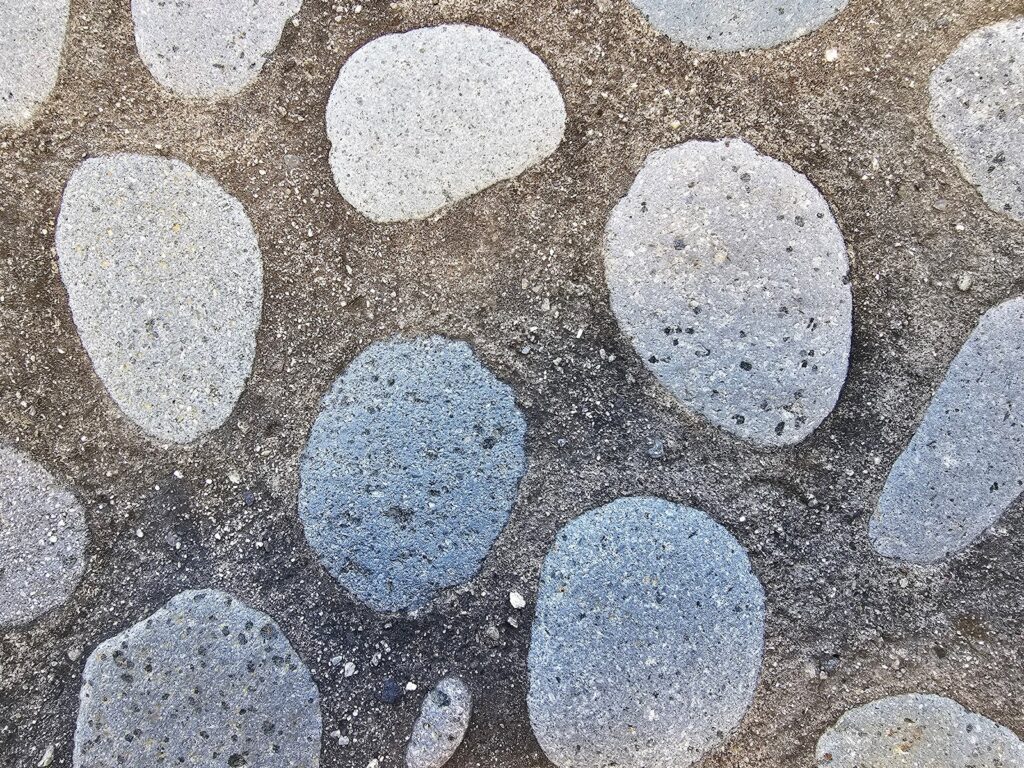
Another view from the same distance as shown above follows below.
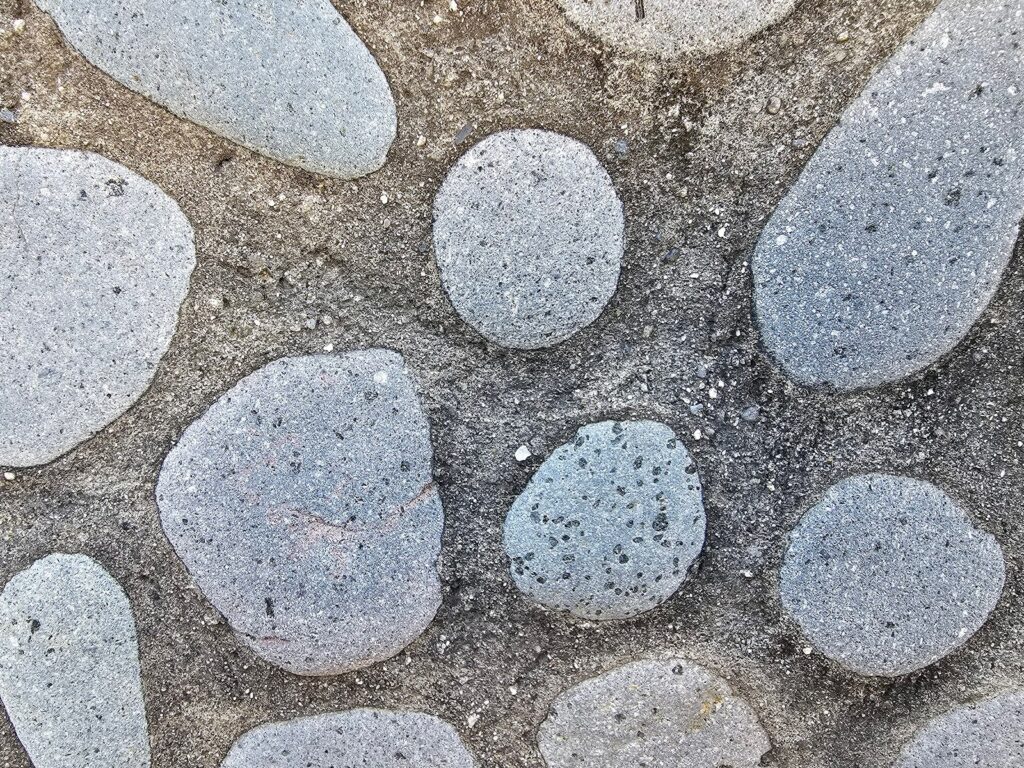
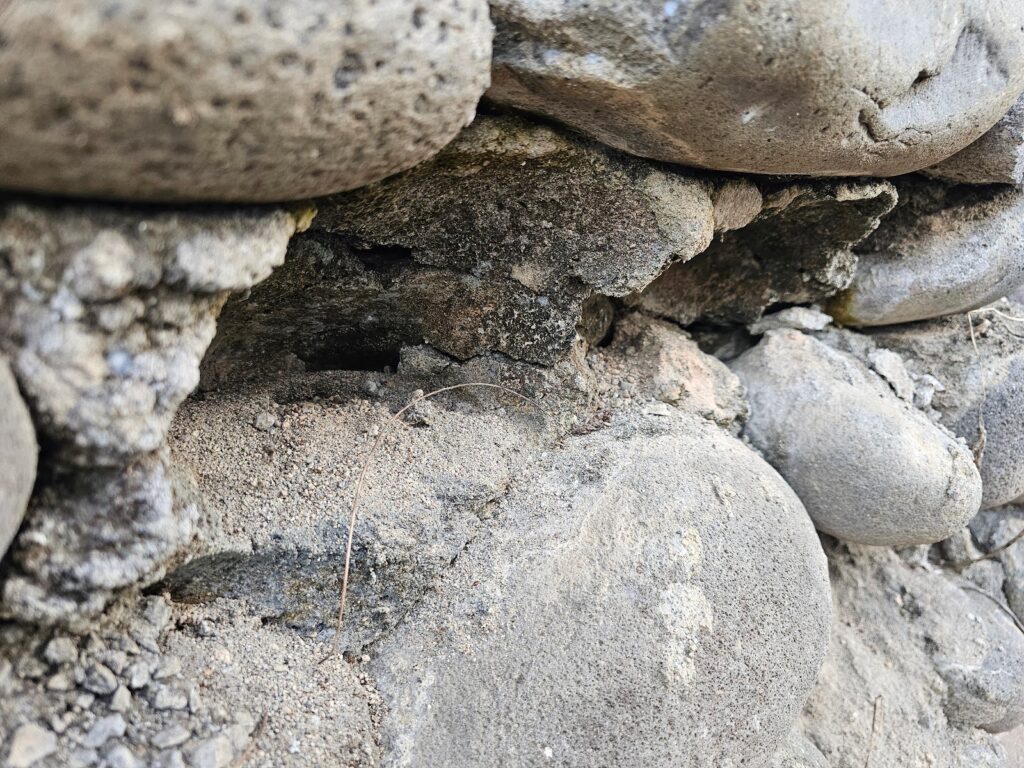
Here a different wall shows a similar type of stone installed with a more recessed mortar joint. As well, this particular mortar joint happens to have a higher level of deterioration.
A more oblique angle, of the same wall shown above, follows below.

Here you can see that more deteriorated mortar joint more closely.
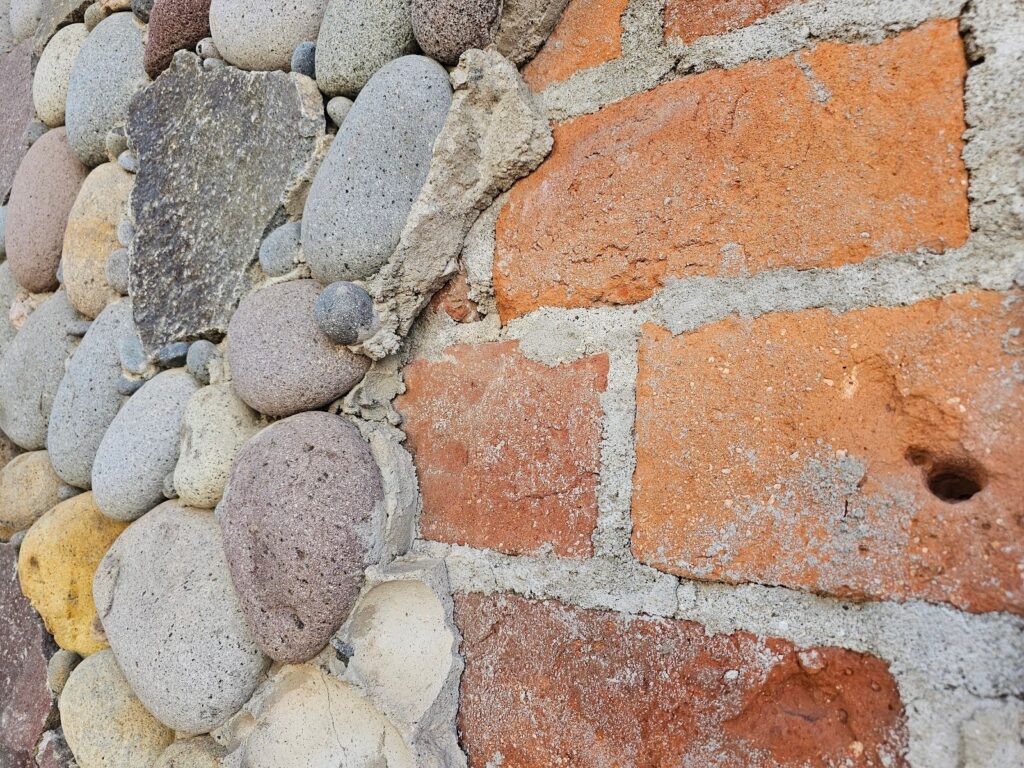
In this past week’s blog article, we mentioned that there are examples of cases where this type of stone could be used as a purely decorative element. In the example shown below, where the stone is essentially glued back to a brick wall surface, the stone is not at all structural.
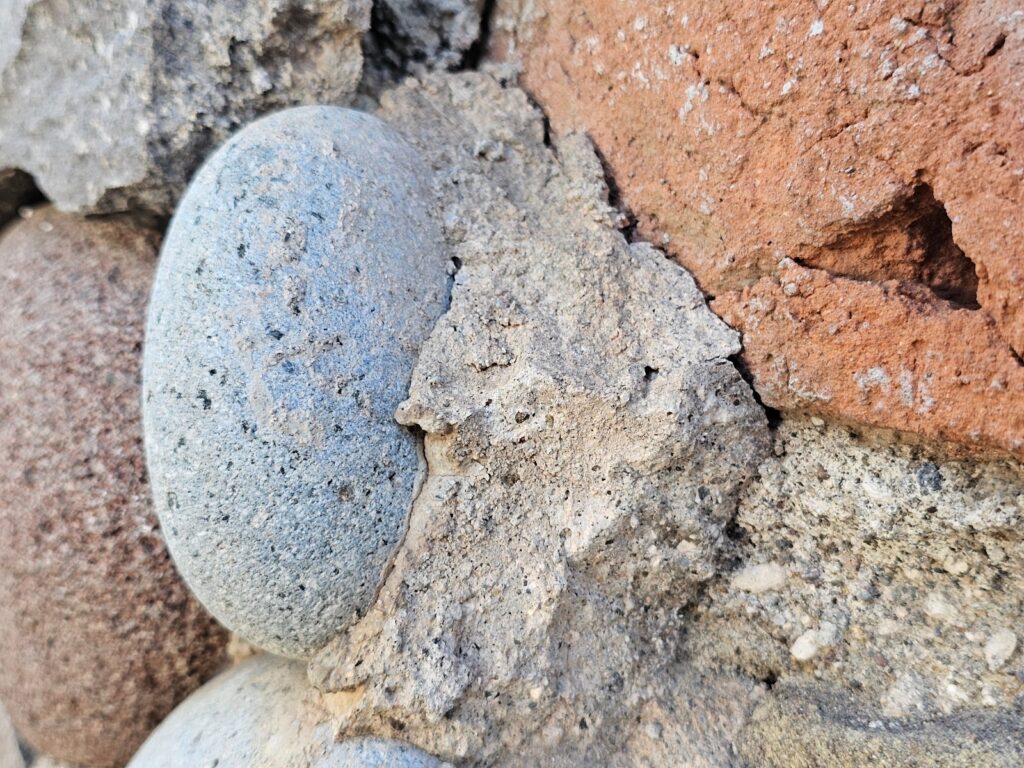
It’s merely a decorative element that has almost zero structural capacity. The stone is being merely held on to the wall with the mortar as the mortar acts like a glue that only adheres to it and gives it almost no structural continuity as a mortar between the individual stone units. In fact, if you look very closely in the picture below you can see an example where a few of the round stones have flaked off the wall, leaving an imprint in the mortar that once held them in place.
Here, the area of where the stones have delaminated from the mortar is shown more closely. You can see the impressions left by the stone. This is a clear example to illustrate that the stone here has no structural capacity, it’s just merely being held on by the mortar as if it were a glue, sticking it back to the brick substrate.
The brick substrate though, by comparison, not just because of its rectilinear shape as a type of ashlar masonry, but also because of the relative thickness of the wall, is a structural element. The brick wall not only supports itself, but in the case of a veneer stone such as this application of sea pebbles it’s also supporting additional elements.

In a sort of artistic faux type approach, the previous builder has intentionally exposed a part of the brick wall to add a type of rustic aesthetic element.
We can Help
Our company focuses on historic restoration more than modern building upkeep, maintenance, and construction, but our company understands both types of construction very well and a full picture well-rounded approach is needed in any niche in the construction industry. Although we focus on historic restoration, repointing, tuckpointing and historic brick repair, our company also has technical knowledge and competencies in the areas of modern and contemporary construction as well as we become one of the leaders in that area of the market today. Understanding both historic and modern or contemporary construction is useful because both aspects help understand the challenges and potential solutions for challenges in building science and construction.
We can help with a variety of historic masonry restoration needs and upkeep, from modest tuckpointing and or repointing to complicated and extensive historic masonry restoration. Infinity Design Solutions is a historic restoration specialist contractor specializing in both historic masonry restoration such as tuckpointing our repointing, and brick repair. If you have questions about the architectural details or facade of your historic building in Washington DC, reach out and say hello and if we can help we’ll be glad to assist you. You can email us or call us on the telephone at the following link: contact us here.