
Projecting Horizontal Bands in Masonry Design
This past week, we looked at several different types of profiles of masonry facade accent pieces. Some of these are called cavetos and ogees. Today we’re looking at other types of projecting trims. Particularly, we’re starting by looking at an ovalo. This particular molding is brownstone, in a horizontal form, similar to a freize. A frieze is an intentional aesthetic horizontal band, generally used as a permanent type of decoration of facades.
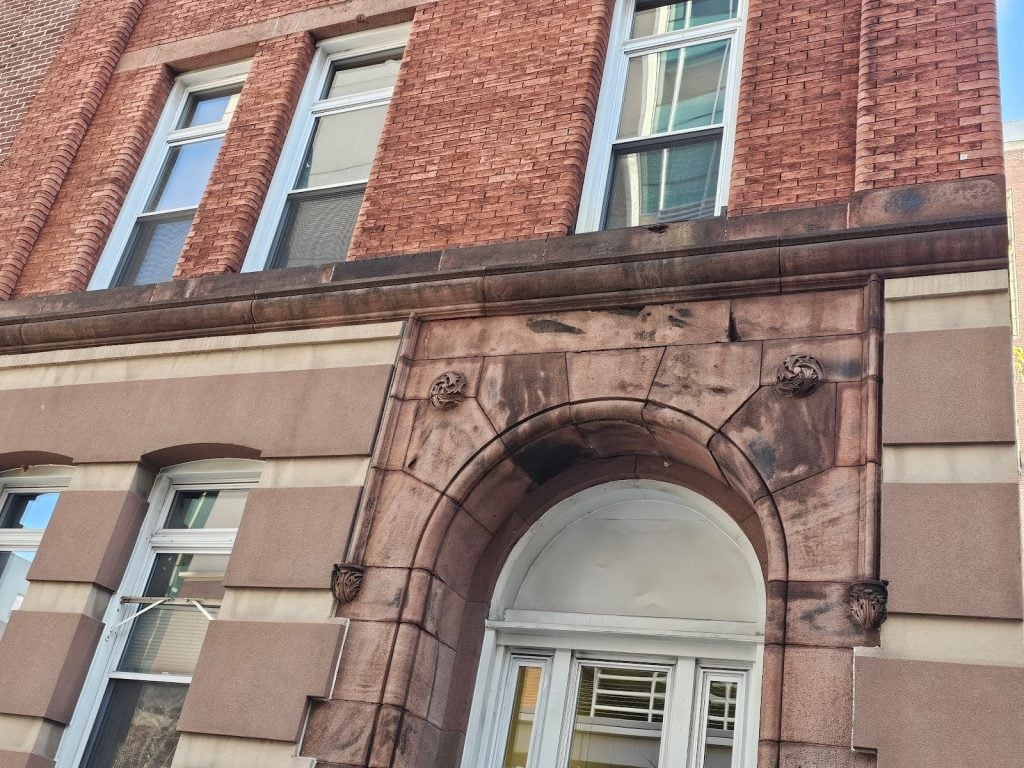
This particular molding happens to be at the top of the transition between the ground level stone facade and the upper level brick facade. This particular molding happens to extend out a bit like a windowsill. Since it’s at the termination at the top of the stone, it works like a transition piece. It’s, essentially, the demarcation point where the stone transitions into brick. The brick is set back, vertically from the plane of the stone, overall. The brick wall happens to be a double wythe thickness. The stone wall happens to be much thicker. In some cases, large masonry elements like this will be used both as a lintle and also a decorative horizontal type of element.
In some cases it can even be incorporated into the design of the frieze. Here though, this beam is completely independent of the structural supports above the doors and windows. In fact, those doors and windows happen to have their own structural systems to give them support at the top of the openings. At the door, you can see, this archway is shaped like a Roman arch with the individual voussoirs cut from a brownstone, similar to the stone used in the construction of the ovolo molding.
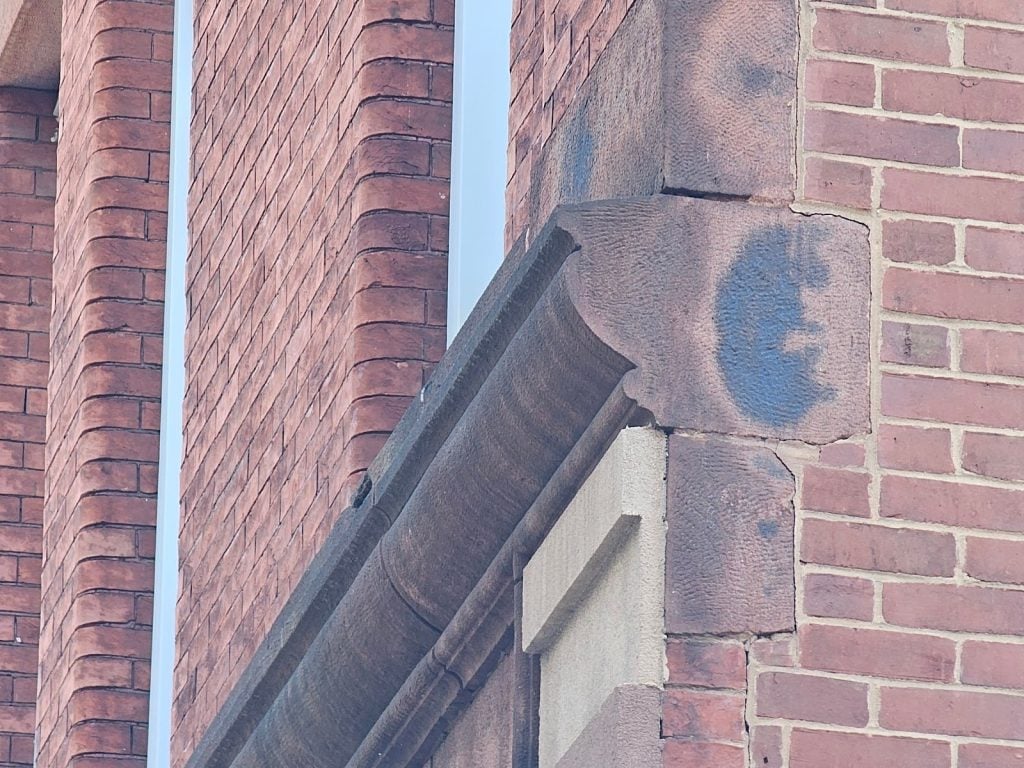
This particular building is built all the way to the property line. This gives us an opportunity to see the edge of the molding, like a cross section. Here you can see how the brick is built around the particular horizontal molding. Similar to how quoining joins two different facades In a structurally interconnected type of way, Here, the brickwork ties around the stone masonry. Quoining is a type of decorative element that functionally amd structurally ties together different facades.
Typically if a stone facade is built with stonework that differs from the size of the individual brick units, the stonework will be cut to at least fit neatly within the intervals of the sizes of the brick courses. The roots of the word quoining come from the French word coin which doesn’t mean money, it means corner. The idea of this type of historic quoining that we’re referring to from historic architecture displays these cornerstones as large prominent elements.
Not all classic brick row homes have these types of details. Some of them were more cheaply built in a much more simple type of style or architecture. Here, these buildings that were showing this week and last week are both a bit more prominent, in terms of a center facing location, and also built with a larger floor plan and higher degree of architectural focus.
Based on the type of care a building receives, you can always tell that though. Sometimes buildings that were intended to be filled with wealthy people yet the buildings may be treated like trash today. The funny thing about it is that today sometimes these buildings are very valuable, much more than they were at the time of the original construction, even after adjusting for inflation.
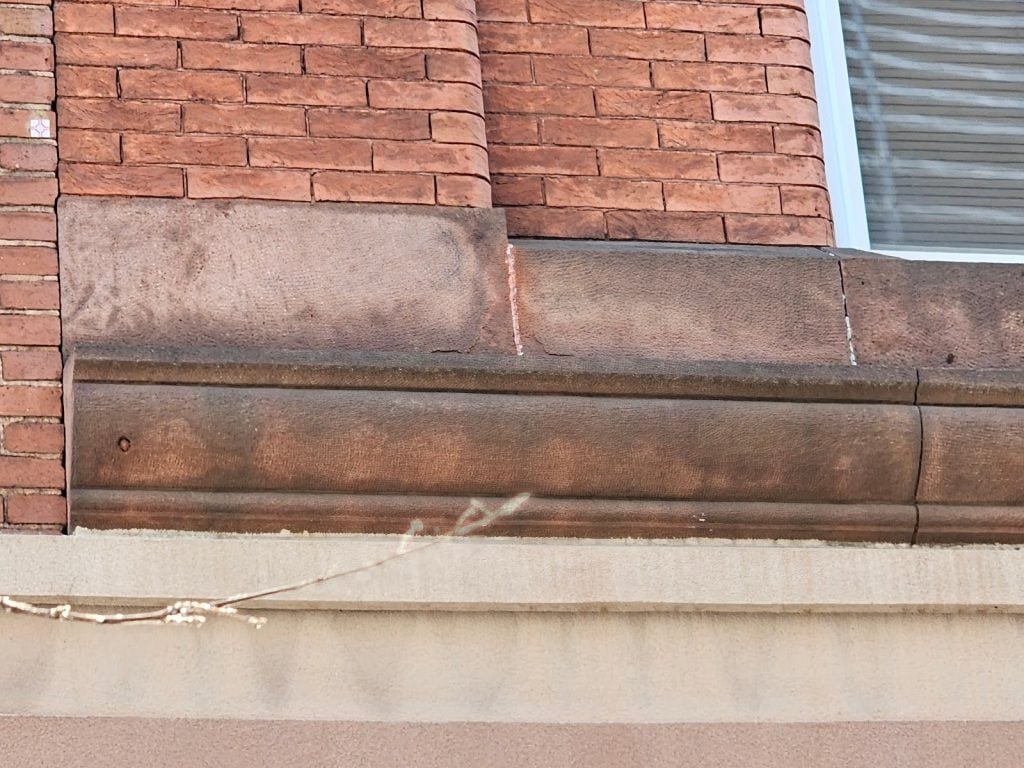
In the picture below, you can look at the brickwork and tell that it’s well overdue for repointing. Repointing and types of restoration of masonry facades can preserve a building for decades. Without it, deterioration can increasingly happen at an accelerated rate and lead to the destruction of the building.
We can Help
Our company focuses on historic restoration more than modern building upkeep, maintenance, and construction, but our company understands both types of construction very well and a full picture well-rounded approach is needed in any niche in the construction industry. Although we focus on historic restoration, repointing, tuckpointing and historic brick repair, our company also has technical knowledge and competencies in the areas of modern and contemporary construction as well as we become one of the leaders in that area of the market today. Understanding both historic and modern or contemporary construction is useful because both aspects help understand the challenges and potential solutions for challenges in building science and construction.
We can help with a variety of historic masonry restoration needs and upkeep, from modest tuckpointing and or repointing to complicated and extensive historic masonry restoration. Infinity Design Solutions is a historic restoration specialist contractor in specializing in both historic masonry restoration such as tuckpointing our repointing, and brick repair. If you have questions about the architectural details or facade of your historic building in Washington DC, reach out and say hello and if we can help we’ll be glad to assist you. You can email us or call us on the telephone at the following link: contact us here.