
Essential Assessment of Fire Damage in Historic Buildings
Here in DC, it doesn’t happen as often as it used to, but buildings can catch fire. One of the really positive innate characteristics of historic row homes here in Washington DC is that the brick is non-combustible and works pretty well as a fire barrier. It’s not perfect, it’s not as good as some modern commercial elements, but having a separating demising wall of 8 inches thick of solid brick helps to stop the spread of a fire.
One of the inherent defects in our historic brick walls is that they often have holes that run all the way through from one side to the other. We can’t always see straight through these holes, but they are there.
In some cases the walls are covered with plaster and or have been furred out with drywall. If they’ve been renovated and the renovations are well built, they’ll at least have insulation as well in a furring or frame cavity. In the original historic installations, they’ll often have a plaster directly on top of the face of brickwork.
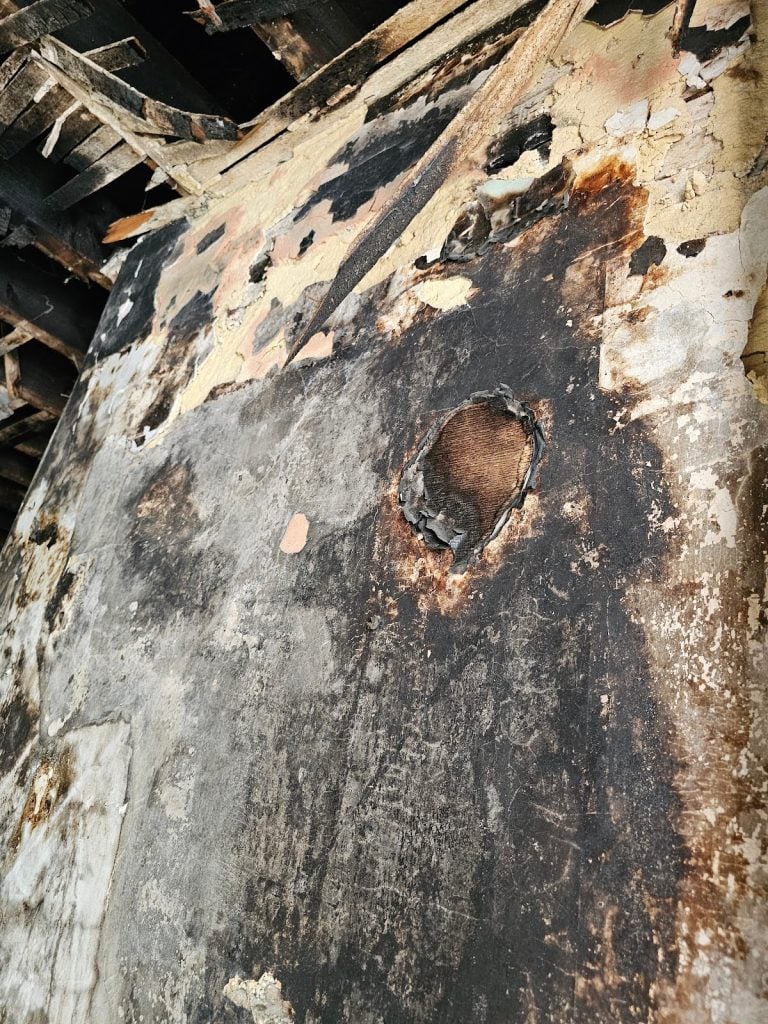
Where the plaster has delaminated and or been intentionally removed, sometimes you can see holes that go into the brickwork. Sometimes those holes, in a cavernous type of pathway connect with other holes that run through to the other side. Those points are like weak links in a chain and can cause a fire to spread from one building to the next.
In the particular case that we’re looking at, this building was abandoned before the fire. The building was in disrepair and it was lucky that the fire didn’t spread from this building to the next. Even though our company doesn’t particularly specialize in post disaster remediation, we think it’s helpful to look at this building and understand some of the components and parts. It’s unique that we get to see this kind of view inside of something that’s been ravaged by a fire. A lot can be learned.
If you live in DC, like we do, you may be used to seeing the inside of historic brick row homes. It doesn’t look so different here that it’s unrecognizable, but there are parts that are normally covered that are now either charred and or opened up.
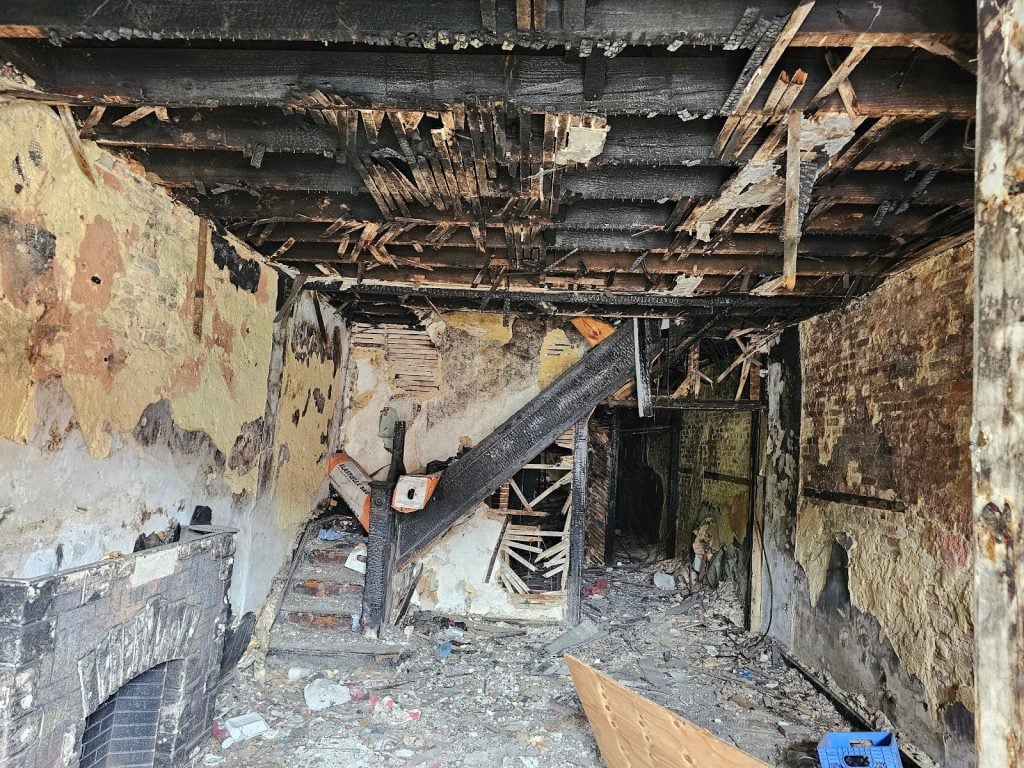
The way these buildings were built, from an architectural perspective, is a bit of a paradox. Although they had this unique quality that we described above where they naturally resist fire, they also have these hidden pathways where fire can run through. We talked about how the fire can get through a demising wall, in some cases. There are also other ways the fires can get through the attics. Most historic brick row homes in the historic parts of Washington DC don’t have significant attics but they generally have a small space that people will sometimes refer to as a crawl space.
It’s different from the crawl space down in the basement but only because it’s above the house and not below. Sometimes it’ll be just a thin space of about 20 inches or so that runs above the top floor ceiling joist and below the roof rafters. This thin space might be enough to weasel your way through, but generally at the back it’s very tight.
In some more rare cases, particularly where there are large turrets at the front facade, there might be larger addicts. There might even be a full standing height space, at least in the front portion of the attic. In some cases, up there, we find that the original masons did a very poor job finishing the brick work in the attic.
We can Help
Our company focuses on historic restoration more than modern building upkeep, maintenance, and construction, but our company understands both types of construction very well and a full picture well-rounded approach is needed in any niche in the construction industry. Although we focus on historic restoration, repointing, tuckpointing and historic brick repair, our company also has technical knowledge and competencies in the areas of modern and contemporary construction as well as we become one of the leaders in that area of the market today. Understanding both historic and modern or contemporary construction is useful because both aspects help understand the challenges and potential solutions for challenges in building science and construction.
We can help with a variety of historic masonry restoration needs and upkeep, from modest tuckpointing and or repointing to complicated and extensive historic masonry restoration. Infinity Design Solutions is a historic restoration specialist contractor specializing in both historic masonry restoration such as tuckpointing our repointing, and brick repair. If you have questions about the architectural details or facade of your historic building in Washington DC, reach out and say hello and if we can help we’ll be glad to assist you. You can email us or call us on the telephone at the following link: contact us here.