
How Cast-In-Place Concrete Foundations Support Buildings in Washington DC
Particularly in buildings here in Washington DC, you may have the chance to see cast in place concrete, but it isn’t always exposed and visible. More often, you may see exposed building facades that are built with Precast concrete. Precast concrete isn’t exactly different from a material perspective, but it’s built very differently. it’s almost a completely different method of construction. We’ll start by explaining precast concrete, just so we can show the distinctions.
Precast concrete is generally made from wet concrete that is poured into a mold like plaster but on a much larger scale, in a factory or warehouse or production facility. Later after that concrete core becomes hard and at least partially cured, it is removed from the formwork which held it together in the wet state.
You can kind of think of the formwork a bit like a baking pan. It creates the shape of the concrete and later it is removed from the concrete the way a big pastry might be pulled out of a pan after it’s been formed into the shape. There are many technical details and facets to the process, but this explanation is intended to just serve as the most basic summary.
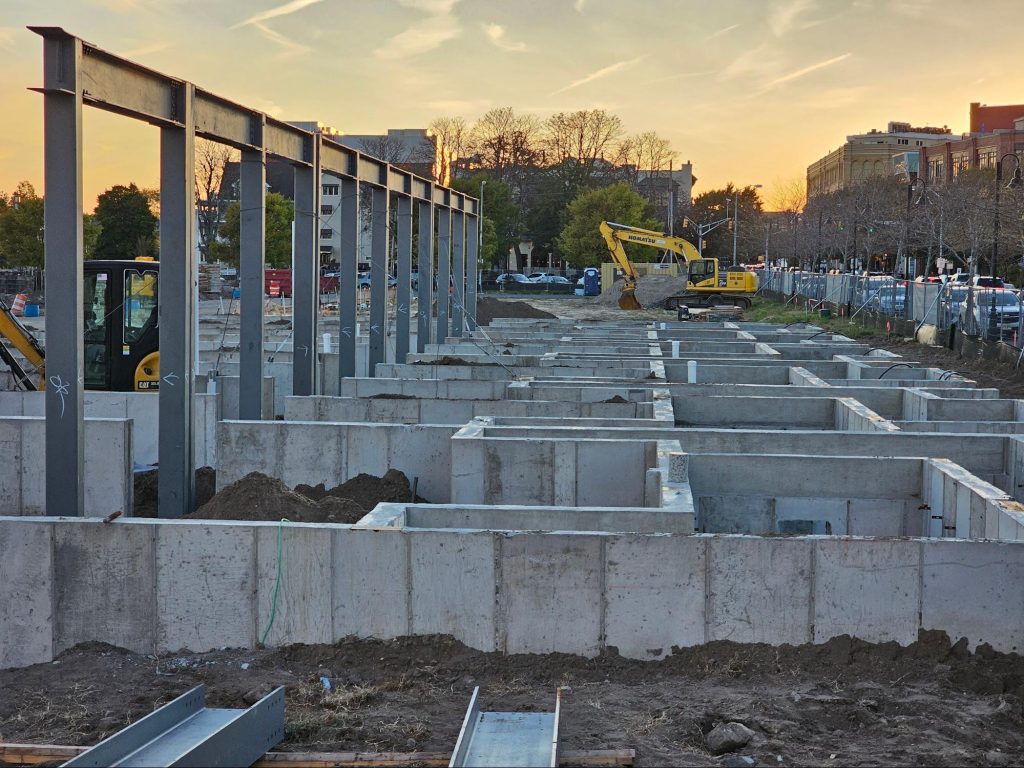
The picture below shows a field of building foundations. The foundations have already been excavated, set with drain pipes (and block outs for service water) from the underground plumbing, and have the structural foundation walls already built.
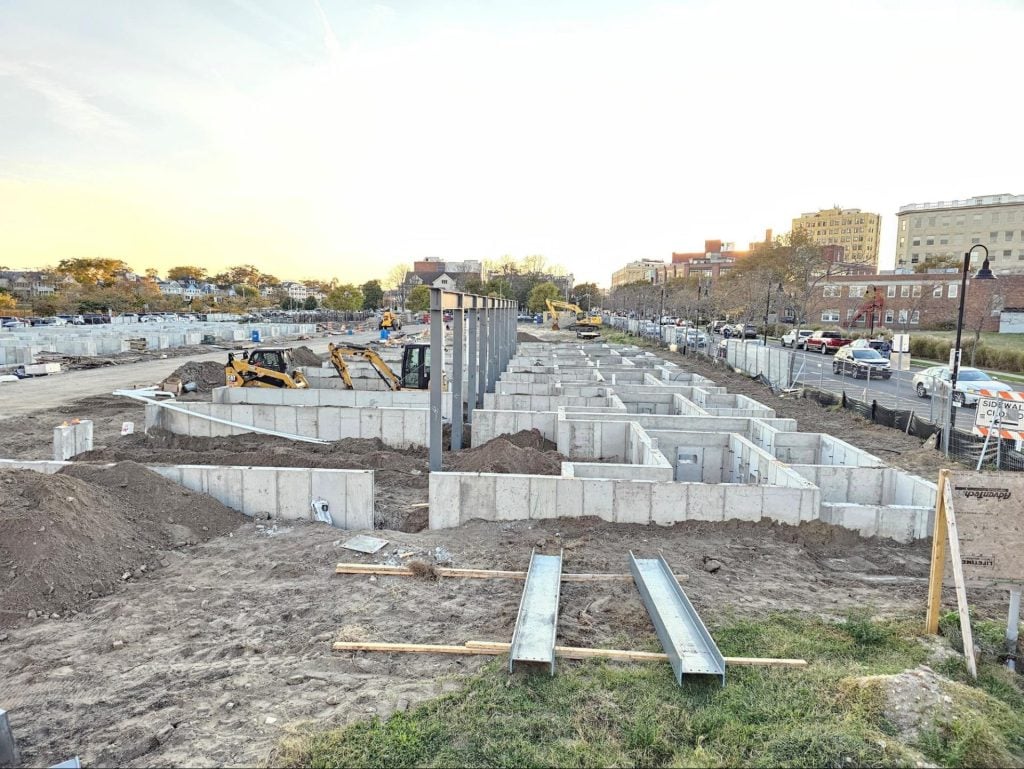
If you look at the Tetris-like zigzagging shape of the foundation walls, you can get an impression of the vertical facade that will later follow above grade. There are offsets in that facade which allow for a greater amount of linear space of the facade. Essentially, by creating offsets and jogs in the wall of the facade, they are creating an overall wider facade. When you add the width of each wall section, it will be cumulatively wider than the width of the house, from demising wall to demising wall. The demising walls between the buildings are the walls that separate the buildings from the next building in row.
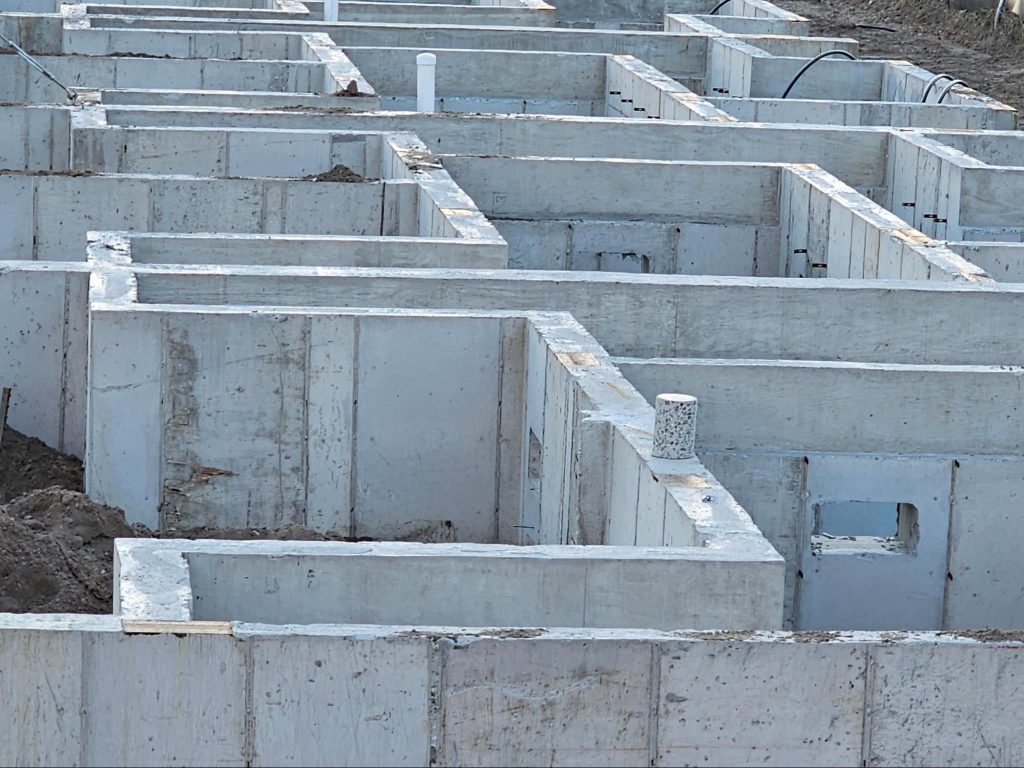
Another really big difference between precast concrete and cast in place concrete is in the installation. At the top of this article we explained some of the differences in the way that the materials components are individually assembled, but the way that the materials are then used to later assemble the building is just as different between these two different classes of concrete.
The picture below shows a series of building foundations that are assembled in a row, similar to the way city buildings are built. Unlike the historic masonry which requires repeated iterations of repointing, here these foundations are built with cast in place concrete. It may, from a distance, look like they’re built with individual panels of pre-cast concrete, but those vertical lines are actually just the edges of the continuous row of forms use to mold the wet concrete and temporarily hold it in place.
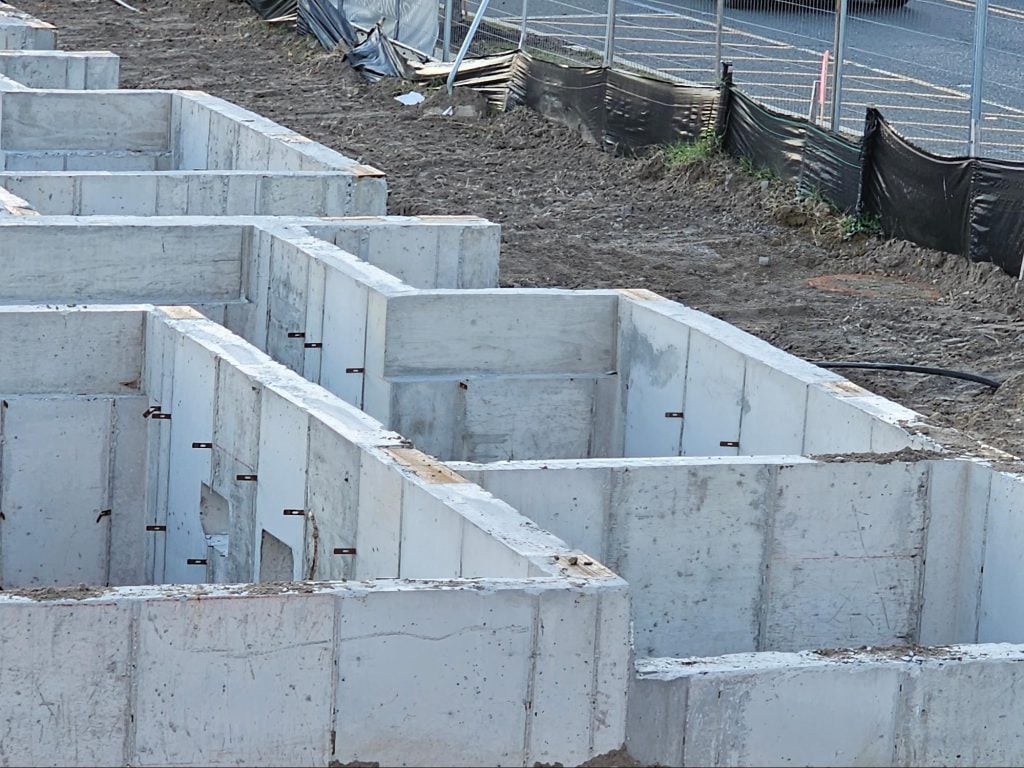
In this coming week, we’ll also take a look at some of the other additional accessory type elements around these cast in place concrete walls. We will also show some examples of the form boards which have been already stripped from the sides of the concrete. Form boards and panels like that, are only temporarily used to position and hold the concrete in place.
Once they’ve been used and the concrete has partially at least cured, the form boards can be stripped off and reused. They can’t be reused indefinitely because the removal process requires a great deal of strength and force to be applied to the form boards. In most cases though when the form boards are built from relatively resistant materials, they can generally be at least used a few times again in future construction.
We can Help
Our company focuses on historic restoration more than modern building upkeep, maintenance, and construction, but our company understands both types of construction very well and a full picture well-rounded approach is needed in any niche in the construction industry. Although we focus on historic restoration, repointing, tuckpointing and historic brick repair, our company also has technical knowledge and competencies in the areas of modern and contemporary construction as well as we become one of the leaders in that area of the market today. Understanding both historic and modern or contemporary construction is useful because both aspects help understand the challenges and potential solutions for challenges in building science and construction.
We can help with a variety of historic masonry restoration needs and upkeep, from modest tuckpointing and or repointing to complicated and extensive historic masonry restoration. Infinity Design Solutions is a historic restoration specialist contractor specializing in both historic masonry restoration such as tuckpointing our repointing, and brick repair. If you have questions about the architectural details or facade of your historic building in Washington DC, reach out and say hello and if we can help we’ll be glad to assist you. You can email us or call us on the telephone at the following link: contact us here.