
Weathering Effects on Paint and Mortar Joints
As you look upwards, vertically, across the facade of this brick wall, you can see the paint is in rough shape. It’s basically all about the flake off. The rough texture is noticeable from far away. It looks like a strong wind might blow half of it away. There are a handful of main reasons that paint will flake like this. It’s a matter of delamination. Essentially, the bond between the paint and the substrate is compromised. In some cases, the root of the problem goes all the way back to the initial installation.
The prior preparation of the substrate is critical. If you try to take a shortcut and skip the step of substrate preparation it will lead to accelerated deterioration of the paint. As the paint deteriorates from external factors, the deterioration is accelerated because the paint will begin to lose its bond to the substrate. We’re not recommending painting brick, it’s done on a large portion of the buildings here in DC. Probably more than half of these historic facades have already been painted, but the paint itself isn’t necessary, it’s an aesthetic choice.
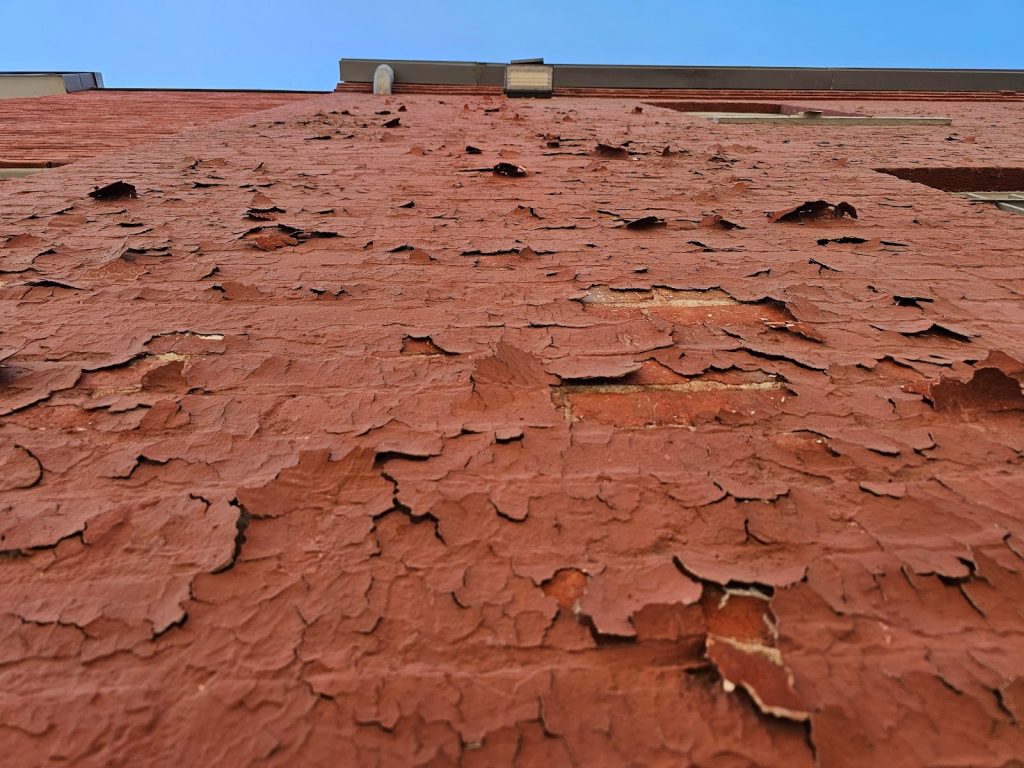
Many of the causes of this type of paint failure can be largely avoided or at least significantly deterred. Understanding the root causes on a chemical level really helps. A wide range of chemicals can be used in cleaning and substrate preparation. They have different pros and cons. Some of the constraints are based on the bond needed between the substrate and the type of paint which will be used.
When painting a brick surface, dirt and calcium based type deposits must be removed. Trisodium phosphate can be a great cleaning agent, but some more severe deposits and debris may require something stronger, like acids. Acids can damage bricks though, so any use of acid should be limited and done with care, under the supervision or guidance of a masonry professional.
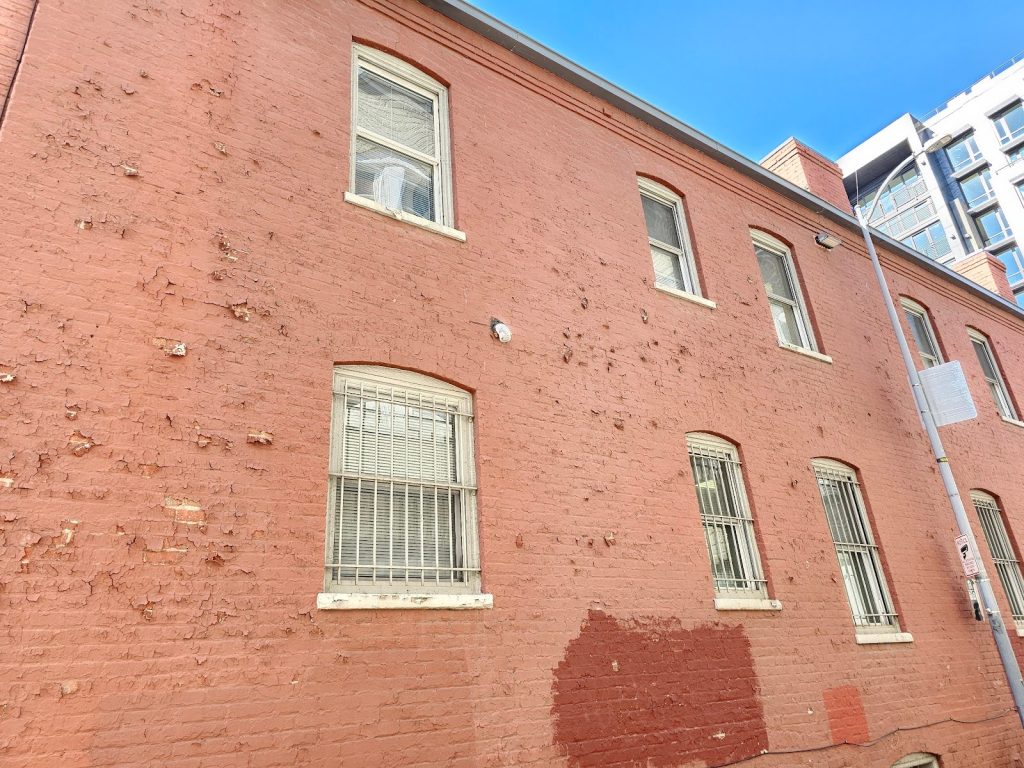
If these debris aren’t removed before the painting is applied, they can delaminate later. Debris like efflorescence on masonry can be thought of like a decoupler. Those materials may have a bond, to a degree, now. However, even though they have a degree of a bond or adhesion now, they will delaminate later. These debris or dirts essentially act like a decoupler. Imagine flour applied to a marble countertop.
Before rolling out wet dough, the flour keeps the dough from sticking. In that, otherwise unrelated example, the flour acts just like a decoupler. The dirt and debris and or deposits on the brick work the same way. If painting is applied without removing them first, the paint will stick, at first. Later though, since the bond of these decoupling elements isn’t very strong, the decoupler and the paint on top will delaminate.
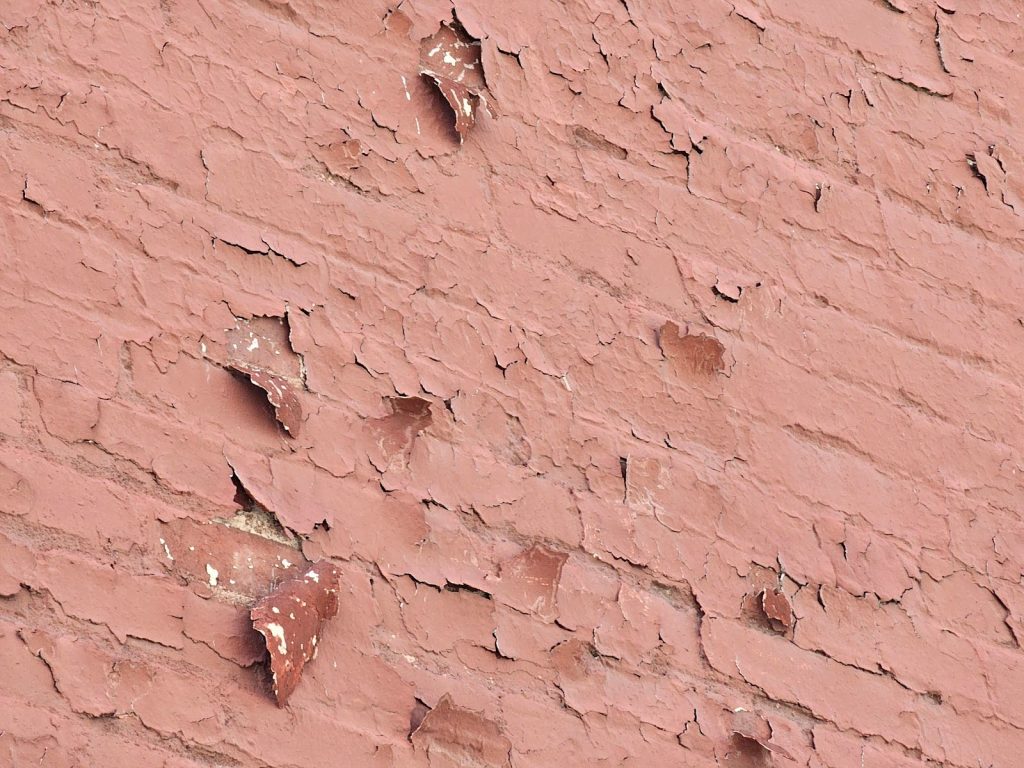
A primer should be applied after cleaning. However, thorough drying should be verified before priming or painting. When a historic brick wall has a rough surface, it may take more time for the substrate to thoroughly dry. At the brick joints, if the joints are deteriorated, they should be repointed before paint is applied. Particularly, with lime mortar, a thorough drying may take months.
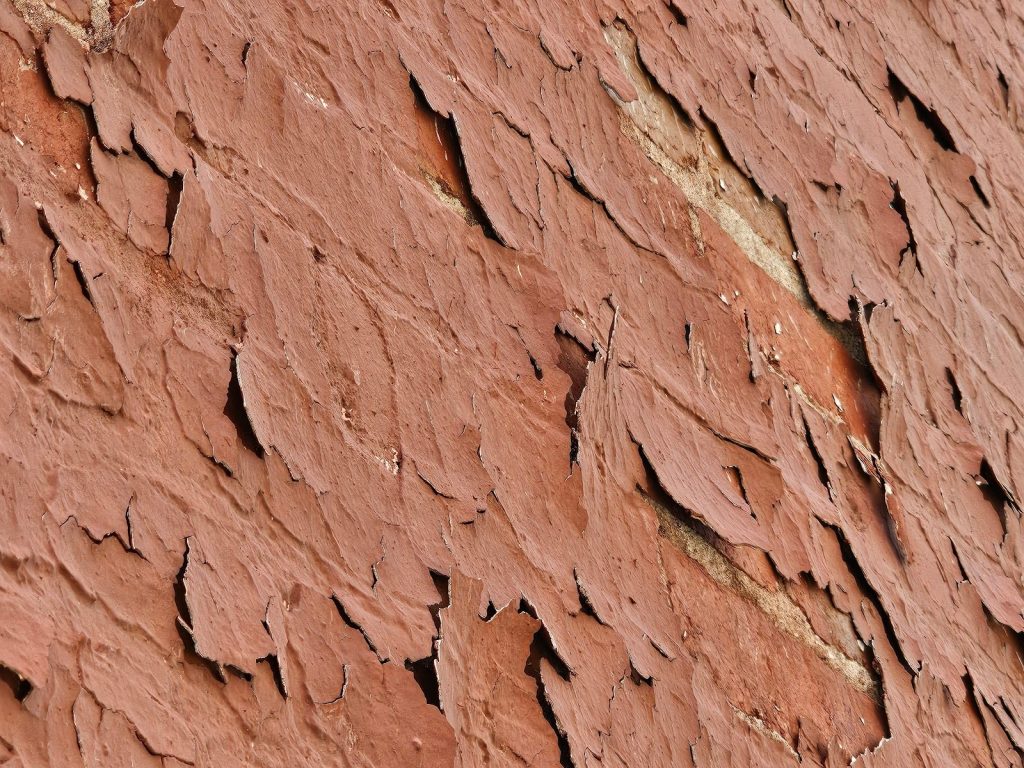
There are multiple different types of paints, but to simplify things, you could say there are basically three main families of paint: water based, oil based, and epoxies. The water based paints will generally be latex or acrylic. Oil based paints may also be referred to as solvent based paints, and even though they may be similar, they may not actually contain oil. Epoxies work similarly but may use cross-linked polymer chains. These chemicals may lead to strong bonds.
We can Help
Our company focuses on historic restoration more than modern building upkeep, maintenance, and construction, but our company understands both types of construction very well and a full picture well-rounded approach is needed in any niche in the construction industry. Although we focus on historic restoration, repointing, tuckpointing and historic brick repair, our company also has technical knowledge and competencies in the areas of modern and contemporary construction as well as we become one of the leaders in that area of the market today. Understanding both historic and modern or contemporary construction is useful because both aspects help understand the challenges and potential solutions for challenges in building science and construction.
We can help with a variety of historic masonry restoration needs and upkeep, from modest tuckpointing and or repointing to complicated and extensive historic masonry restoration. Infinity Design Solutions is a historic restoration specialist contractor specializing in both historic masonry restoration such as tuckpointing our repointing, and brick repair. If you have questions about the architectural details or facade of your historic building in Washington DC, reach out and say hello and if we can help we’ll be glad to assist you. You can email us or call us on the telephone at the following link: contact us here.