
Beam pocket with tree interference
Several times in the past, we have looked at examples of where trees and plants have caused significant destruction and deterioration to buildings. These particular examples seem to be most prevalent in historic masonry buildings. It’s not that these buildings are weaker or particularly more susceptible to damage from plants and trees, but they are often much older and have less upkeeping care than newer buildings. Here in Washington DC, the urban historic areas of the city have gone through significant cycles and economic changes. During some parts of those cycles, the city was neglected and care was not well applied to many of these historic buildings.
The picture below shows the side of a dilapidated historic brick building where the adjacent building has already collapsed, been removed, and or been demolished. An empress tree is growing right out of one of the beam pockets. Even though the vast majority of original historic brick buildings, here in Washington DC, are over 100 years old today, many are still in moderately good shape.
They were built differently, and one of the differences in the framing of these buildings is that they didn’t use a contemporary type of platform framing. Modern contemporary platform framing is essentially built with stud walls and a joist system positioned on top of the stud walls. Additional upper floors are then built on top of the platform and so on upwards. Brick buildings are framed with similar wood elements on the interior, but the structural shell is built differently.
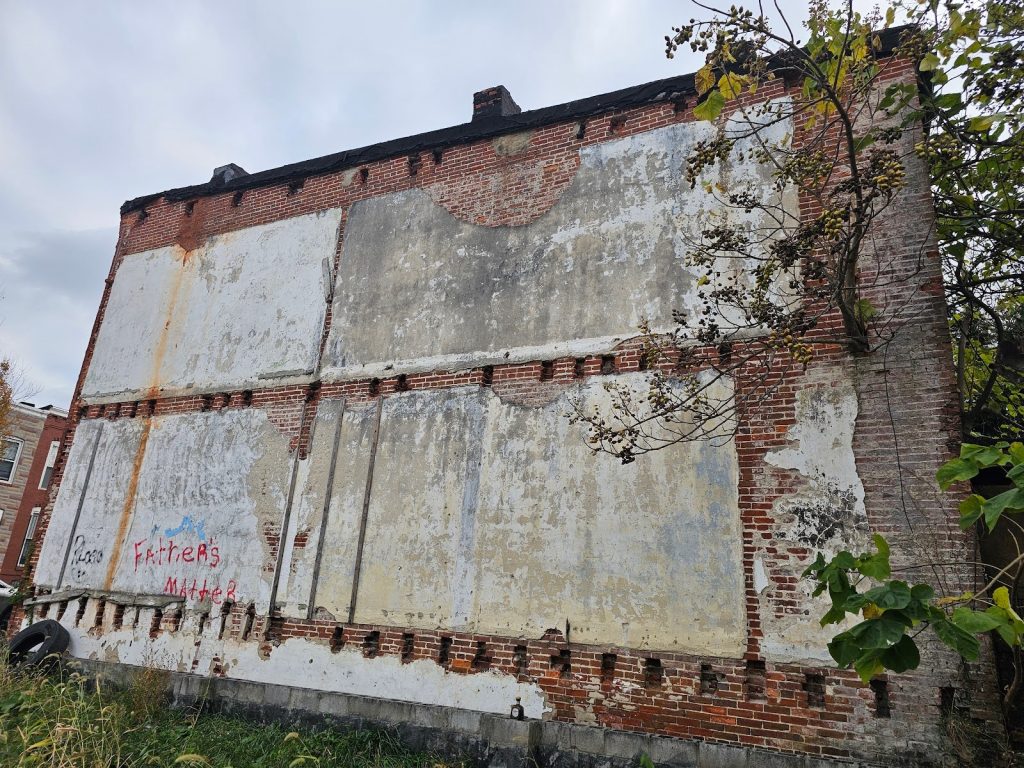
As you look across the side of this building, you can see three rows of beam pockets that run in sequence. Each beam pocket is separated by about 14 inches of open space. Within each sequential spacing, there’s about 2 inches for the horizontal thickness of the floor joist or roof joist and then about 14 inches of open space. In total there’s roughly 16 inches per joist bay and each joist is set on about 16 inch spaced centers. You can see the horizontal bands of these rows of beam pockets at the lowest ground level.
The floor of the upper level is built similarly, but then a much wider spacing is used for the roof. The roof was built in a similar way, but with less structural support because the roof load did not have a live load required to support people and furniture.
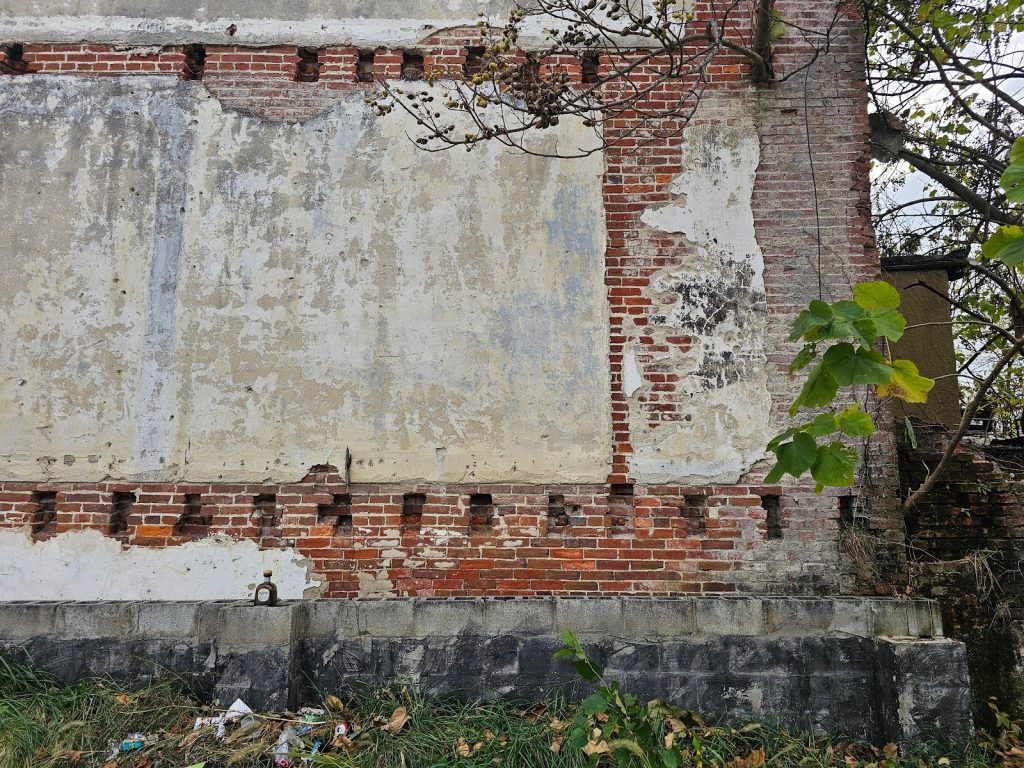
When the adjacent building was removed, the joists were removed and these beam pockets were left empty and open. Since they are empty and open, and in the form of a small ledge, they are a perfect place for moisture and precipitation or water to accumulate.
They are turned into a place where debris also accumulates. This type of context happens to be perfect, but not in a good way, for plants to grow. Where tree seeds land onto these ledge areas, since there is also moisture and debris, it’s a perfect recipe for growing a tree. As the seeds sprout, new tiny tree plants take root and begin to grow. As they grow the roots become larger and stronger and penetrate deeper into the structure of the masonry. Simultaneously, since there is exposure, unmitigated, to the natural elements, the masonry also happens to deteriorate on an accelerated time scale.
All of these things are a part of the recipe for destruction and deterioration. As the roots grow, it damages the masonry considerably. Here on our website, we talk a lot about the importance of repointing and restoring historic masonry. Repointing is the process of repairing the external or most exterior edges and outside of historic mortar joints. Mortar simply deteriorates faster than the bricks in the brickwork. Therefore, the mortar joints need more attention and more upkeep. Essentially, they deteriorate on a faster timetable and therefore require intermediary or more aggressive timetables of restoration and repointing.

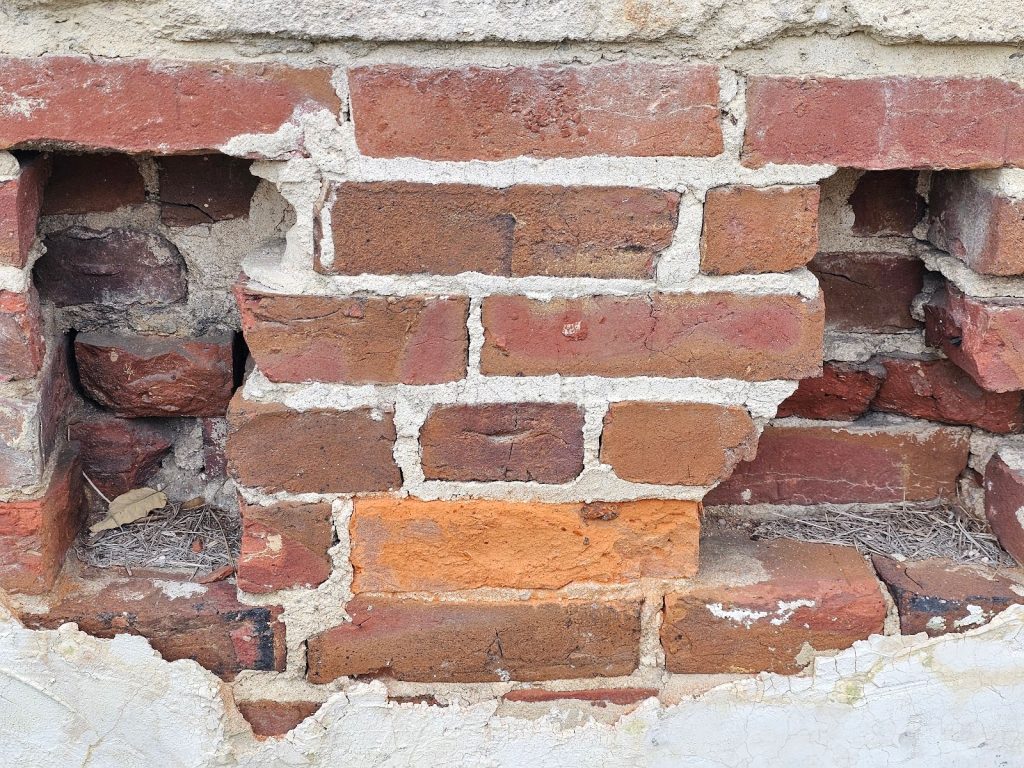
In this picture, you can see that in this relatively thin wall the beam pocket allows for an open space where the joist sits on roughly 3.5 to 4 inches of substrate brick below. That open space allows for a reduced amount of thickness between this wall and the adjacent side of the wall which is another building. In this coming week, we will look at another blog article examining different aspects of the same building. We’ll talk more about the problems that happen when trees grow inside of the masonry of a historic facade.
We can Help
Our company focuses on historic restoration more than modern building upkeep, maintenance, and construction, but our company understands both types of construction very well and a full picture well-rounded approach is needed in any niche in the construction industry. Although we focus on historic restoration, repointing, tuckpointing and historic brick repair, our company also has technical knowledge and competencies in the areas of modern and contemporary construction as well as we become one of the leaders in that area of the market today. Understanding both historic and modern or contemporary construction is useful because both aspects help understand the challenges and potential solutions for challenges in building science and construction.
We can help with a variety of historic masonry restoration needs and upkeep, from modest tuckpointing and or repointing to complicated and extensive historic masonry restoration. Infinity Design Solutions is a historic restoration specialist contractor specializing in both historic masonry restoration such as tuckpointing our repointing, and brick repair. If you have questions about the architectural details or facade of your historic building in Washington DC, reach out and say hello and if we can help we’ll be glad to assist you. You can email us or call us on the telephone at the following link: contact us here.