
Cast-in-Place Concrete Foundations: Key Insights
Over the past few weeks, we took a look at some of the structural elements of supporting cast in-place concrete foundations. Today we’re going to look at some of the accessory type elements to explain how these parts are used to actually execute the work of building a concrete cast in place foundation.
In the picture below the concrete happens to be fresh and new, but the stack of form boards sitting in front of the concrete foundations is filled with wood elements that look old and aged. These form panels are used again and again. After being used once they can be stripped off of the hardened and cured concrete and then used again. They do eventually get old and wear out. Using them repeatedly through the pouring and casting of concrete will cause them a significant amount of wear and tear. However, it saves a lot of money to be able to reuse these form boards multiple times.
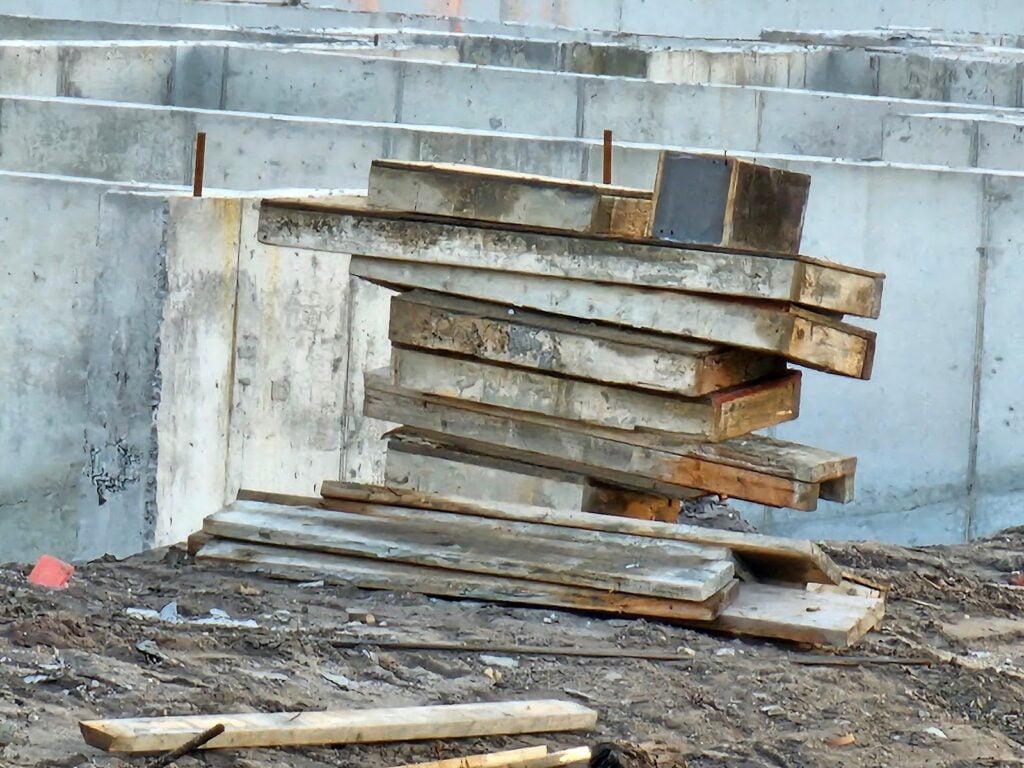
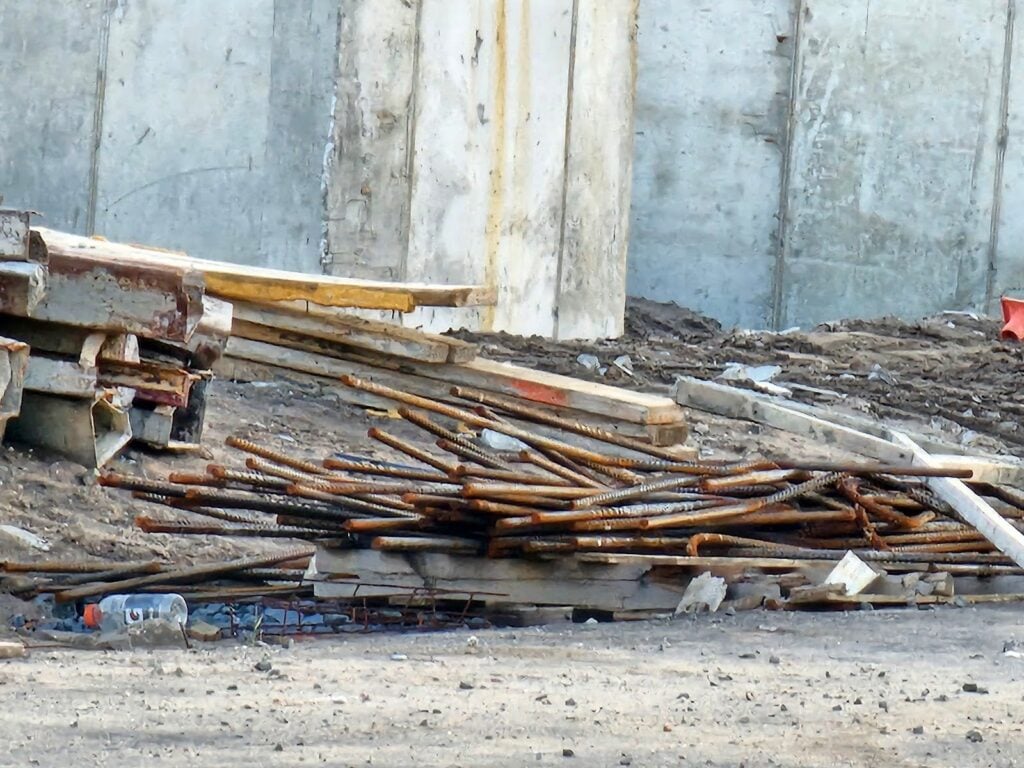
The forms are built or framed together with these individual panel pieces and then the wet concrete is poured into them like a heavy and sloppy porridge or soup. Unlike porridge or soup though, the concrete is extremely heavy. To withstand and support this weight, the form boards are reinforced with perpendicular framing elements. In traditional formwork, these elements would be referred to as strongbacks and walers. The picture below shows a few different things. In the left hand side of the picture, you can see a stockpile of steel walers.
Unlike more traditional wood walers, these elements are actually made of lightweight cold rolled sheet metal. Even though sheet metal may not sound like a structurally strong element, these happen to be of low gauge, meaning high strength, steel. The bends in each individual piece give them significant strength or resistance to deformation and deflection.
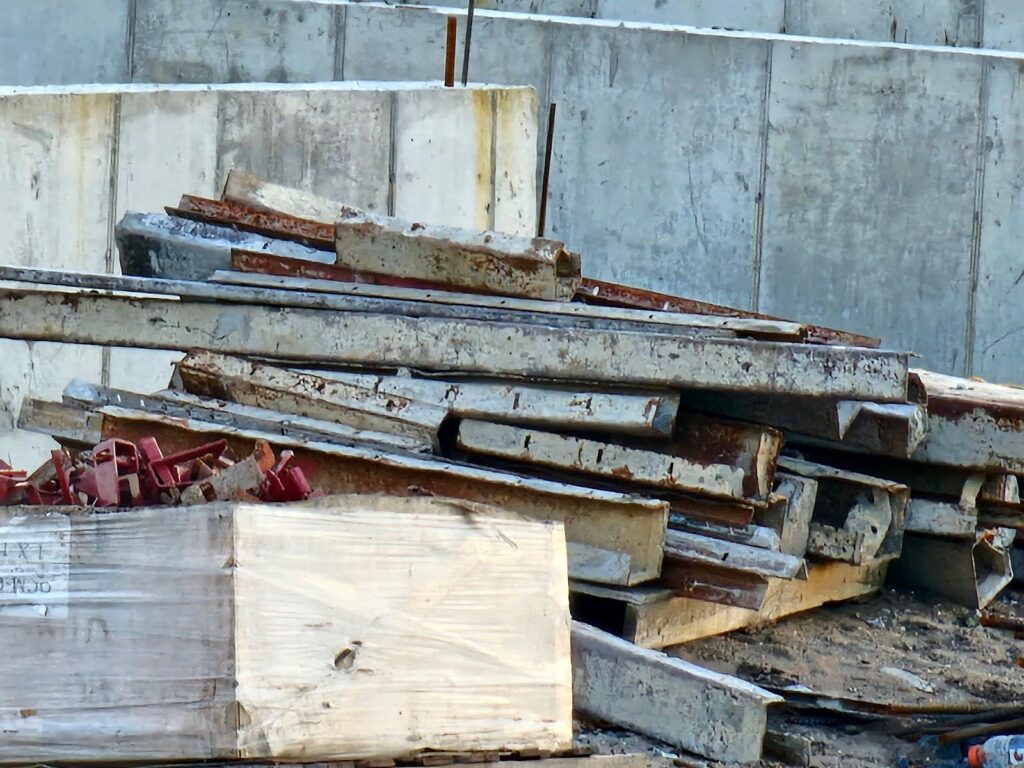
You can see a closer view of these elements in the next picture below. The pile may look like a sloppy mess. However, in this particular case, the sloppy pile of form elements will not stay there long. The previous set up will soon be moved on to the next building foundation. Unlike the wooden formwork panels which can be reused a good handful of times, these particular metal elements can be used hundreds of times. They’re much more durable since they’re made from steel and not from wood.
Unlike wood, steel doesn’t have moisture susceptibility issues where it will absorb moisture and they deform and swell and eventually deteriorate. Clearly, as we can see in many examples throughout building construction, steel and iron elements do have a tendency to oxidize and rust which will lead to their destruction. This particular steel happens to be galvanized though.
Galvanized steel can either be hot dipped or Electro galvanized. That type of treatment applies the coating of zinc to the exterior surfaces of the elements and the zinc coating will resist the oxidation deterioration associated with exposure to typical environmental and work moisture.
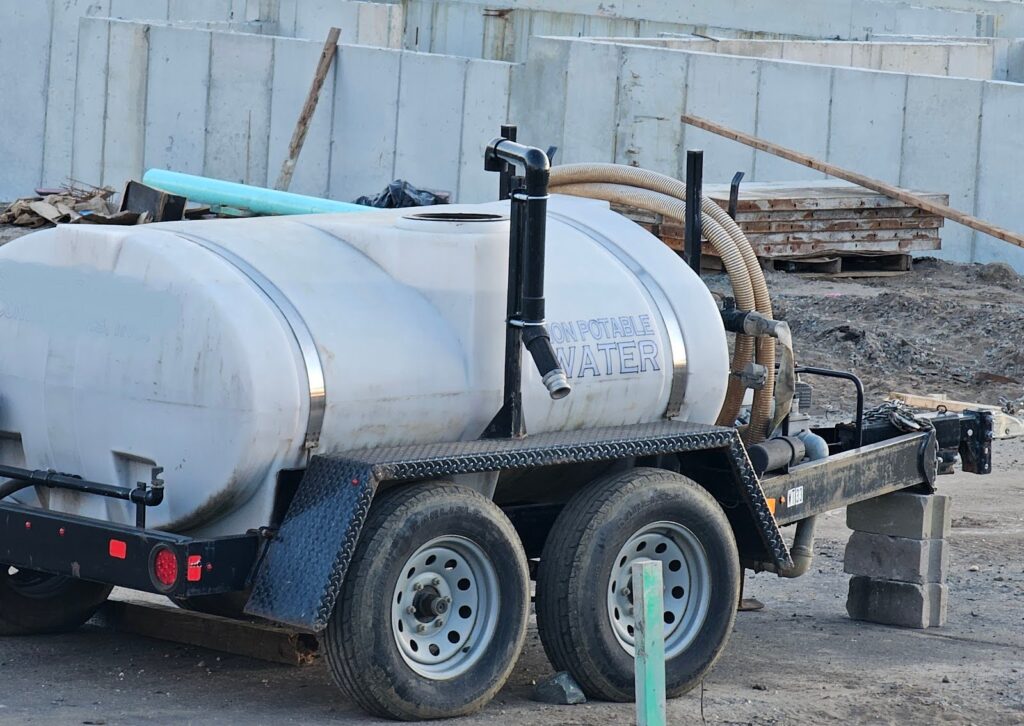
Most construction sites, particularly in rehabilitation work, have a plumbing infrastructure in place. In this particular case, the plumbing infrastructure is actually under construction and not yet built. There isn’t regular water available and mixing concrete requires a significant amount of water. The water isn’t just used for hydrating the concrete materials such as sand and cement and aggregate, it’s also used for cleaning the tools and form materials after concrete has been applied. Here, water had to be brought in because water was not available on site. The cost of bring water in to a job site, when necessary, is significant.
To conduct large scale construction type operations, and even small scale, most sites need to have connections or provisions for power, water, and other types of typical services. Power can also be generated with plants or generators brought into the job site. After the USA started an unnecessary trade war in 2025 we then went and attacked Iran for no apparent reason, costs increased. As a result, gas prices will increase significantly and it’ll hurt our economy badly. Like always, the weakest among us will be hurt the worst, but it’ll also result in increased cost for typical things like groceries and construction.
We can Help
Our company focuses on historic restoration more than modern building upkeep, maintenance, and construction, but our company understands both types of construction very well and a full picture well-rounded approach is needed in any niche in the construction industry. Although we focus on historic restoration, repointing, tuckpointing and historic brick repair, our company also has technical knowledge and competencies in the areas of modern and contemporary construction as well as we become one of the leaders in that area of the market today. Understanding both historic and modern or contemporary construction is useful because both aspects help understand the challenges and potential solutions for challenges in building science and construction.
We can help with a variety of historic masonry restoration needs and upkeep, from modest tuckpointing and or repointing to complicated and extensive historic masonry restoration. Infinity Design Solutions is a historic restoration specialist contractor specializing in both historic masonry restoration such as tuckpointing our repointing, and brick repair. If you have questions about the architectural details or facade of your historic building in Washington DC, reach out and say hello and if we can help we’ll be glad to assist you. You can email us or call us on the telephone at the following link: contact us here.