
Cliffbrakes Growing in Historic Mortar Joints: Part I
A few times in the past, we have looked at a couple of examples where plants are growing in historic masonry. Plants growth in a historic masonry is often called biocolonization. It starts out small, generally, but then as the material of the mortar and bricks continue to deteriorate, the plant life grows more complex. Even the plant species will change. Obviously, it’s not that the individual plants will evolve themselves, but as the deterioration grows in scale and size, plants that grow stronger with deeper roots will overtake the less complex plants. This change of course accelerates deterioration even more. The plants start to grow there but the plant growth itself causes more deterioration.
The plant growth only happens because of deterioration. In this way, it’s a bit like a chicken and egg type of quandary. Really the deterioration happens first but the continued deterioration is largely affected by the roots of plants. As they grow, they push and weasel themselves into deeper crevices in the mortar and cause the more to break apart faster into a higher degree.
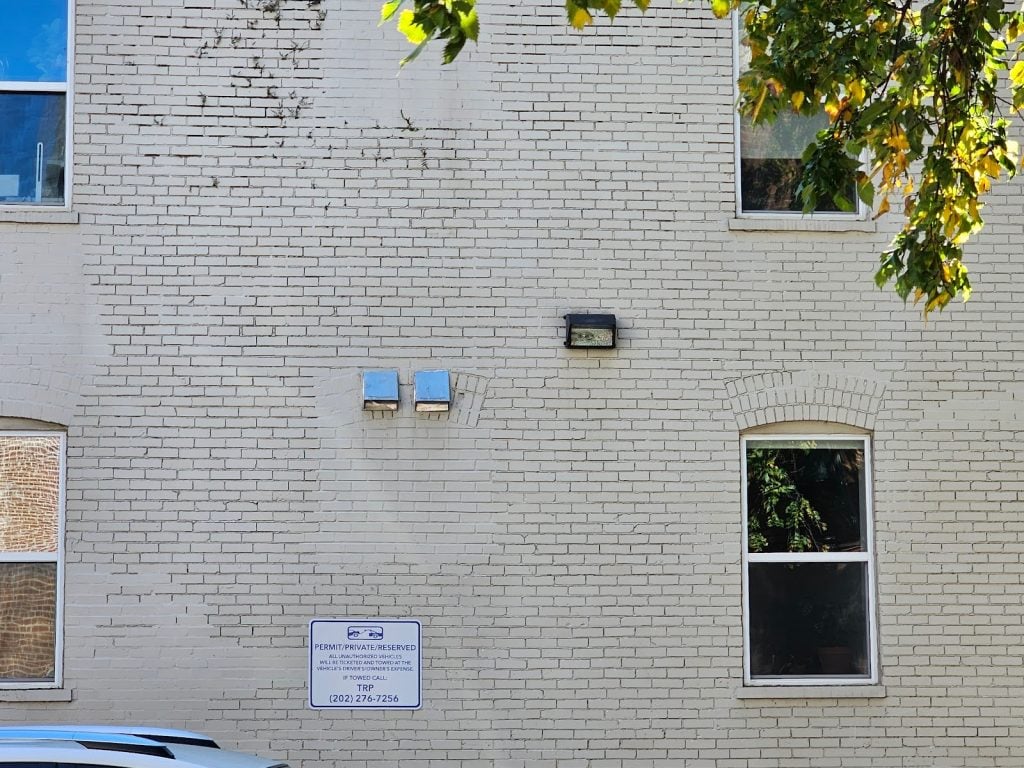
From a distance, this particular building doesn’t look like it has serious damage or anything particularly problematic. In fact everything kind of looks normal. It’s not an elaborate or architecturally decorative type of facade. When you start looking a little bit closer though you see that some of the areas appear to have a little bit of a darker shade or color than the others.
When you get closer you happen to notice the mortar joints are more recessed and deteriorated in certain areas of this wall. And when you start to look even closer, you can see there’s plants growing out of the mortar joints. That’s a sign that things have problems and the wall is in trouble. If these problems are left unmitigated, it will literally destroy the wall and then destroy the building.
The picture below shows this issue from a distance. It’s almost like it just looks like the specific darker areas are dirty. It looks worse when you get closer though.
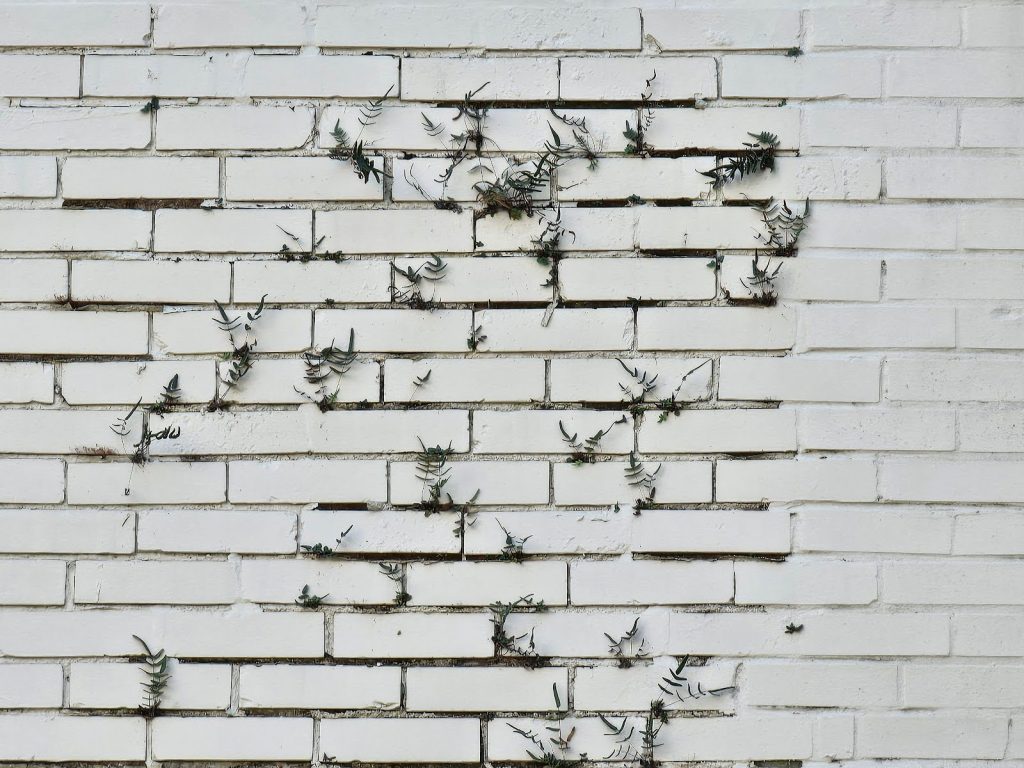
This picture shows it from a much closer angle. It’s clearly more than just dirt, here you can see, it’s actually little plants growing out of the brickwork’s mortar joints. These particular plants are called Cliffbrakes. They are little ferns. Ferns are pretty plants, but these plants are well adapted to growing on small ledges. As their name implies, they grow very well on the edges of cliffs, so they thrive in deteriorating brick mortar just like this. Their Latin name is Pellaea atropurpurea.
The first latin name, pellaea, comes from the Greek word pellos which refers to their dark color. The second name also refers to their dark color, so, oddly, neither of the names refer to any qualities other than their often dark color. As mentioned, this plant is a type of fern. The term “brake” in the plant’s common name is an older word that means fern, related to the word “bracken”. A bracken is a dense fern or thicket.
In this coming week we’ll talk about why this type of plant can really damage a building and why it’s just important to simply repoint a historic masonry facade before it becomes excessively deteriorated.
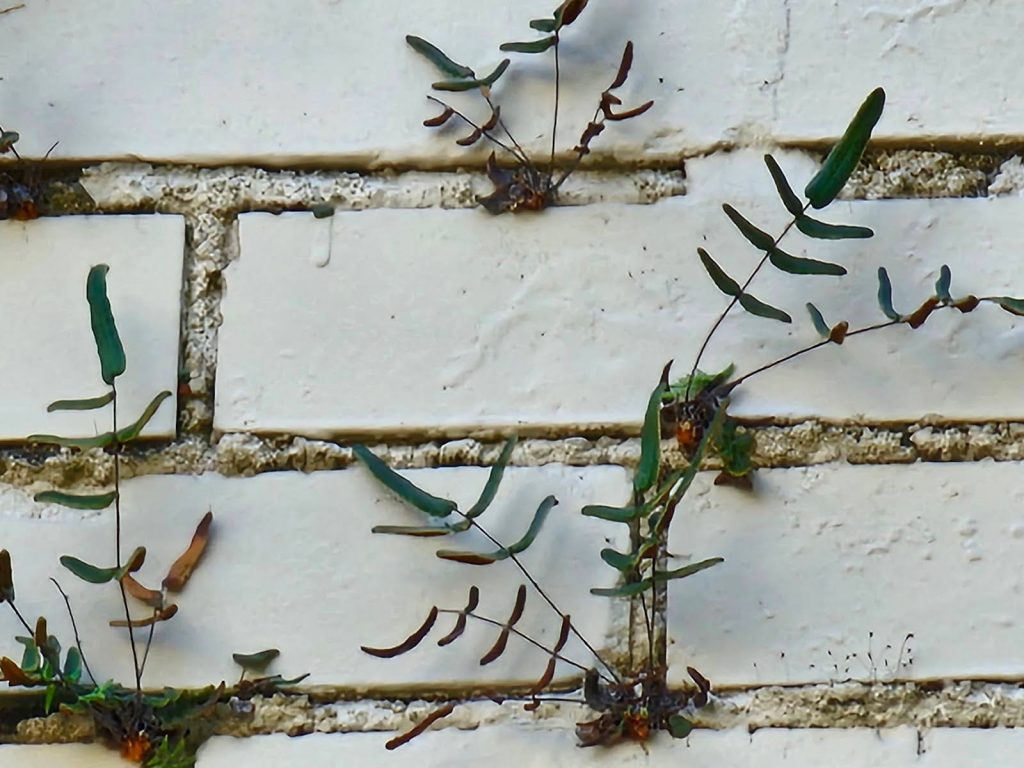
Ferns have rhizoid roots. These types of roots are bad news for old and deteriorating brick mortar. These roots are strong and they run a bit like a tap root and can effectively break apart deteriorated and aged mortar and masonry apart. The picture below shows a closer view. You can see the mortar has deteriorated. It looks like it was painted right on top of bad mortar.
The mortar is recessed and it has a rugged finish that was likely smooth at the striking process during initial construction. That means that the original face of that brick mortar has worn off. Then somebody went and painted on top of it without anyone thinking that it should be repointed first. Clearly that’s a misunderstanding of the most basic parts of the techniques of keeping a building in maintained and in decent shape.
Another peculiar but interesting detail of this, besides that it looks like they repointed the upper levels but omitted the repointing at the lower levels, is that the lower levels often require repointing sooner. Generally, depending on a handful of different factors, the lower area of the wall will deteriorate at a faster rate.
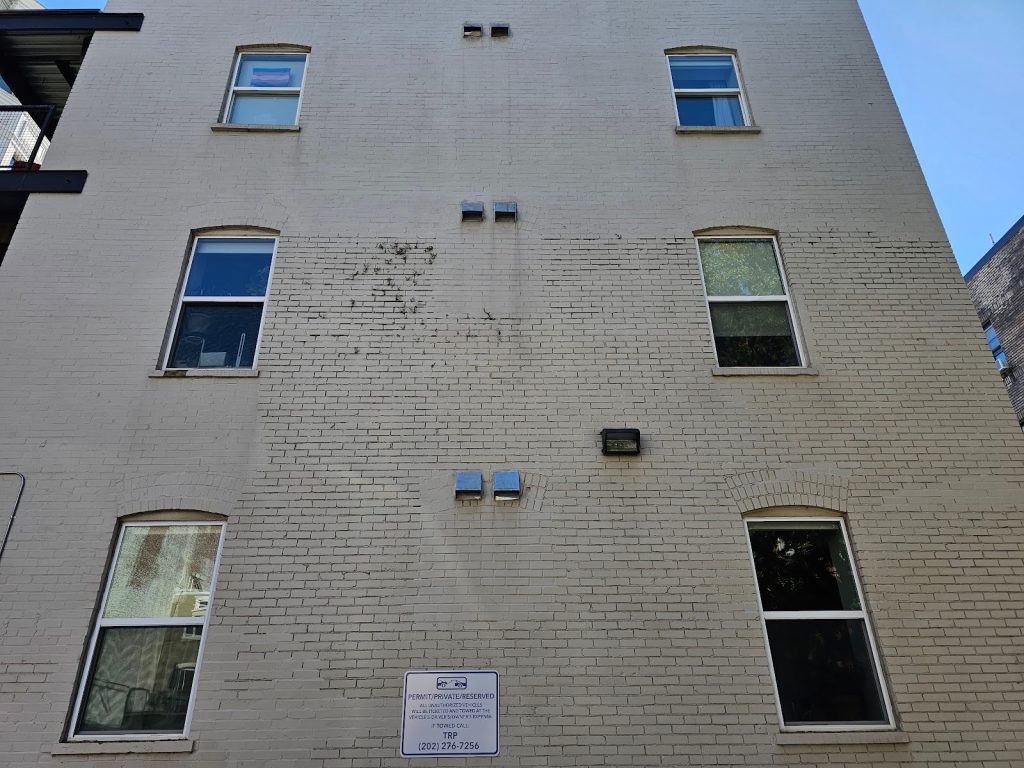
Here you can see the clear distinction between a horizontal line that runs through an area just below the two exhaust fans shown in the photo below.
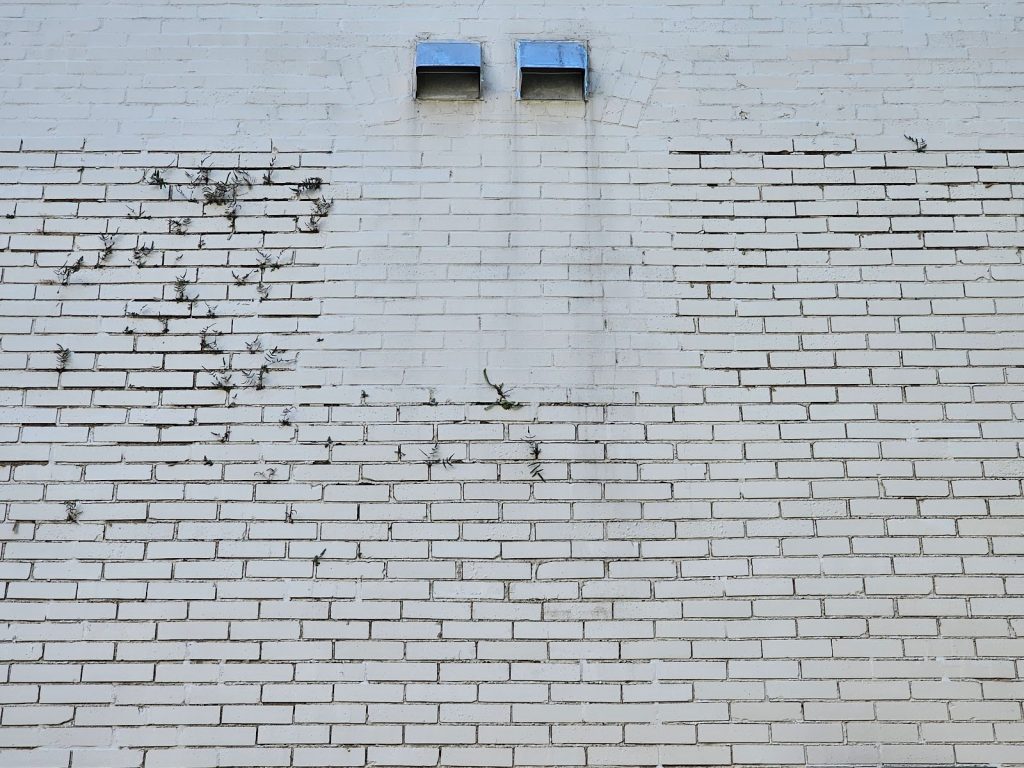
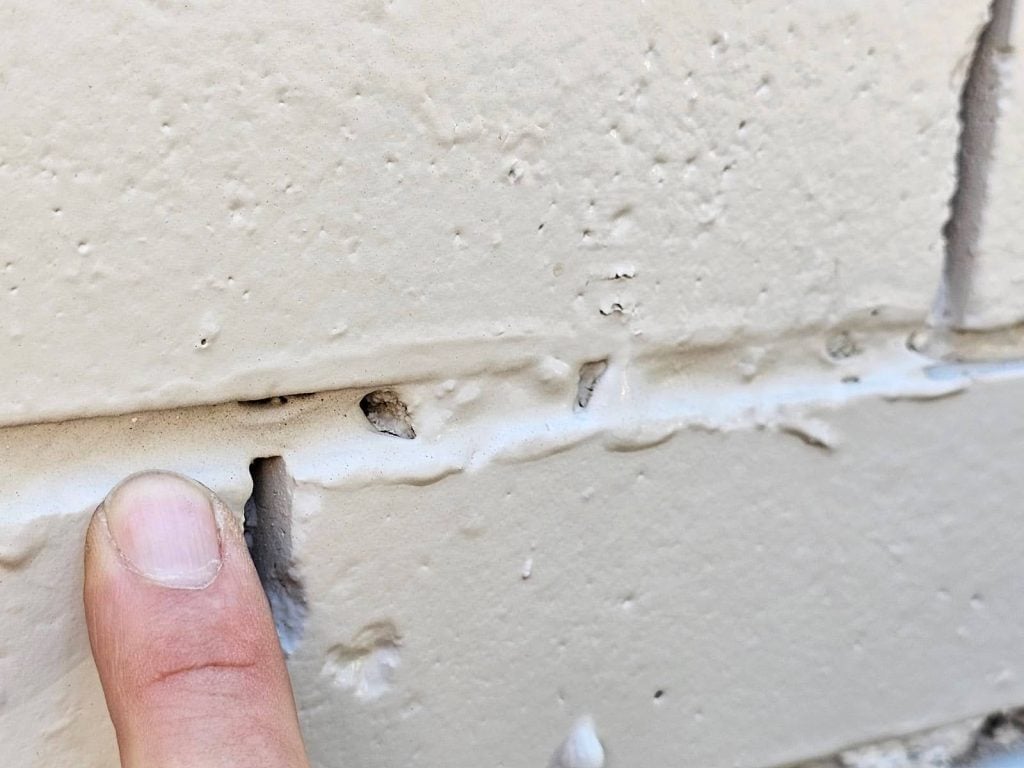
The next two pictures show a really close view of this deteriorated mortar. It’s not just recessed, it’s also been compromised through deterioration. Repointing should have been done before it was repainted.
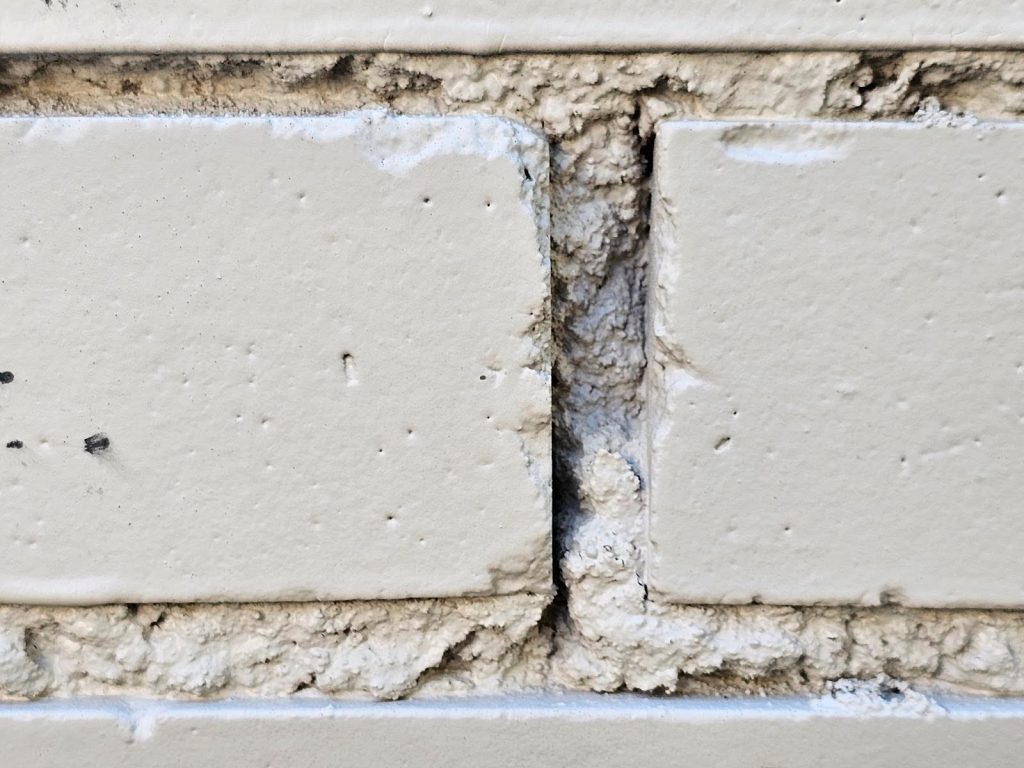
Even worse than just painting over mortar that’s in terrible shape, they also caulked some of the open joints in the mortar lines. Caulk doesn’t belong jammed into spaces between bricks like this, it leads to and causes more problems. The proper treatment is repointing.
We can Help
Our company focuses on historic restoration more than modern building upkeep, maintenance, and construction, but our company understands both types of construction very well and a full picture well-rounded approach is needed in any niche in the construction industry. Although we focus on historic restoration, repointing, tuckpointing and historic brick repair, our company also has technical knowledge and competencies in the areas of modern and contemporary construction as well as we become one of the leaders in that area of the market today. Understanding both historic and modern or contemporary construction is useful because both aspects help understand the challenges and potential solutions for challenges in building science and construction.
We can help with a variety of historic masonry restoration needs and upkeep, from modest tuckpointing and or repointing to complicated and extensive historic masonry restoration. Infinity Design Solutions is a historic restoration specialist contractor specializing in both historic masonry restoration such as tuckpointing our repointing, and brick repair. If you have questions about the architectural details or facade of your historic building in Washington DC, reach out and say hello and if we can help we’ll be glad to assist you. You can email us or call us on the telephone at the following link: contact us here.