
Decorative Planters on Historic Masonry Facades: Part II
This past week, we took a look at some historic masonry facades here in Washington DC. These particular buildings happen to be really close to our company’s office. We talked about several different topics such as historical restoration and mounting decorative type elements on historic masonry. We also talked about the similarities between the grouping of particular buildings that we are looking at here in these photos. These buildings were built together in a grouping. They were likely built at the same time by the same developer.
We will also looked at some other buildings today, but the point is that there’s some interesting architectural details that are similar between these buildings. Because they were built in a group, they were designed to compliment one another. There were several different styles and types of designs of buildings, even back in historic times. One group of row homes might have an entirely different style than another group of buildings. This is particularly common when the different groups of row homes were built and or designed by different architects and or builders.
This past week, we talked about the implications for financing. In historic times, the financing was generally done through individuals or small groups of investors. In contemporary times we use the system of financial lending that’s been common for about the past 75 years. This particular system is changing quickly though. In this system, individual families were able to get financing that allowed the to build and or purchase entire homes, at once.
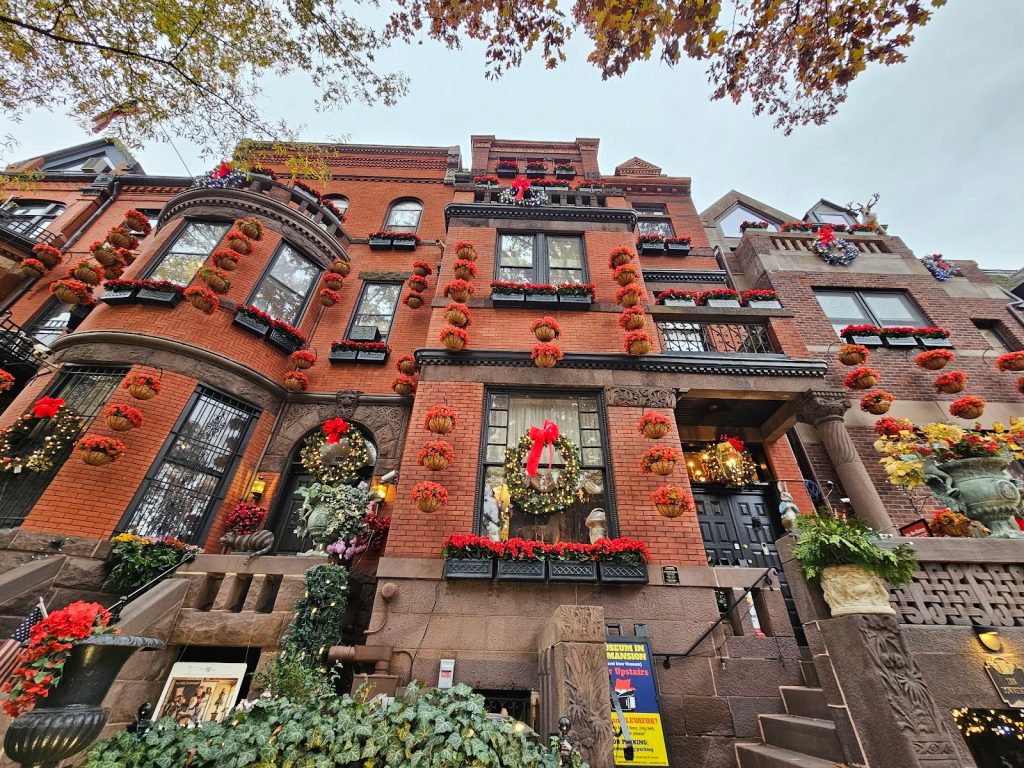
Although, seemingly, not directly a part of construction itself, this mode or method of financing changed the construction industry completely. Instead of saving up for each individual part and then building homes in sections, even just room by room, through lending full size homes could be built at one time. Prior to this, builders had to be much wealthier than average families. Interesting and also not directly related to construction, the financing model is changing because as homes have increased in price and as earnings have decreased, adjusted for inflation, now people will no longer be able to afford a home.
The president here in the USA recently suggested switching traditional 30 year loans to 50-year loans. At first, that might sound like a reasonable alternative. However, when you really look at the math, it doesn’t reduce the monthly payments enough over the span of the loan. Instead, it makes it so that the borrower pays way more interest overall. Again, it doesn’t sound related to construction, but it impacts the modes and methods of construction, significantly.

The math on this proposal by Trump is a bit shocking really. It seems like a really bad idea. In a 30-year loan, at 6.35% (current interest rates in mortgages), for a property that costs $875,000, the monthly payment would be $5,159, just for principal and interest. The payment on a 50-year loan would be $4,453. The difference there, of $706, is too small to make it worth it, because you end up paying for an additional 20 years! This isn’t actually saving.
However, this does not include mortgage insurance nor does it reflect the differences of a higher interest rate expected on the 50 year loan. Once you include those two factors, the increased duration barely reduces the monthly payment. Instead, it shifts the overall proposition from one that builds generational wealth to one that builds generational debt. Over the life of the loan, the total amount paid in the Trump proposed loan increases drastically. This is a perfect recipe to strip equity away from the vast majority of Americans.
While it hurts the vast majority of Americans, it does help billionaires though. It makes the mortgage market much more valuable to the lenders. It doesn’t just help the billionaires in America, it helps the wealthiest people in other countries as well. Japan, China, and Taiwan are major holders of US mortgage backed securities. Holding the real estate debt helps secure and stabilize those and many other currency and financial markets abroad. So, while the Trump idea may hurt Americans badly, it helps the top wealthiest and many of the richest people abroad.
It impacts construction and housing trends here in America though, and that is the real point. In housing, there is increasing talk about the “missing-middle”. Homes were built, for many recent decades, for the lower middle wealth families and the upper middle. To fill in options for the former middle-middle, duplex and tripleplex home construction may resurge. The future upper middle will likely actually be pushed down to the spot or rank of the former middle-middle though.
The historic architecture of cities like Baltimore, in many cases, resembles and even surpasses the gilded age architecture of DC. Through economic decline, those once beautiful buildings have mostly been chopped and diced into many small apartments, today. The building facades though can still look terrific, especially where well maintained through proactive masonry restoration and repointing.

In this particular case, the decorations are large or expanded because there’s three different planters that are mounted, one from the next.
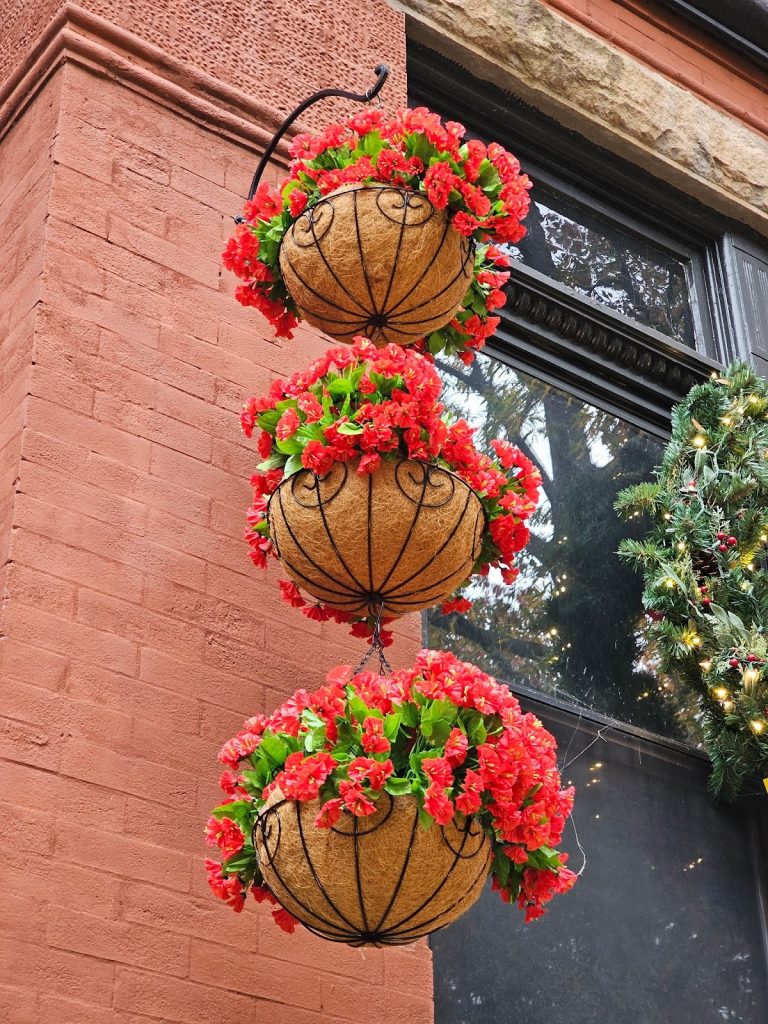
In this particular case, even though it’s such a large display with numerous plants, it’s only mounted at one location into the masonry wall. In this case, fewer mounting spots is better.
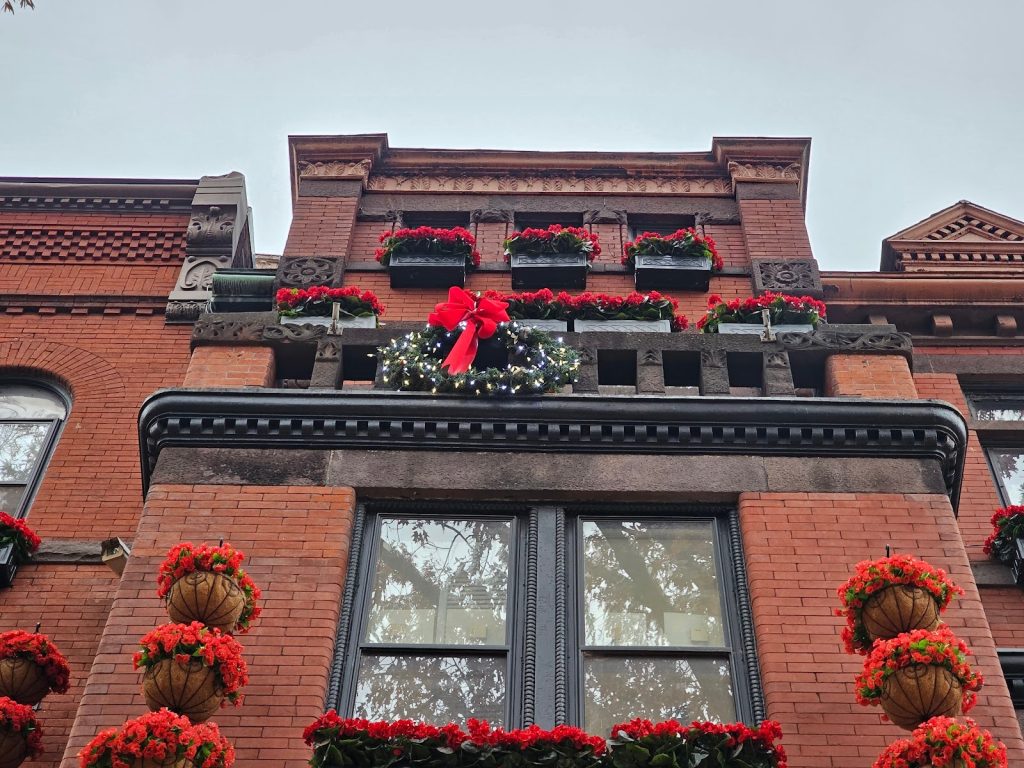
You can also see the people here also installed a set of planters at the window sills and the cross the balcony. It’s not just what they did here though, this can be done at almost any building here in Washington DC.

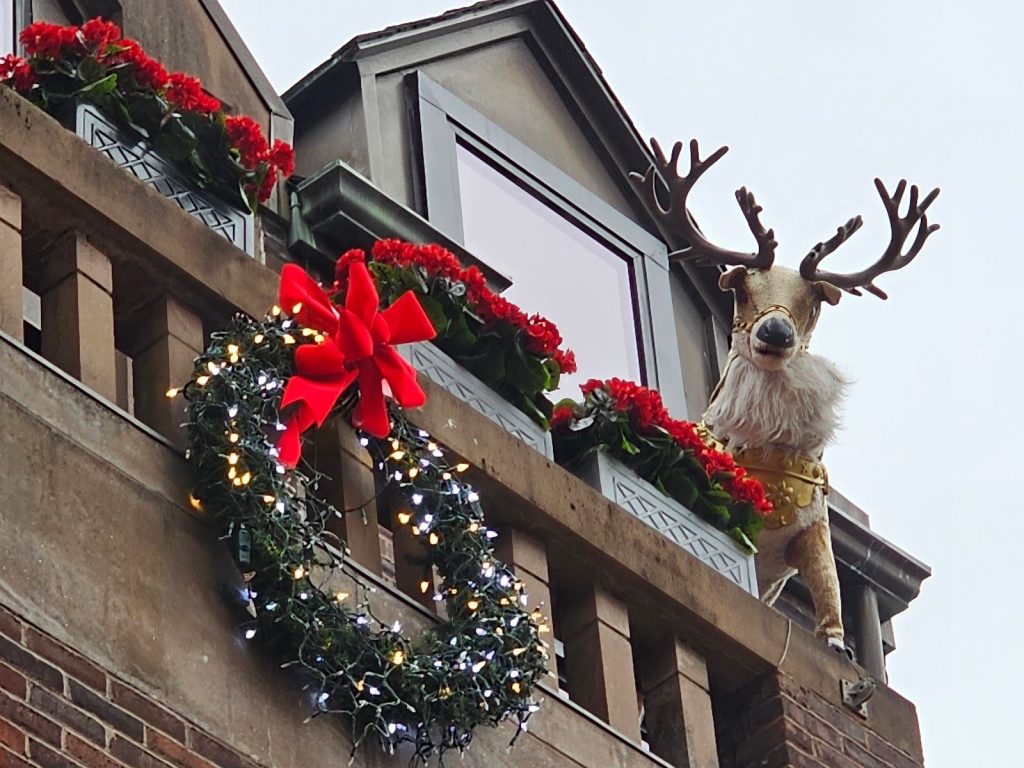
They even set up a fake reindeer for Christmas.
We can Help
Our company focuses on historic restoration more than modern building upkeep, maintenance, and construction, but our company understands both types of construction very well and a full picture well-rounded approach is needed in any niche in the construction industry. Although we focus on historic restoration, repointing, tuckpointing and historic brick repair, our company also has technical knowledge and competencies in the areas of modern and contemporary construction as well as we become one of the leaders in that area of the market today. Understanding both historic and modern or contemporary construction is useful because both aspects help understand the challenges and potential solutions for challenges in building science and construction.
We can help with a variety of historic masonry restoration needs and upkeep, from modest tuckpointing and or repointing to complicated and extensive historic masonry restoration. Infinity Design Solutions is a historic restoration specialist contractor specializing in both historic masonry restoration such as tuckpointing our repointing, and brick repair. If you have questions about the architectural details or facade of your historic building in Washington DC, reach out and say hello and if we can help we’ll be glad to assist you. You can email us or call us on the telephone at the following link: contact us here.