
Understanding Deteriorated Mortar Failure at Stone Fence Posts – Part I
A little while ago, before it got bitter cold here, we took a look at its historic masonry fence post. This type of post is installed more for aesthetic properties than functional properties. A simple wrought iron or steel or even cast iron post could suffice from a functional perspective. However, the stone fence post looks classic and sturdy, like an element of architecture that is substantial and permanent. The use of stone here also has a look of elegance and wealth. Even though many centuries ago even poor people would use stone in construction, people today recognize it as an architectural element associated with permanence and wealth.
Some of these classic historic areas, especially in urban environments, are worth a lot. Real estate is simply expensive here. However, over the many decades since their original construction, many of these elements have fallen into disrepair. Here, you can see that the iron fence is covered in rust. It isn’t yet rusted to the point of debilitation though. It can be simply saved through preventative or proactive upkeep and maintenance. Sanding and removal of the rust on this three dimensional complex shape, including details around the ornamental metals is tedious, but it can save the fence from complete deterioration and destruction.
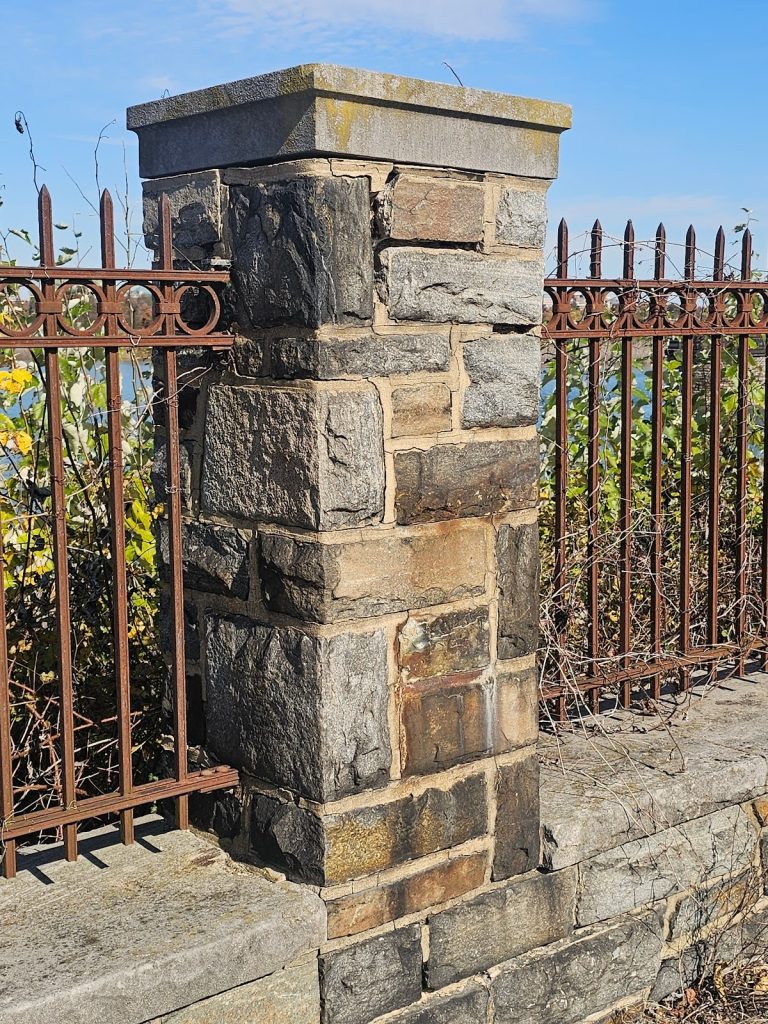
As well, the mortar joints of the stone work need to be repointed. Just like the historic brick common throughout much of the historic neighborhoods of Washington DC, old stone construction elements need upkeep and occasional repointing. Repointing is the process of removing the deteriorated mortar at the outer face of the masonry wall. In this case it’s a post, not a wall, but this post is covered in four vertical facades, similar to most brick walls and even masonry retaining walls.
When you look close at the face of the mortar joints, you can see cracks running through the face of the mortar. The stone does not show signs of significant deterioration or damage. This particular stone happens to be a type of granite. Unlike some types of sandstones and limestones, granite is extremely durable.
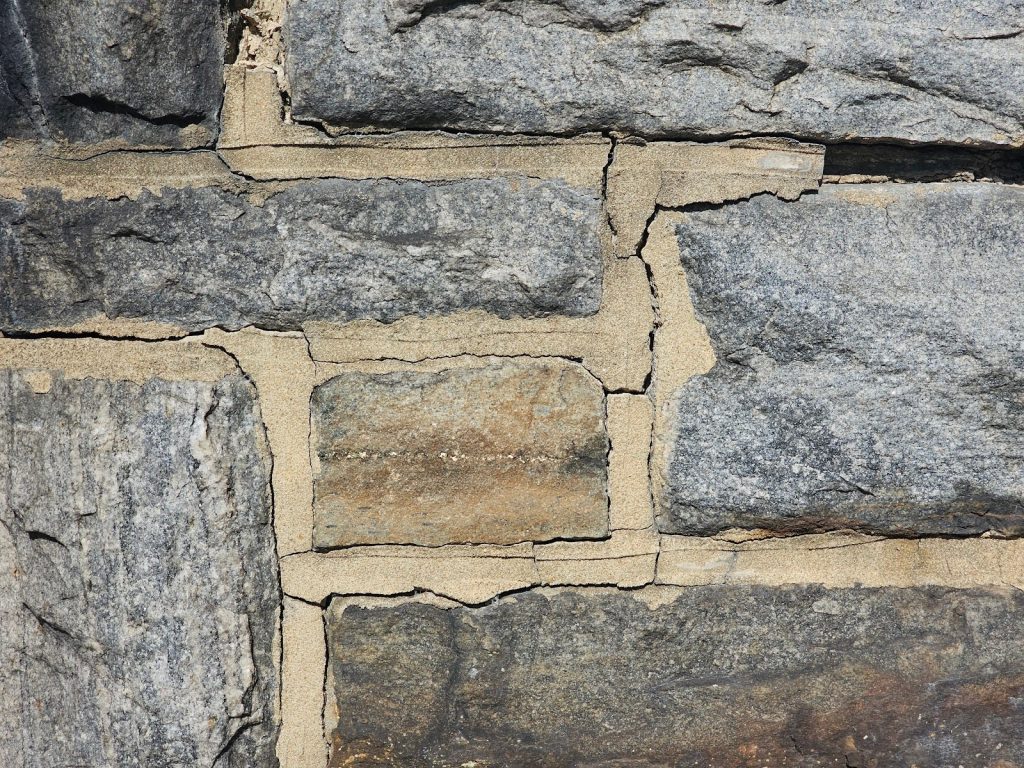
Particularly in historic brickwork, when repointing is not done at the times or points of the life cycle when most needed, it can lead to damage of the brick masonry units themselves. Essentially by not repointing properly, and on time, it can cause the bricks unnecessary damage. From the face of the struck mortar joints, shown above and below, you can see that this masonry has already at least once been repointed in its lifetime.

Often, here, in Washington DC, the original joinery at the mortar joints between rubble granite stone is often struck or finished with a grapevine or toothpaste mortar joint. Here, the original mortar joints are no longer apparent because they have since deteriorated. The repointed areas have been tooled with a different striking profile.
Today though, those areas need to be repointed again. It’s likely that they had a lifespan of over 30 to 50 years. Now though, they have deteriorated again and need to be repointed again. The mortar color is also a particular choice or selection. Instead of using a basic lime rich type mortar, they have chosen to use a tan or yellow buff color mortar. Often, the replacement options for mortar colorant looks a little bit more brilliant or bright than the original mortar. As a side note, we highly recommend prioritizing the structural elements of the mortar over the color.
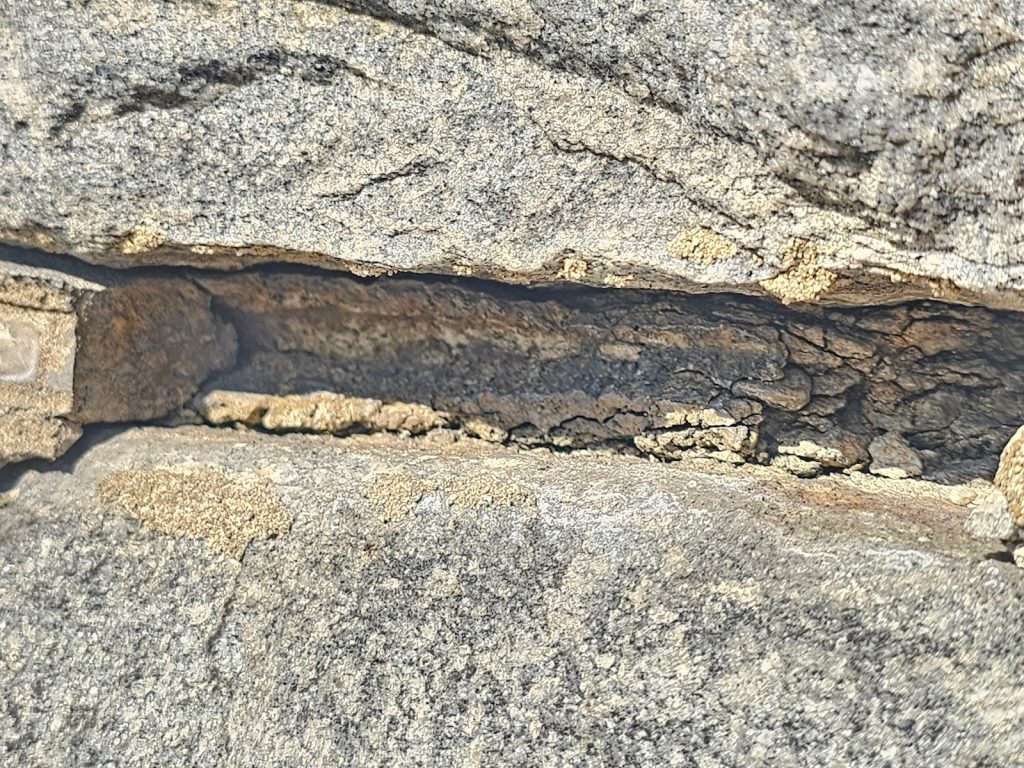
In this coming week’s blog, we’ll take a look at some other pictures from areas of deterioration of these mortar joints and discuss some of the physical properties and the elements of repointing and proper historic masonry restoration.
We can Help
Our company focuses on historic restoration more than modern building upkeep, maintenance, and construction, but our company understands both types of construction very well and a full picture well-rounded approach is needed in any niche in the construction industry. Although we focus on historic restoration, repointing, tuckpointing and historic brick repair, our company also has technical knowledge and competencies in the areas of modern and contemporary construction as well as we become one of the leaders in that area of the market today. Understanding both historic and modern or contemporary construction is useful because both aspects help understand the challenges and potential solutions for challenges in building science and construction.
We can help with a variety of historic masonry restoration needs and upkeep, from modest tuckpointing and or repointing to complicated and extensive historic masonry restoration. Infinity Design Solutions is a historic restoration specialist contractor specializing in both historic masonry restoration such as tuckpointing our repointing, and brick repair. If you have questions about the architectural details or facade of your historic building in Washington DC, reach out and say hello and if we can help we’ll be glad to assist you. You can email us or call us on the telephone at the following link: contact us here.