ClickCease
Skip to content

Formstone Coverings over Historic Brick – Part II

Formstone Coverings Over Historic Brick in DC Town

This past week we looked at examples of cementitious type formstone coverings applied directly on top of historic brick buildings. This formstone fad was really interesting, as a part of architectural history. It was one of the first times that fake masonry was made in mass production and distribution, in all of human history. Since then there’s been tons of different types of fake masonry but we don’t really understand it.

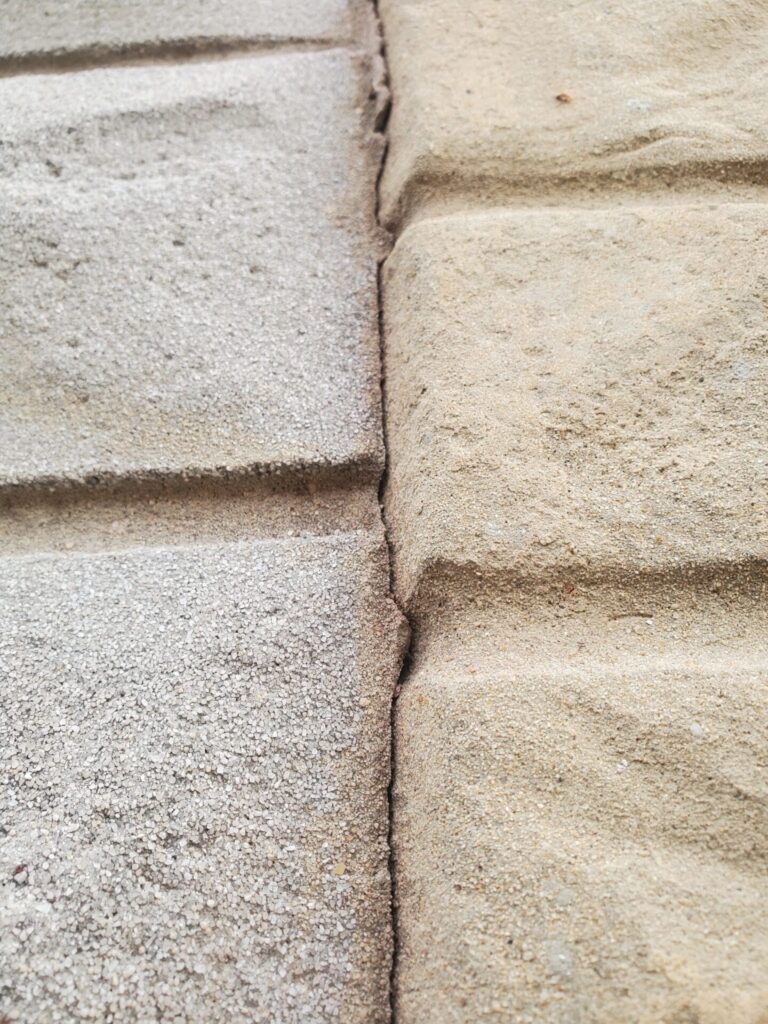
The picture below shows the area where the two buildings meet and you can see there is a difference between the faces of these buildings.  Not only do they not attempt to make the formstones faux masonry line up at their respective course joints, the face of one of the buildings also projects more horizontally, without actual reason.

We can’t really just easily tell if the brick substrate was built out of alignment as well. It’s doubtful though. Generally, even in historic times, people had a bit better workmanship than they do today. The middle of the 20th century was a time of great economic decline concentrated in urban areas. We’ve talked about intentionally manufactured or designed urban blight in the past.

The history has many details.  You could even make an argument that that history is debated more now than ever. Apparently, we are in a political phase of intentional misinformation to erase parts of our collective understanding of our own history. Although the realm of the fourth estate may naturally seem limited to politics and economics, it has many implications that reach even into architecture.

Generations ago, while other cities were building subway systems, DC instead opted for a streetcar system.  In a nearby little city to the north where formstone was actually invented, they had a streetcar system that was intentionally dismantled to benefit the titans of the automobile and petroleum industries.  We happen to again be in a time of collusion between the most powerful to use our collective assets against us.  Things like this hurt, not just our future, but they also hurt the investment and development into the systems that make cities thrive.

In the middle of the 20th century, property values decreased against typical inflation. In fact, just a generation ago, homes in Washington DC were actually worth less than their counterparts out in the suburbs. The trend began reversing about 30 years ago. Before that time, shoddy work in construction in Washington DC was prolific.

That means that the overall timeline through history went through a phase where Washington DC buildings such as single-family row homes or even two unit row homes were built with decent quality and then about a half of a century into their life cycle they were only renovated with mostly low quality. Then about roughly 100 years after the original construction, they began to have a higher economic value, again.
This past week we looked at examples of cementitious type formstone coverings applied directly on top of historic brick buildings. This formstone fad was really interesting, as a part of architectural history. It was one of the first times that fake masonry was made in mass production and distribution, in all of human history. Since then there's been tons of different types of fake masonry but we don't really understand it. The picture below shows the area where the two buildings meet and you can see there is a difference between the faces of these buildings. Not only do they not attempt to make the formstones faux masonry line up at their respective course joints, the face of one of the buildings also projects more horizontally, without actual reason. We can't really just easily tell if the brick substrate was built out of alignment as well. It's doubtful though. Generally, even in historic times, people had a bit better workmanship than they do today. The middle of the 20th century was a time of great economic decline concentrated in urban areas. We've talked about intentionally manufactured or designed urban blight in the past. The history has many details. You could even make an argument that that history is debated more now than ever. Apparently, we are in a political phase of intentional misinformation to erase parts of our collective understanding of our own history. Although the realm of the fourth estate may naturally seem limited to politics and economics, it has many implications that reach even into architecture. Generations ago, while other cities were building subway systems, DC instead opted for a streetcar system. In a nearby little city to the north where formstone was actually invented, they had a streetcar system that was intentionally dismantled to benefit the titans of the automobile and petroleum industries. We happen to again be in a time of collusion between the most powerful to use our collective assets against us. Things like this hurt, not just our future, but they also hurt the investment and development into the systems that make cities thrive. In the middle of the 20th century, property values decreased against typical inflation. In fact, just a generation ago, homes in Washington DC were actually worth less than their counterparts out in the suburbs. The trend began reversing about 30 years ago. Before that time, shoddy work in construction in Washington DC was prolific. That means that the overall timeline through history went through a phase where Washington DC buildings such as single-family row homes or even two unit row homes were built with decent quality and then about a half of a century into their life cycle they were only renovated with mostly low quality. Then about roughly 100 years after the original construction, they began to have a higher economic value, again. That steep decline in value and then drastic increase again means that the architectural elements in place today may be a hodgepodge of decent quality but very old elements mixed with terribly low quality modifications and cheap renovations. Today again,renovations and improvements have a very high return on investment for good quality improvements. Our company happens to focus on historic masonry restoration and we see some of the highest ROI investments that can be made to a building, in that discipline of construction. In this coming week we'll look at some low quality retrofit type elements at a historic masonry facade covered with formstone. To properly maintain, repair, and care for these historic buildings, a knowledge, interest and understanding of historic building principles is required. Here in Washington DC, historic masonry buildings are extremely expensive and the amount of financial loss caused by improper repointing and low quality construction is staggering. However, in addition to the direct financial value of the property, there is also a cultural loss when historic buildings are damaged. By comparison, consider neighboring poor cities, when historic buildings are damaged, it's not just the loss of value to the property owner, there's also a loss to all inhabitants and visitors of a city, present and future, who care about architecture, history, and culture. We encourage all of our clients, and all readers of this article and to our blog in general, to prioritize the historic built environment of Washington DC and neighborhoods such as Capitol Hill, Dupont Circle, and Georgetown and become educated on on the difference between proper historic preservation versus improper work which leads to significant damage to the historic fabric of a building. From a conservation and preservation perspective, several approaches can be taken to improve conditions related to deteriorated historic brick masonry. Primarily, lime mortar brick joints and low temperature fired soft red clay bricks should be inspected and checked on a routine maintenance schedule, either seasonally or at least annually. If brick masonry is kept in good condition, the life of embedded wood elements can be significantly extended. Hire a professional contractor which specializes, understands and appreciates historic construction elements and buildings.

That steep decline in value and then drastic increase again means that the architectural elements in place today may be a hodgepodge of decent quality but very old elements mixed with terribly low quality modifications and cheap renovations. Today again,renovations and improvements have a very high return on investment for good quality improvements.

Our company happens to focus on historic masonry restoration and we see some of the highest ROI investments that can be made to a building, in that discipline of construction.
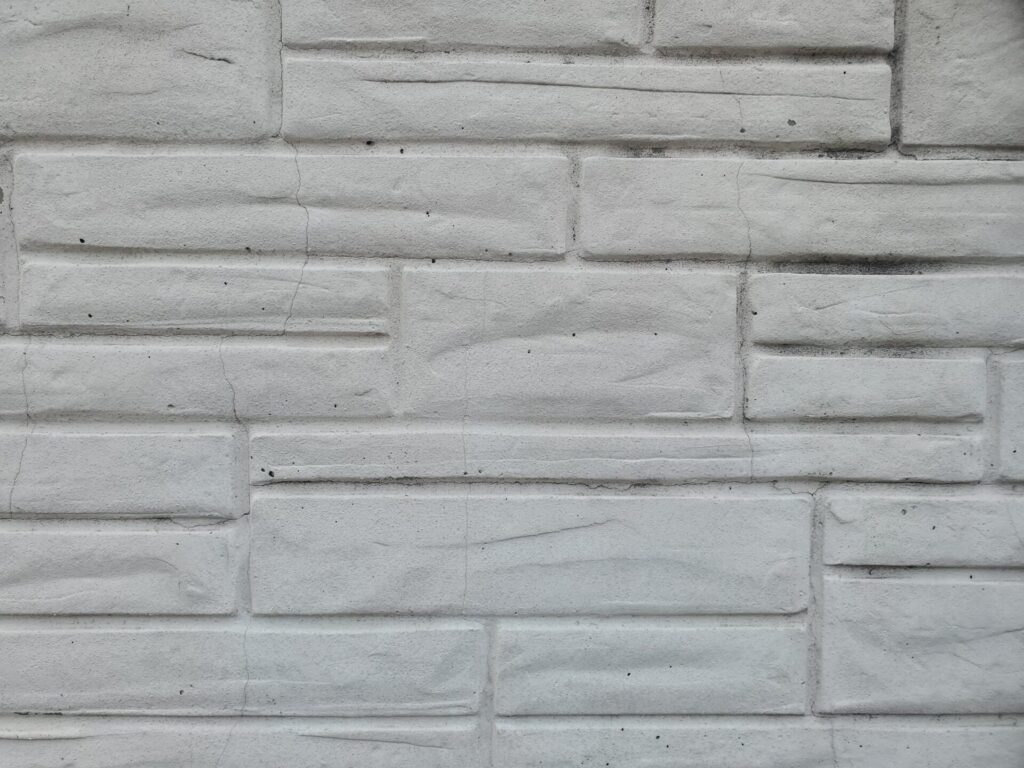
Close-up of formstone applied over historic brick masonry

In this coming week we’ll look at some low quality retrofit type elements at a historic masonry facade covered with formstone.

To properly maintain, repair, and care for these historic buildings, a knowledge, interest and understanding of historic building principles is required.  Here in Washington DC, historic masonry buildings are extremely expensive and the amount of financial loss caused by improper repointing and low quality construction is staggering. However, in addition to the direct financial value of the property, there is also a cultural loss when historic buildings are damaged.

By comparison, consider neighboring poor cities, when historic buildings are damaged, it’s not just the loss of value to the property owner, there’s also a loss to all inhabitants and visitors of a city, present and future, who care about architecture, history, and culture.

We encourage all of our clients, and all readers of this article and to our blog in general, to prioritize the historic built environment of Washington DC and neighborhoods such as Capitol Hill, Dupont Circle, and Georgetown and become educated on on the difference between proper historic preservation versus improper work which leads to significant damage to the historic fabric of a building.

From a conservation and preservation perspective, several approaches can be taken to improve conditions related to deteriorated historic brick masonry. Primarily, lime mortar brick joints and low temperature fired soft red clay bricks should be inspected and checked on a routine maintenance schedule, either seasonally or at least annually.

If brick masonry is kept in good condition, the life of embedded wood elements can be significantly extended. Hire a professional contractor which specializes, understands and appreciates historic construction elements and buildings.

FINANCING AVAILABLE CLICK HERE