
Repointed Historic Brick Masonry and Mortar Compatibility
Here on our website and in our blog we look at a handful of different parts of the historic masonry restoration trade. Some of the things that we focus on are the types of damage and defects that happen slowly over time through natural deterioration. We also focus on some of the items related to best practices. Today we’re going to look at walls that have been repointed and repointed well. Part of the quality required for historic masonry restoration is related to understanding the technical details and the engineering behind mortar and mortar compatibility. One of the first steps is to understand the components and characteristics of the existing mortar.
One type of existing mortar may be very different from another. Sometimes they range significantly, not just with subcomponents but also with characteristics of structural performance qualities.
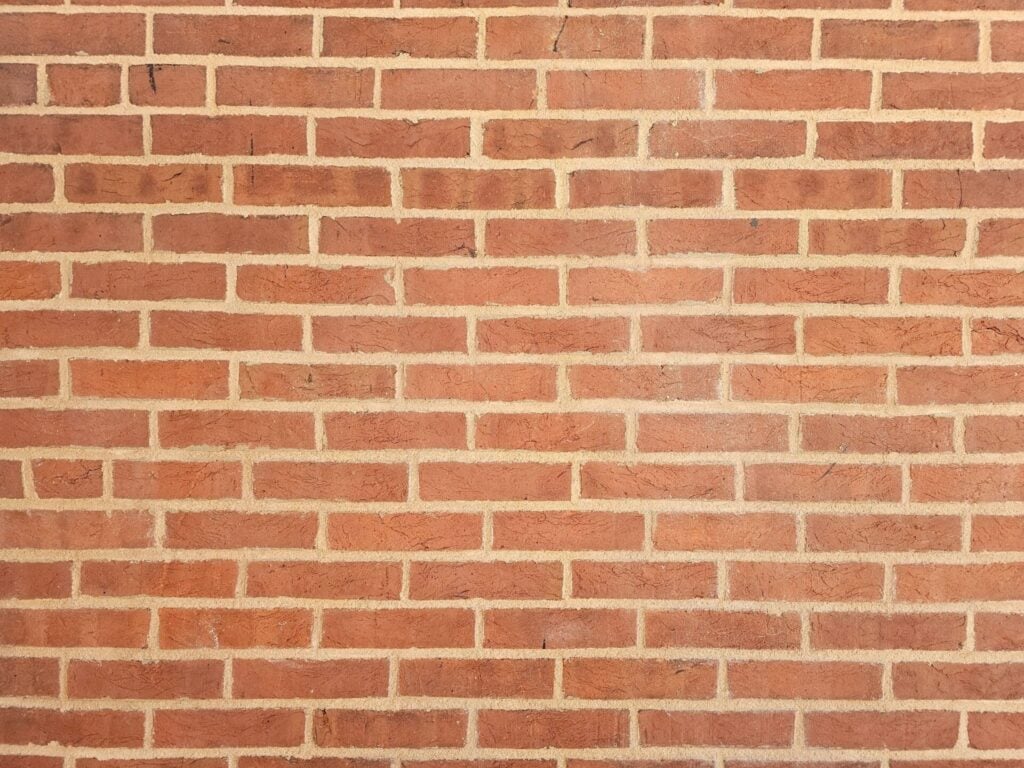
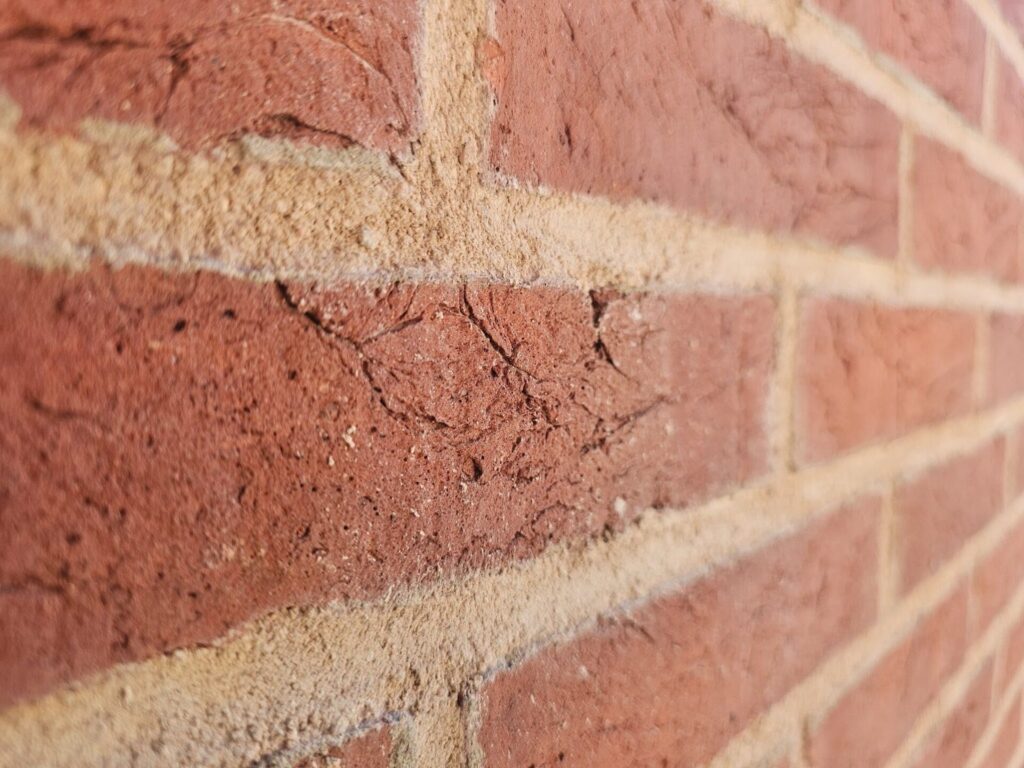
The brick wall below is a simple running bond, built with a historic brick, that’s about as simple as you can get. When you look closely though there’s some differences between this and a more contemporary or more modern facade of historic bricks. Historic bricks have an inherent type of sensitivity to modern mortars and modern treatments. For example, even with just simply washing the brick, using a typical muriatic solution can damage this brick. You may notice there are more crevices and tiny fissures in the surface of the brick than many types of contemporary or modern bricks. You can see this more closely in the second picture below.
Not only is the brick a bit more sensitive throughout because of lower semi-fitreousness, it also has higher porosity and a overall texture with more surface because of these small fissures at the surface. This means that not only is the brick more sensitive in general but acids will enter deeper into the surface even without the higher level of sensitivity these elements can all lead to accelerated deterioration of the brickwork. When treated well and proactively managed, historic brick facades can last for hundreds and hundreds of years.
Most of the historic brick walls here in Washington DC have already been here for over 100 years. To have them last for another hundred or many hundreds of years, they need to be well maintained and or proactively restored.
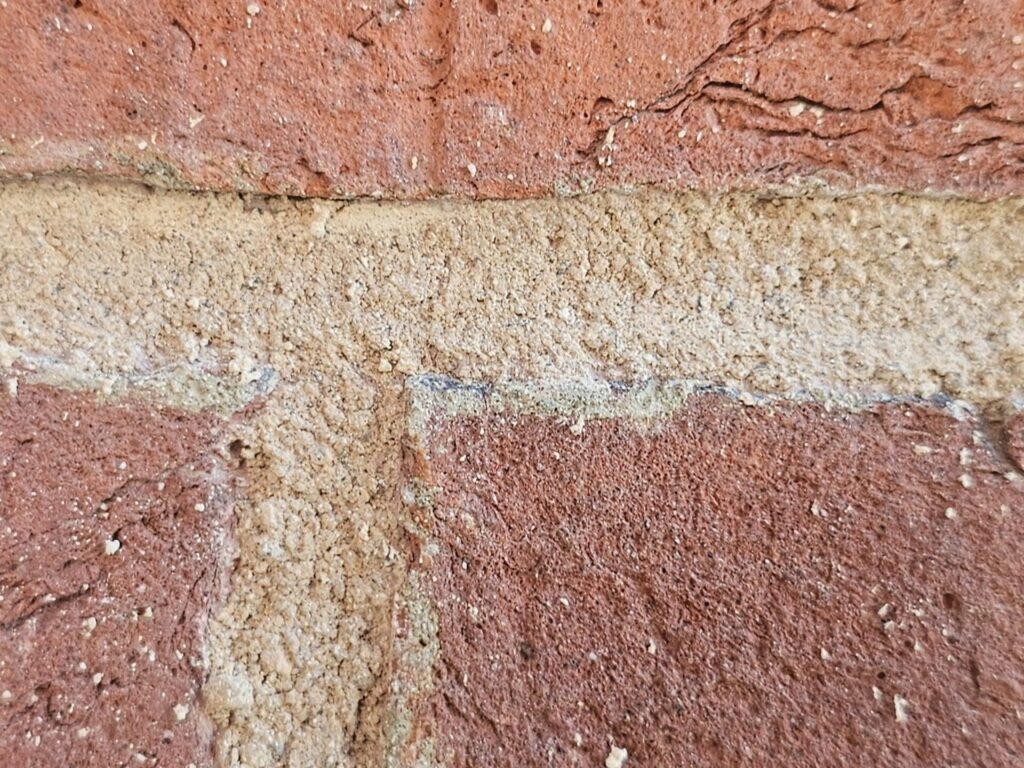
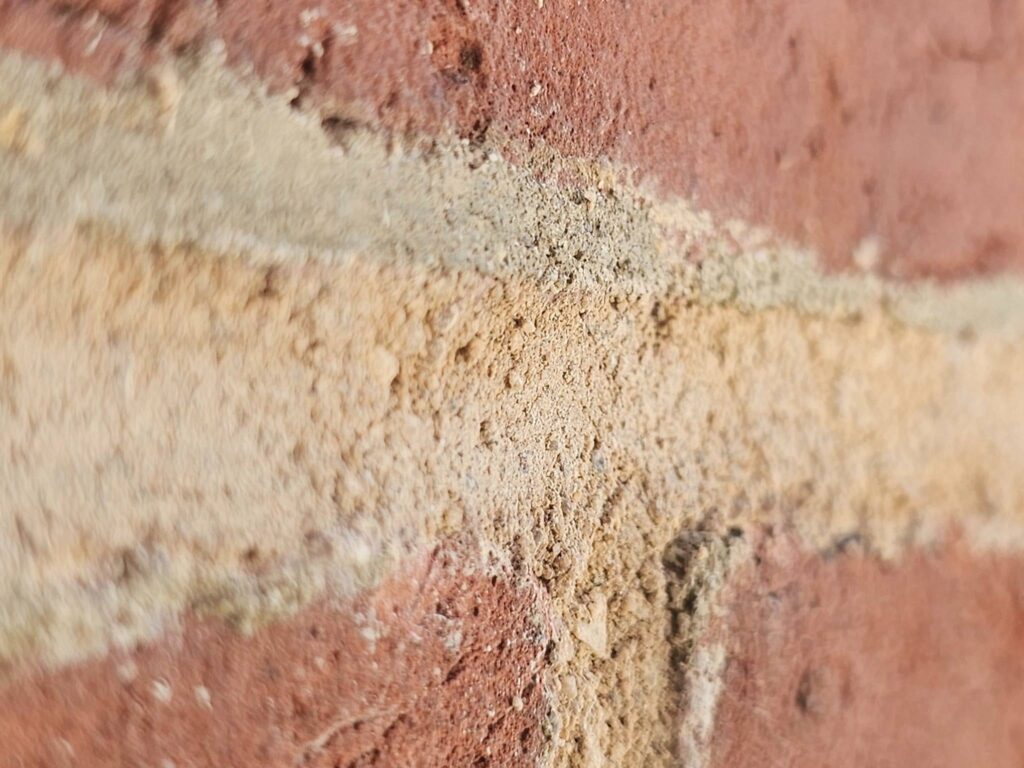
The picture below shows the close-up view of a recently replaced mortar joint. These mortar joints were repaired and the mortar at the outer face of the wall was replaced through a repointing process. This not only includes the addition of compatible mortar at the surface of the wall but it also includes removing remnants of partially deteriorated mortar deeper into the surface of the wall. If mortar is simply applied at the outer face, it will not have an embedment deep enough into the key of the wall to resist fracture and/or delamination.
For the repointing process’ mortar to work well from a functional perspective, it doesn’t necessarily need to be applied painstakingly neatly. Here though, the mortar has been applied so carefully that even without a post application wash, the mortar almost looks perfectly neat into the lines of the mortar joint. In most cases, after application, a gentle low acid restoration wash will be applied. To remove the thin shadow-like marks where mortar and or tools touched the wall without the actual application of mortar.
Even when checking carefully through the quality control process, when you find spots like this, shown in the next picture below, where the mortar has come on top of the face of the brick, this is not an actual problem. This will be corrected because it’s not an actual buildup of mortar, it’s merely a spot of contact of the hydrated mortar that left a thin residue on the surface of the brickwork. These marks of excess mortar will be removed in the cleaning. (We will show pictures of that post clean up this coming week.)
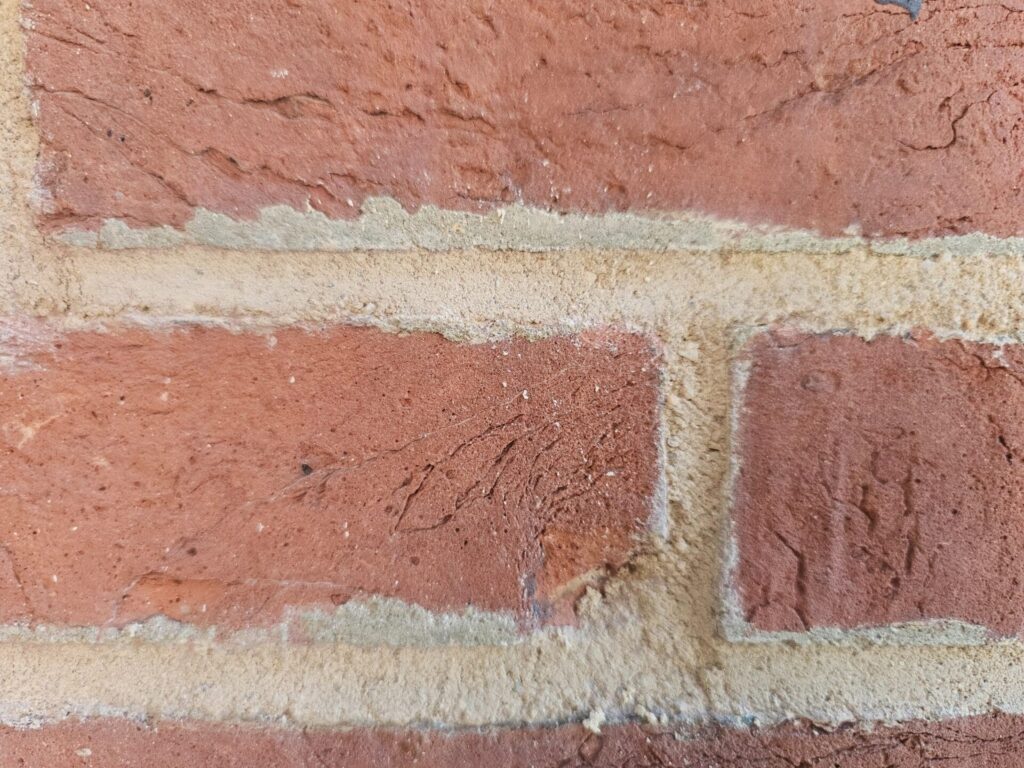
The next picture below though shows a different circumstance. It’s important to be able to understand the differences when doing the work because misunderstanding can lead to the wrong type of outcome. Here, the mortar has been applied too thickly, past the edge of the mortar joint and needs to be removed with actively or aggressively cleaning with rags or tough sponges before fully curing. If cleaned well before the mortar is fully cured, there is a bit of a window where cleaning itself will work without destructive removal.
One of the positive sides of a lime rich or lime-based mortar is that it cures very slowly. That can be a downside from other perspectives, but with proactive cleanup it’s a positive.
We can Help
Our company focuses on historic restoration more than modern building upkeep, maintenance, and construction, but our company understands both types of construction very well and a full picture well-rounded approach is needed in any niche in the construction industry. Although we focus on historic restoration, repointing, tuckpointing and historic brick repair, our company also has technical knowledge and competencies in the areas of modern and contemporary construction as well as we become one of the leaders in that area of the market today. Understanding both historic and modern or contemporary construction is useful because both aspects help understand the challenges and potential solutions for challenges in building science and construction.
We can help with a variety of historic masonry restoration needs and upkeep, from modest tuckpointing and or repointing to complicated and extensive historic masonry restoration. Infinity Design Solutions is a historic restoration specialist contractor specializing in both historic masonry restoration such as tuckpointing our repointing, and brick repair.
If you have questions about the architectural details or facade of your historic building in Washington DC, reach out and say hello and if we can help we’ll be glad to assist you. You can call us at (202) 800-1751 or contact us here.