
Masonry cavettos and ogees shown in traditional stone molding detail
This past week, we started looking at cavetos and ogees used in masonry construction. Similar types of moldings and profiles are also used in wood trim and in woodworking. There’s also similar types of elements used in high-end historic interiors, set in plaster work. We talked a little bit about the different names for moldings in the families of trims, this past week. We didn’t really talk though about the etymology of the term moldings.
Originally, I thought it might be related to the plaster moldings that were run on a guide with a blade to fit the lumped plaster into a specific shape. Those shapes are very similar to the range of masonry trims that we see on so many historic architectural facades here in Washington DC. The actual etymology of the word, I learned after looking it up, actually comes from latin about shaping and measuring, not about necessarily forming it into shape through a cast, or a die, but instead more about fitting it into shape by its dimensions. So, I was wrong to guess it might be related to the concept of cast and or plaster shaping with a guide.
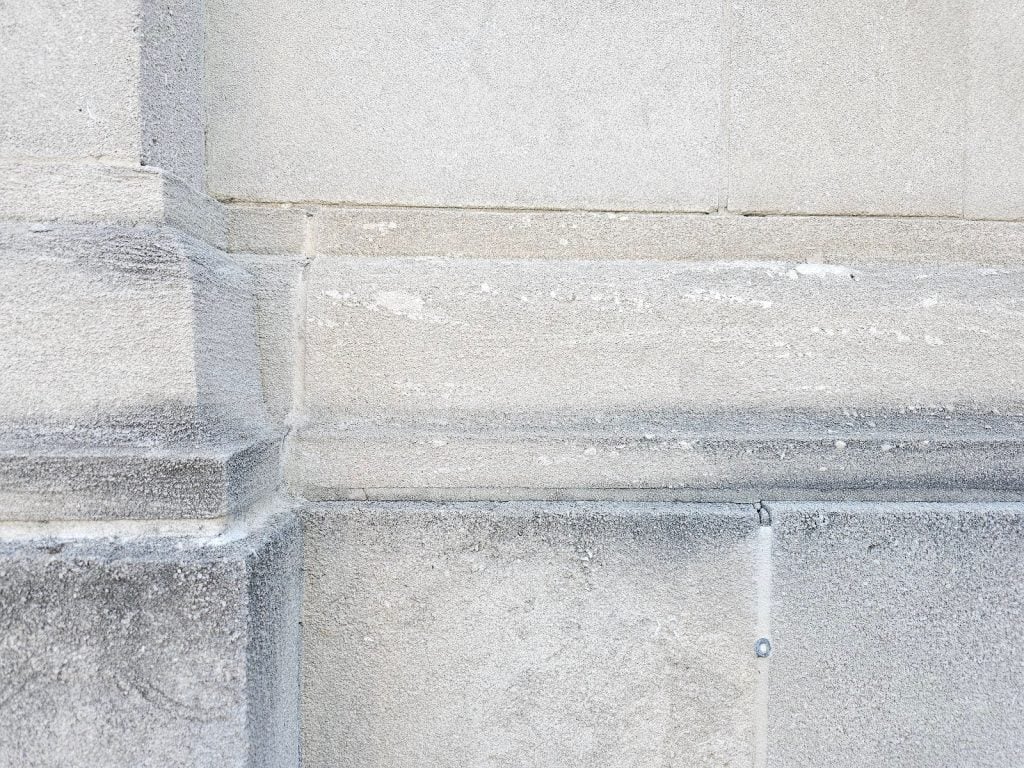
Sandstone moldings are shown in the picture below. These particular details are at the base or plinth of an exterior facade. The wall base at the area underneath the column is large and therefore protrudes away from the remainder of the facade of the building. This particular design combines both of these two forms, both cavetto and ogee.
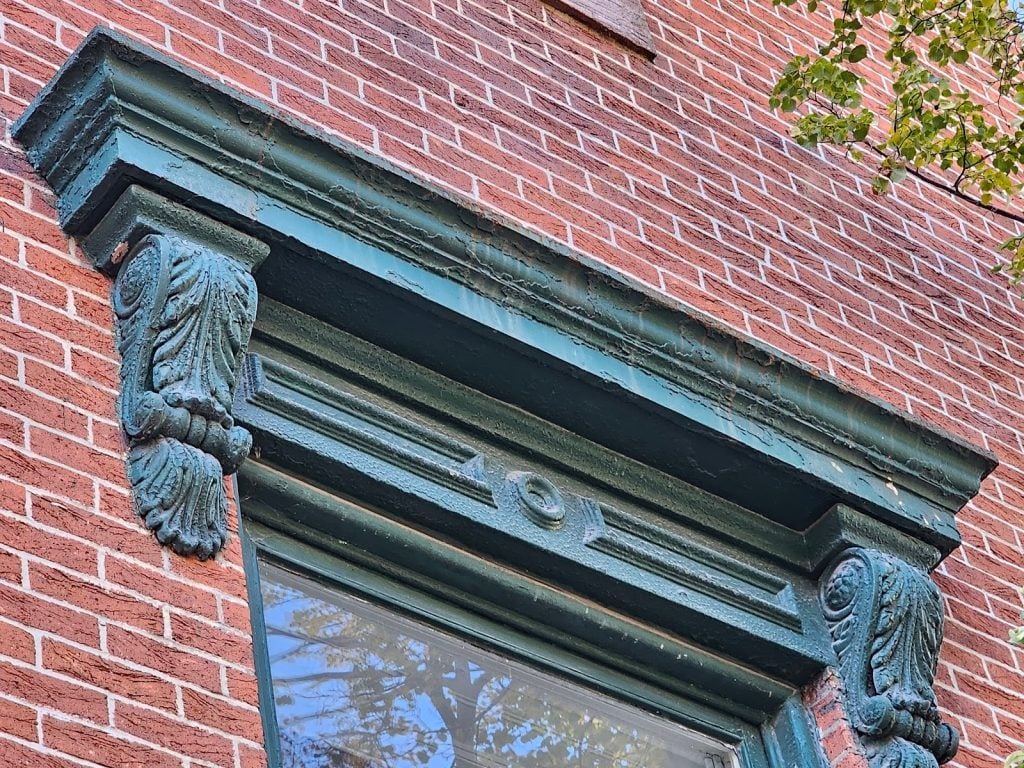
Even though our focus is almost entirely on the masonry elements, both brick and or stone, we also work on facades in general and therefore also pay attention to some of the other details. A particularly good example of a non-masonry exterior window trim detail follows in the next picture below. Here we are showing a water table above this window. This is an Italianate window hood.
The water table essentially provides a little bit of cover for a window opening. This helps the wooden architectural elements last longer. It’s essentially helping preserve them by keeping the majority of rain, not driven by wind, off of the window and associated details. These architectural moldings could be made from a variety of materials, both wood, and masonry elements, and or in this case, sheet metal. These particular details were original to the house, over 120 years ago.
These details are like a microcosm of the type of details you might find at the facade of a building. There’s a cornice at the top, corbels on the side which run down vertically underneath the cornice, and a horizontal header above the window, similar to a freize board that you might find at the top of a historic masonry facade.
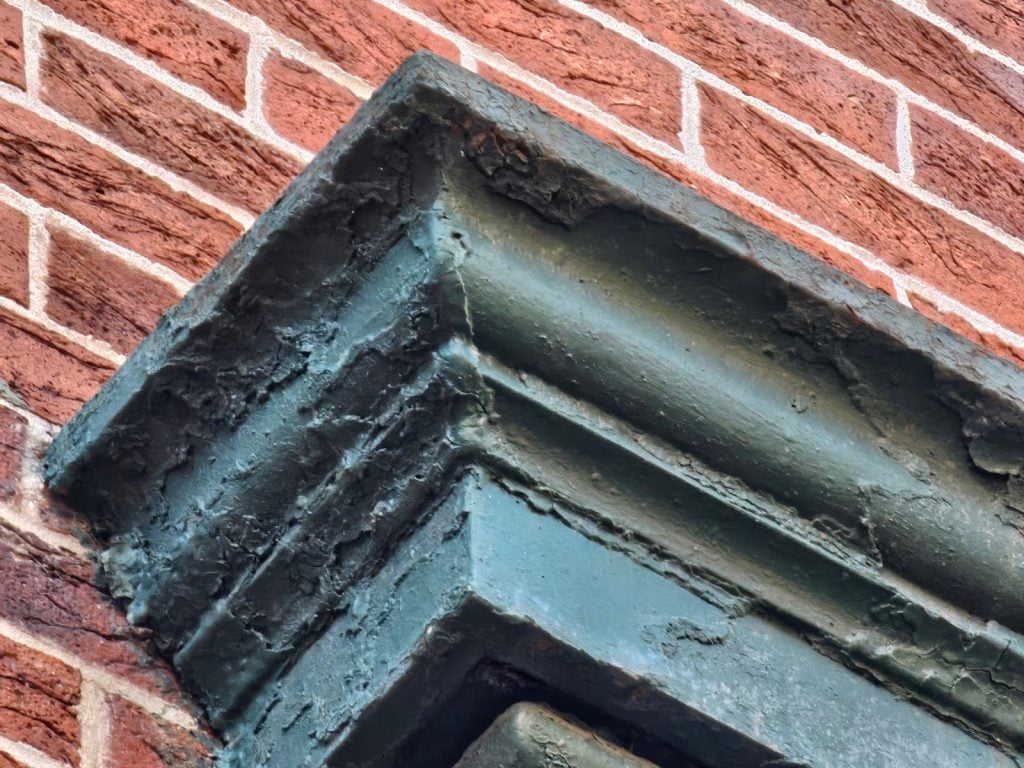
Even though the paint at these architectural moldings is in bad shape, essentially flaking and peeling, there aren’t signs of significant rust and oxidation. With a ferrous metal trim, we generally expect to see some amount of oxidation and particularly coincident with peeling paint. Even though this particular architectural detail is over 100 years old, it’s not beyond the point where it can’t be protected and restored. A bit of attention and proper stewardship can keep this building and these artificial details in decent shape for many decades to come.
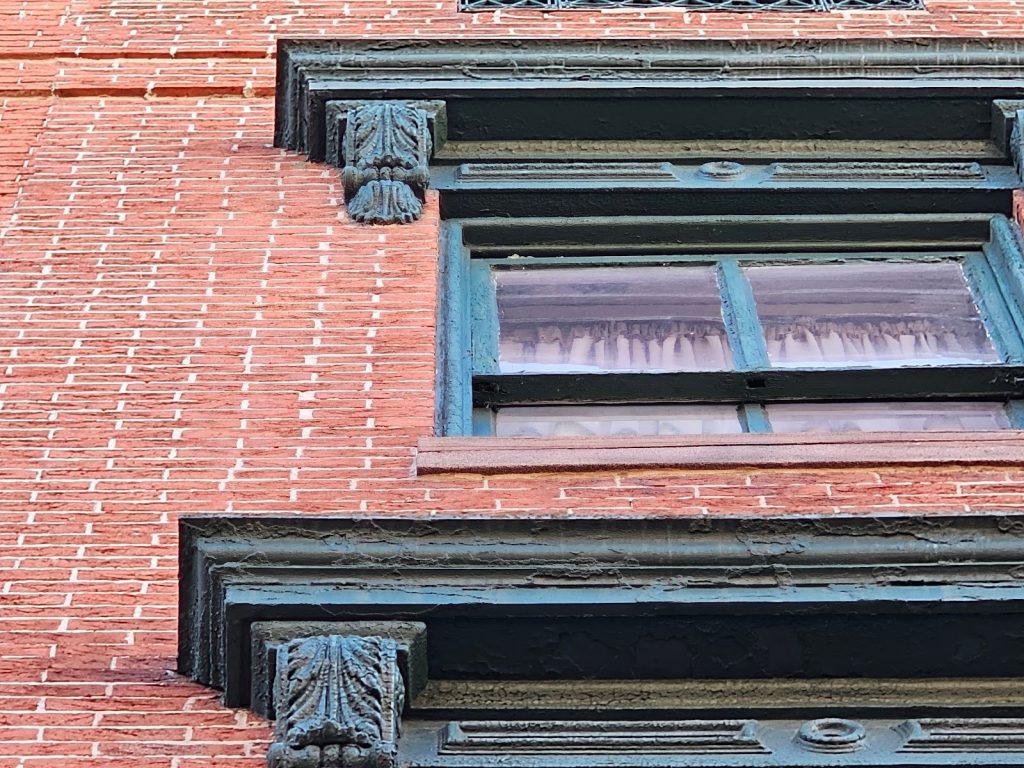
Earlier, we talked about how projecting trims can provide protection for architectural elements. Here, as you can see in the next picture below, there’s a projection of roughly six inches away from the facade. By having that small water table on top of this architectural detail, it lets water run off the face of the building onto that projecting ledge and then from there it runs downward. It doesn’t mean that wind wouldn’t blow rain water back towards the window as it drips off the ledge, but in most precipitation events without heavy winds, it would help a lot.
We can Help
Our company focuses on historic restoration more than modern building upkeep, maintenance, and construction, but our company understands both types of construction very well and a full picture well-rounded approach is needed in any niche in the construction industry. Although we focus on historic restoration, repointing, tuckpointing and historic brick repair, our company also has technical knowledge and competencies in the areas of modern and contemporary construction as well as we become one of the leaders in that area of the market today. Understanding both historic and modern or contemporary construction is useful because both aspects help understand the challenges and potential solutions for challenges in building science and construction.
We can help with a variety of historic masonry restoration needs and upkeep, from modest tuckpointing and or repointing to complicated and extensive historic masonry restoration. Infinity Design Solutions is a historic restoration specialist contractor specializing in both historic masonry restoration such as tuckpointing our repointing, and brick repair. If you have questions about the architectural details or facade of your historic building in Washington DC, reach out and say hello and if we can help we’ll be glad to assist you. You can email us or call us on the telephone at the following link: contact us here.