
Concave Brick Mortar Joints vs Historic Flush Joints
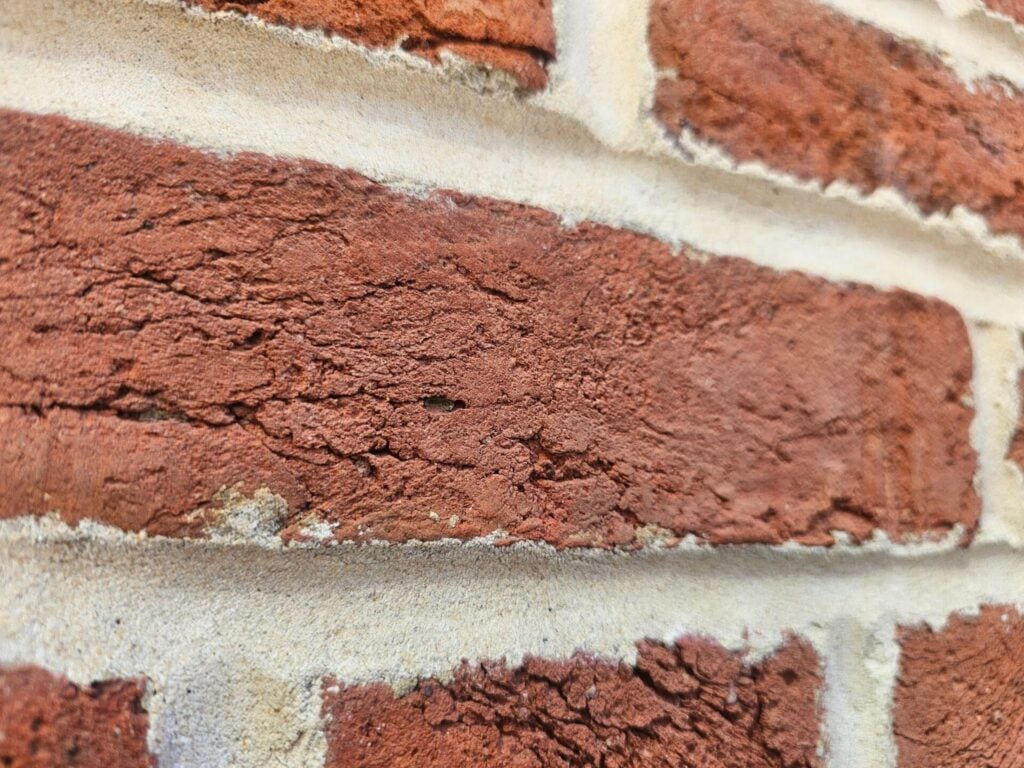
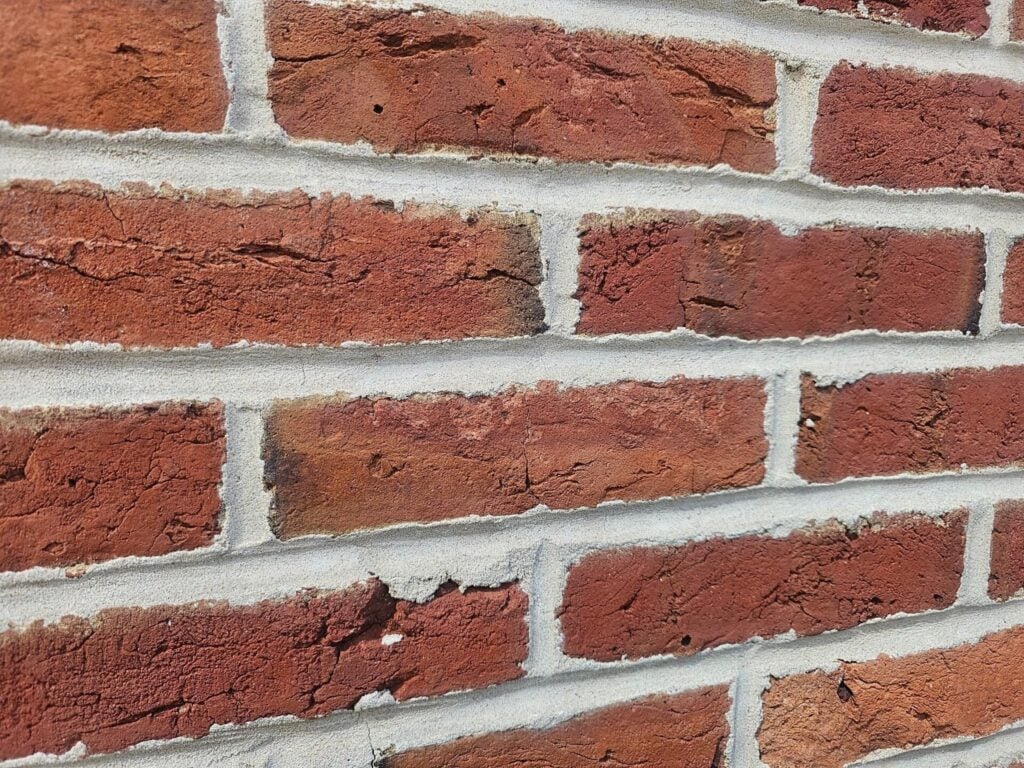
This past week we looked at a bunch of different relatively newly restored and refurbished brick mortar joints. Those mortar joints were not that different than the ones shown in here today the pictures below. One of the big differences though is that the mortar is made with different components. At a glance, it might look similar to the untrained eye. It’s actually very different though.
The historic mortar is made with a higher degree of lime and has a much lower compressive strength resistance. Lower compressive resistance, at a glance, might seem worse, but it’s actually better because it’s more compatible with the existing historic masonry. Better compatibility really matters because when you have incompatible materials you can actually damage and break the bricks apart.
One of the other big problems with the mortar used here in this example today is that the mortar is a much lighter gray color than the traditional historic mortar. The historic mortar didn’t use the portland cements that are commonly used in concrete and in contemporary or modern mortar today.
People often mix up and confuse the words mortar, cement, and concrete. They sound very similar, and they kind of have some similarities but there are actually distinctions between them. They also often confuse other words, such as the word mix. The word mix means to basically combine different elements. And you can use that word anyway you want in the English language if you’re using it to follow the definition. Specifically in the construction industry though the word mix is used for certain things like pre-blended materials.
Often because much of the industry speaks Spanish and the word ‘mezcla’ is used to refer to mortar, in general, not just pre-manufactured premixed materials, the word will be translated from Spanish to English without clarification or qualification. In English, when we talk about a pre-mix, we’re talking about things that are presorted and pre-measured in a manufacturing facility or factory before they’re sold. (In some rare cases, small scale pre-mixes could also be made in smaller shops) Then when sold and transported they’re normally shipped in small bags instead of truckloads. In English, the word means something specific, within the industry.
But when translated from Spanish by many of the people who work in the industry here in the United States, it might become very confusing because they refer to mortars, cements, and even concrete sometimes as mixes. That isn’t how the word should be used though in the industry using the English root. Since there are many English speakers working with many non-native English speakers we seem to hear the words misused or confused very often. It’s nothing really wrong with it.
People’s understanding is normally only slightly complicated or confused by the misuses of the words. However, when you’re trying to communicate about the technical nuances, we find that the language is very important to understand well because the differences and the details need to be well understood to avoid the type of confusion that changes the outcome or effect of the design or the work. A bit of added clarity can simplify so much.
The core of this issue is that people shouldn’t be using premixes for historic repointing. Instead they should be custom blending all the materials to a specific ratio that is not in line with mass manufactured materials. Mixing up the language and the technical terminology leads to actual mistakes in construction.
Mortar generally consists of a type of cement. That cement can either be portland, lime, or even other materials. Mortar is different than concrete though because it generally behaves in different ways. Concrete will often have an aggregate such as crushed rock. Concrete can generally be installed in very thick applications.
Concrete generally won’t work well when applied very thinly. Even with small aggregate removed, when concrete ratios are used for coating or mortar applications, those applications may delaminate at an accelerated rate. Cement is different but related to both mortar and concrete. Cement is generally a subcomponent found inside of both mortar and concrete. Hopefully this description clarifies the words a bit because they’re so often conflated, confused, and misused that their misuse is almost more common than their proper use.
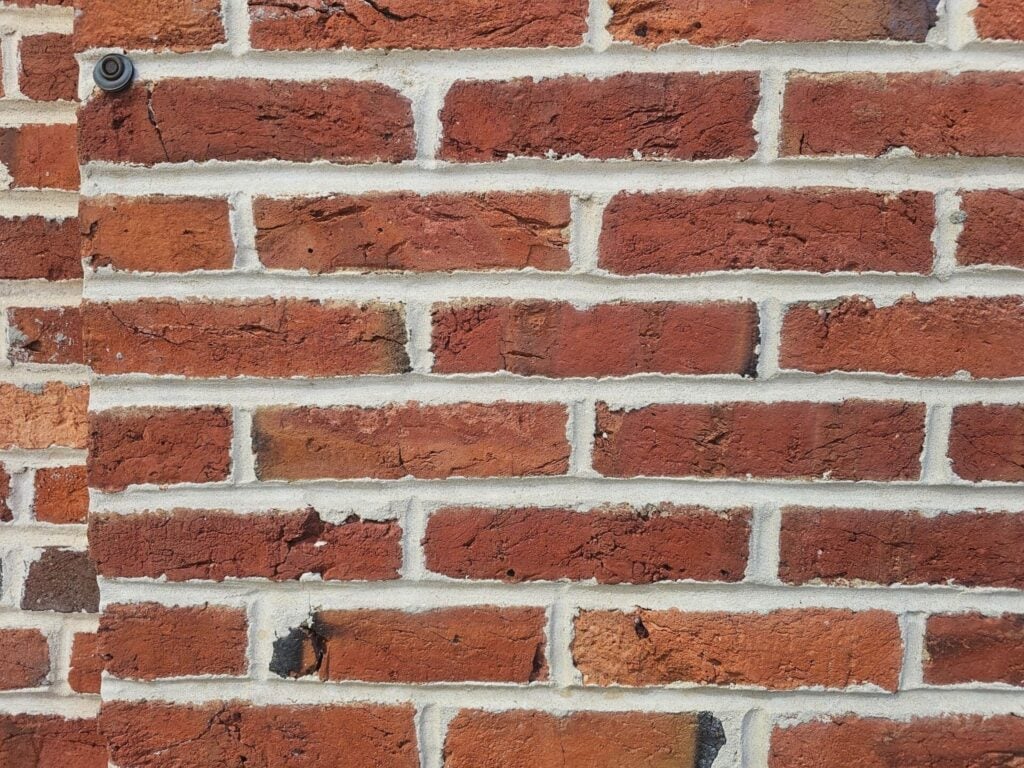
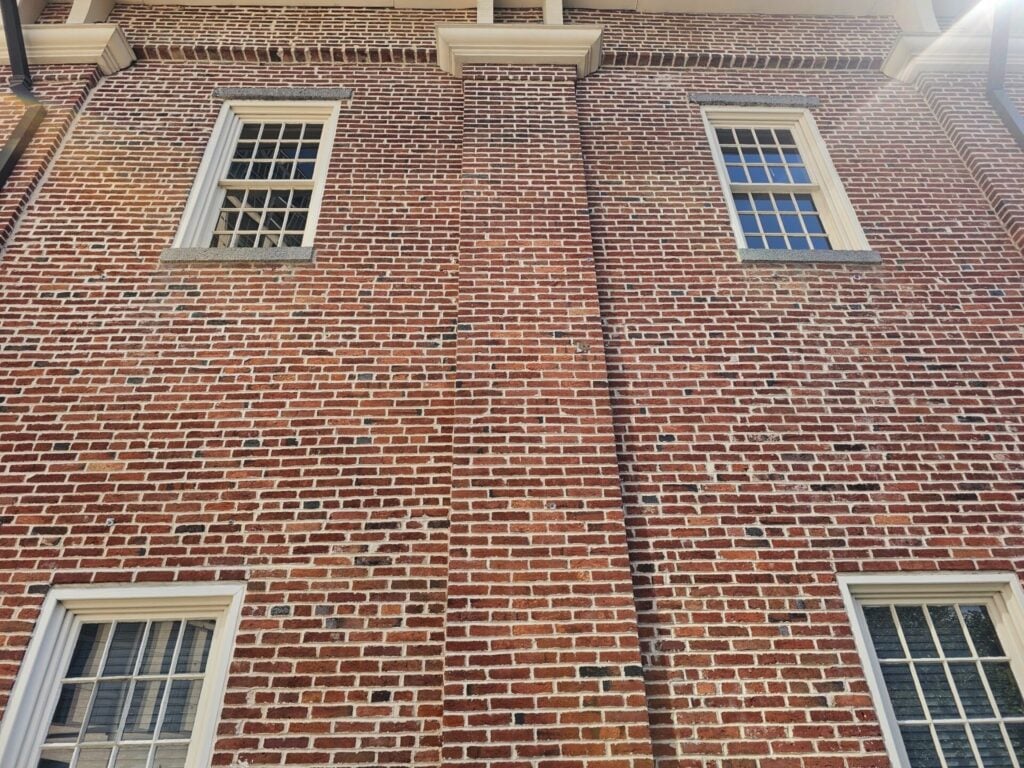
At a glance, across a large building facade, the small details and differences between the concave mortar joints and the more accurate historic flush mortar joints may not be discernible. When you get close though, you can see the difference and we recommend a flush mortar joint generally be used because it’s more accurate to the original historic mortar. We generally think it is perfectly fine to use a concave motor joint in modern masonry but it isn’t really accurate in historic masonry, in our opinion.
We can Help
Our company focuses on historic restoration more than modern building upkeep, maintenance, and construction, but our company understands both types of construction very well and a full picture well-rounded approach is needed in any niche in the construction industry. Although we focus on historic restoration, repointing, tuckpointing and historic brick repair, our company also has technical knowledge and competencies in the areas of modern and contemporary construction as well as we become one of the leaders in that area of the market today. Understanding both historic and modern or contemporary construction is useful because both aspects help understand the challenges and potential solutions for challenges in building science and construction.
We can help with a variety of historic masonry restoration needs and upkeep, from modest tuckpointing and or repointing to complicated and extensive historic masonry restoration. Infinity Design Solutions is a historic restoration specialist contractor specializing in both historic masonry restoration such as tuckpointing our repointing, and brick repair. If you have questions about the architectural details or facade of your historic building in Washington DC, reach out and say hello and if we can help we’ll be glad to assist you. You can email us or call us on the telephone at the following link: contact us here.