
Cast-In-Place Concrete Foundations: Structural Performance and Issues
This past week, we began looking at a series of foundations that were built with cast in place concrete. Here, in Washington DC, particularly in historic row homes made from historic common brick, many of the foundations were also made with a similar type of common brick. There are anomalies and exceptions. In some cases, here and historic neighborhoods of Washington DC, we will find foundations made from granite stone and a variety of a handful of different materials.
Granite and most stone foundations which still remain intact today, were mostly built very strong. Generally though they were built with a rubble type of masonry instead of the ashlar brick that we are more familiar with, used so prolifically in building facade construction about 100 to 150 years ago.
Many of these surviving foundations are generally still in good condition, even after being exposed to the elements for over 100 years. In many cases, those vertical facade walls will need replacing without proper maintenance. Without repointing, deterioration of the mortar can lead to deterioration or failure of the brickwork. That type of deterioration happens at an accelerated rate, particularly when the brick is not maintained and the brick mortar is not repointed. There are many reasons why repointing is so essential, but put it in simple terms, when not repointed on a timely schedule, it will drive the deterioration of the brickwork.
In historic times, the mortar was generally considered to be at least somewhat sacrificial. In most cases, the mortar was intended to deteriorate faster than the bricks. The mortar was also intentionally made to be weaker than the bricks because strong mortar can actually damage the bricks. Particularly, when the mortar used is stronger than the bricks, it will lead to breakage and deterioration of the bricks.
Historic bricks were generally more expensive than the mortar. This may hold true today, in many cases, but particularly in historic times, the transportation cost had a greater impact. Back before diesel driven trucks and motors were available, the transportation of heavy brickwork was extremely expensive. On a dollar per dollar comparison, it was much cheaper back then, but once you adjust accordingly for inflation, it was very expensive to move multiple truckloads of heavy bricks. In contrast, the greatest constituent component of mortar is sand and sand could be brought in from very local sources such as the nearby riverbeds of the Anacostia and Potomac.
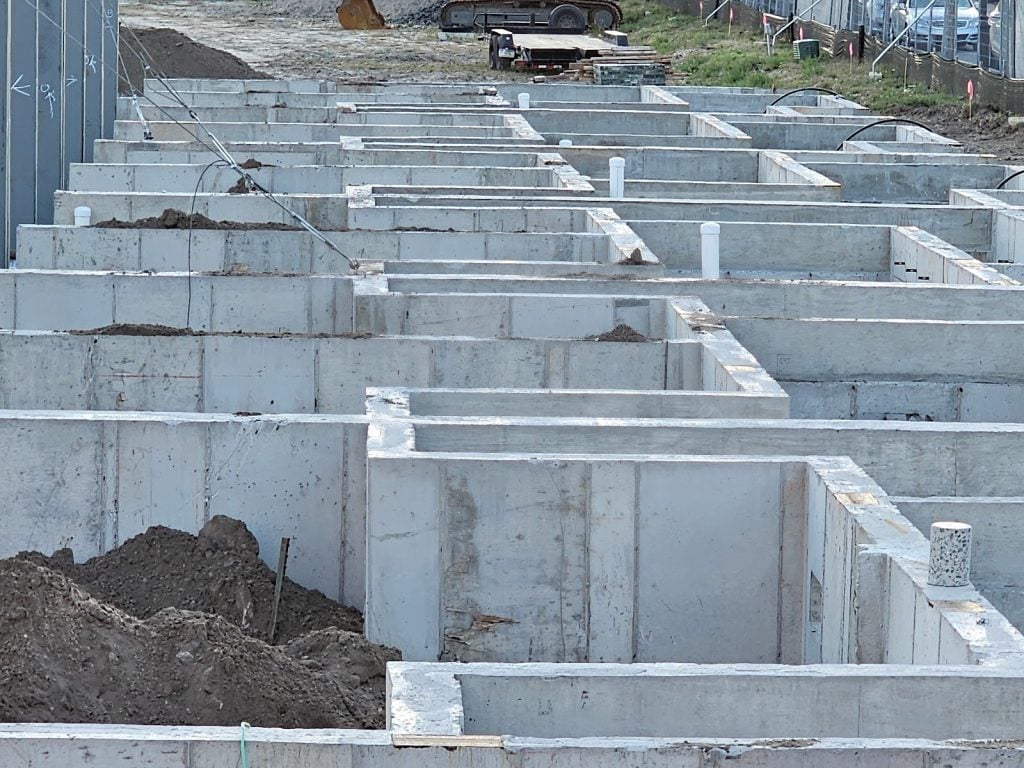
The picture below shows what might look like a complicated matrix of foundation walls across several buildings. These buildings will be built side by side, similar to many historic row homes here in Washington DC.
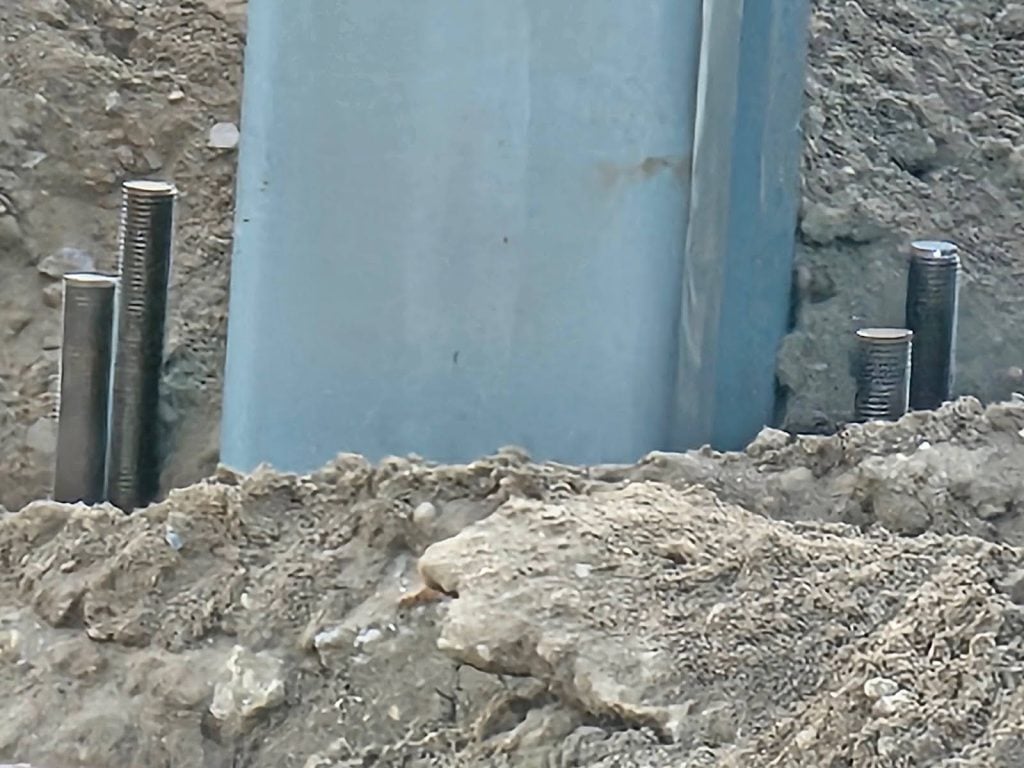
The picture below shows one of the first examples of accessory elements used in the cast in place concrete installation. Since this concrete is cast in place, it is formed and created there on site. Elements can be set and embedded into the wet concrete. Precast concrete doesn’t exactly have that type of flexibility. It’s important here though because they’ve set threaded rods into the wet concrete like anchors which are then later used to connect the base of structural hot rolled tube steel columns. That tube steel will help support the upper levels of the building, particularly where there are wide openings which cannot be supported by typical framing.
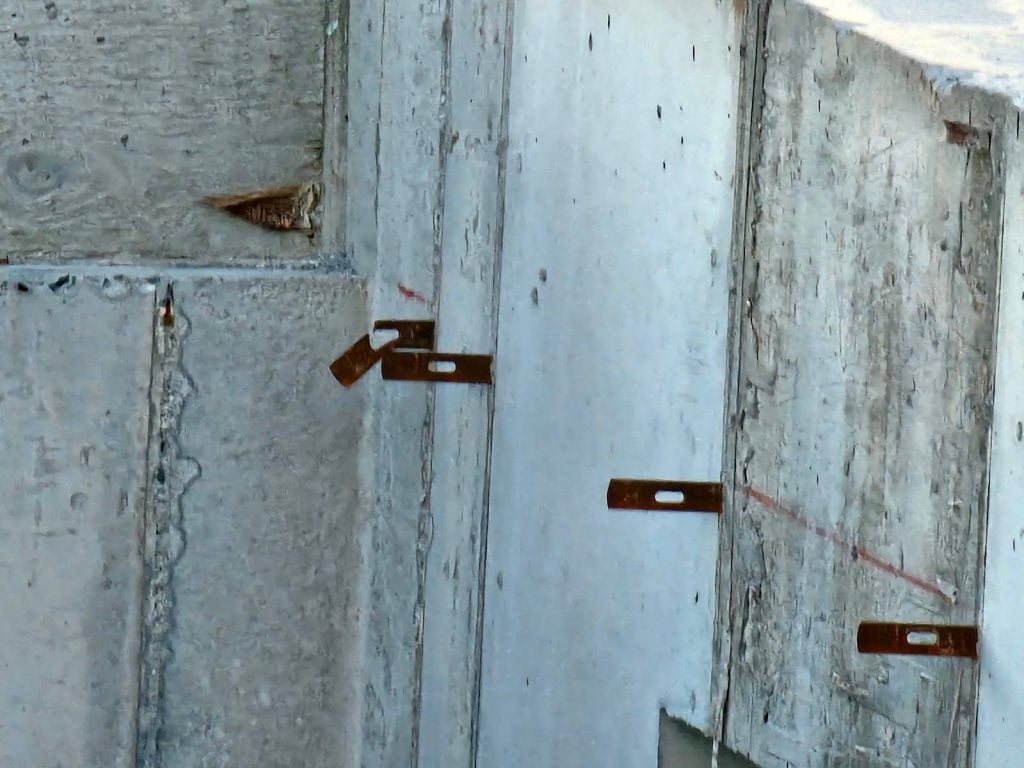
The next picture below shows flat ties that are set embedded in the concrete. Unlike the anchor bolts that are later used to support posting and structural elements, the use of these elements is complete. At this point they will be snapped off and removed from the concrete foundation. They’re only installed before the concrete is cast and cured so that they provide a mounting location for each of the individual formwork panels. They essentially hold the panels in place and are set at consistent spacing so one part of the foundation doesn’t end up accidentally thinner than intended.
In more traditional form work installations, a series of timber boards called strong backs and walers were used to support each panel or assembly of form boards. Those strong backs and walers were individual boards that were nailed against the direction of force to temporarily hold those form work elements in place during the pouring of the concrete. Concrete is extremely heavy and requires a significant amount of temporary resistance to hold it in place when it is in the wet and uncured plastic state.
We can Help
Our company focuses on historic restoration more than modern building upkeep, maintenance, and construction, but our company understands both types of construction very well and a full picture well-rounded approach is needed in any niche in the construction industry. Although we focus on historic restoration, repointing, tuckpointing and historic brick repair, our company also has technical knowledge and competencies in the areas of modern and contemporary construction as well as we become one of the leaders in that area of the market today. Understanding both historic and modern or contemporary construction is useful because both aspects help understand the challenges and potential solutions for challenges in building science and construction.
We can help with a variety of historic masonry restoration needs and upkeep, from modest tuckpointing and or repointing to complicated and extensive historic masonry restoration. Infinity Design Solutions is a historic restoration specialist contractor specializing in both historic masonry restoration such as tuckpointing our repointing, and brick repair. If you have questions about the architectural details or facade of your historic building in Washington DC, reach out and say hello and if we can help we’ll be glad to assist you. You can email us or call us on the telephone at the following link: contact us here.