
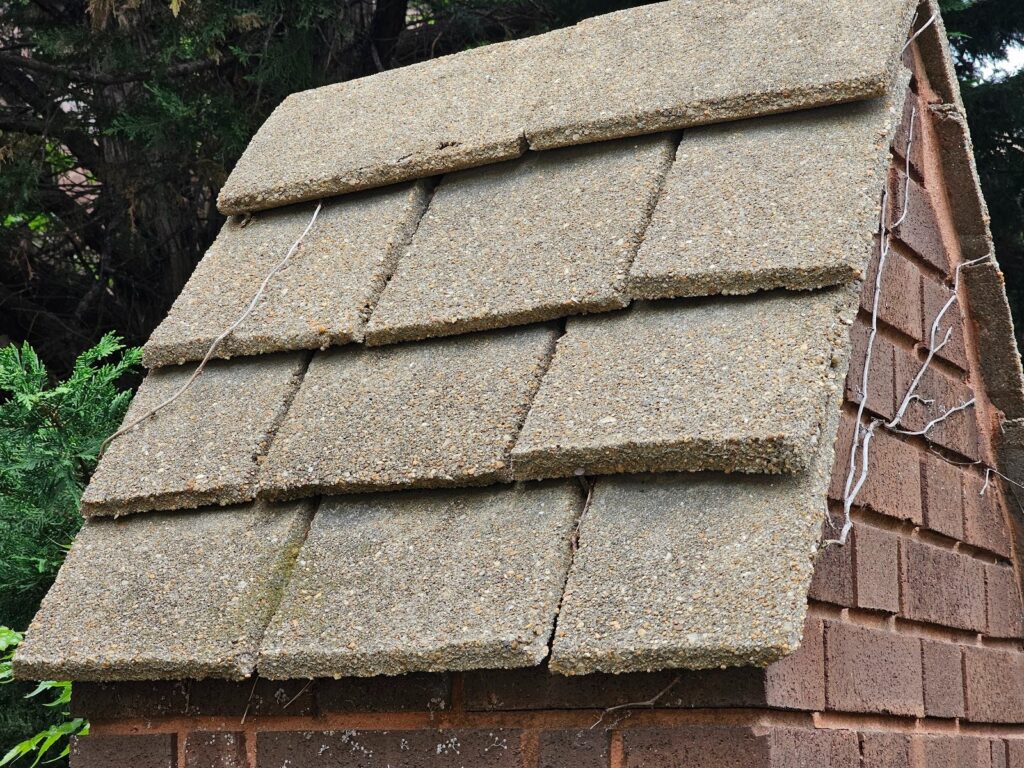
Expert Concrete Shingles at Column Caps in Washington, DC
This past week, we took a look at a particular set of fence posts, built with brick. These are historic construction elements, but they’re built in a really unique way. First, one of the big differences that separates these particular brick columns from other typical historic columns is that they’re built larger and wider than columns you might find in more basic residential construction. Even in historic times, where people seem to have had a greater propensity to invest and spend more in urban row home construction, they generally didn’t build posts that were quite so large.
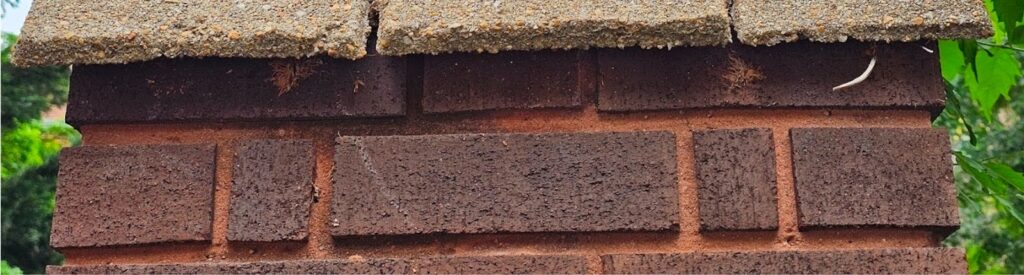
A snippet of one of the images we looked at this past week follows below, for reference. Here you can see that the brick is run in a stretcher type position but the header ends are shown at both outside edges of the top course. There is a full stretcher course run of a brick in the middle, but it is bounded on both sides by queen closers. We are looking at the particular courses and configurations of this brick, just to explain the sizing of the columns. Brick in the stretcher position is roughly 8 in width.
True historic common bricks and pressed bricks of the same time, roughly 110 to 140 years ago were about 8-3/8 of an inch in width, in the stretcher position. They were about 4 inches thick, from vertical front to back, in the stretcher position, similar to but slightly different than contemporary or modern bricks. In the pressed bricks, in historic times, the mortar joints were only about 3/16 to 1/4 of an inch in thickness. This really makes a big difference for repointing and historic masonry restoration done today.
By comparison, common bricks had much wider more joints, even larger than the ones shown in the picture below.
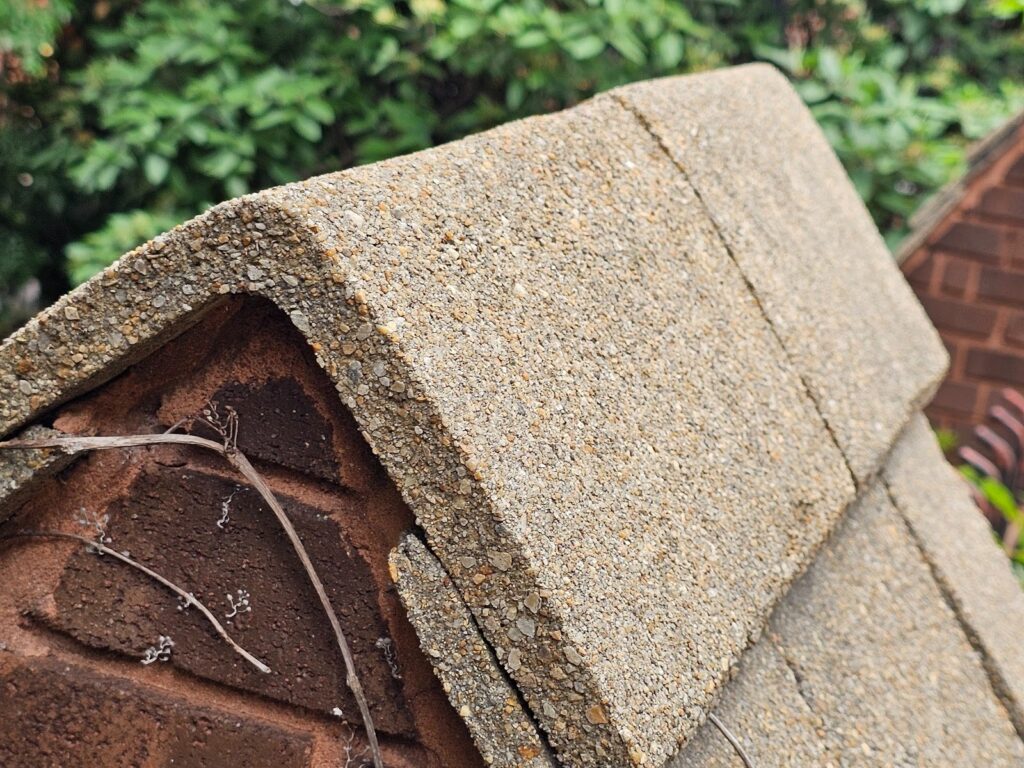
This past week, we also talked about how these particular shingles were made. it’s really rare to have thin shingles made from concrete. They are not nearly as thin as a slate or even a slate shingle, but they are really thin for cement. Generally, cast in place cement or concrete elements are made thicker than this. It’s pretty much agreed across the board the concrete is pretty strong. The typical big box store bag of concrete can be hydrated and achieve a strength of over 3,000 lb per square inch within just a few days.
We would say that is strong. Compared to most of the types of materials that are considered strong, concrete is up there with them. That’s particular data point of 3,000 PSI compressive strength resistance, is about concrete’s resistance to being squished apart when pressed between two points. It does a really good job in that compressive resistance. It’s a natural, innate characteristic of concrete. There’s another type of measurement of strength though, used in analyzing many types of building materials, called tensile strength. It’s not a completely simple characteristic, but to simplify it, you could think of this tensile strength as being a material’s resistance to expanding.
Particularly, I think it makes it easy to think about it in terms of snapping or bending. Spaghetti noodles are a bit like concrete in this particular context. If you take a hard and dry spaghetti noodle and you put it on top of a hard and solid countertop and press down on it with your fingertip, you can press really hard without smushing it. That’s similar to compressive strength.
In the case of the spaghetti noodle, you could press it so hard that it could actually hurt the tip of your fingers before it breaks the noodle into tinier pieces. Imagine in this context, we’re talking about pressing it down between your fingertip and a solid surface and smooshing it into dust or smaller pieces. It’s actually hard to do.
By comparison though when you hold that same spaghetti down on the countertop and then stick one end of it off the countertop and you press down on the other end while holding the first end, it snaps really easily. It has almost no resistance. That particular type of context is very similar to the lack of compressive strength in concrete.
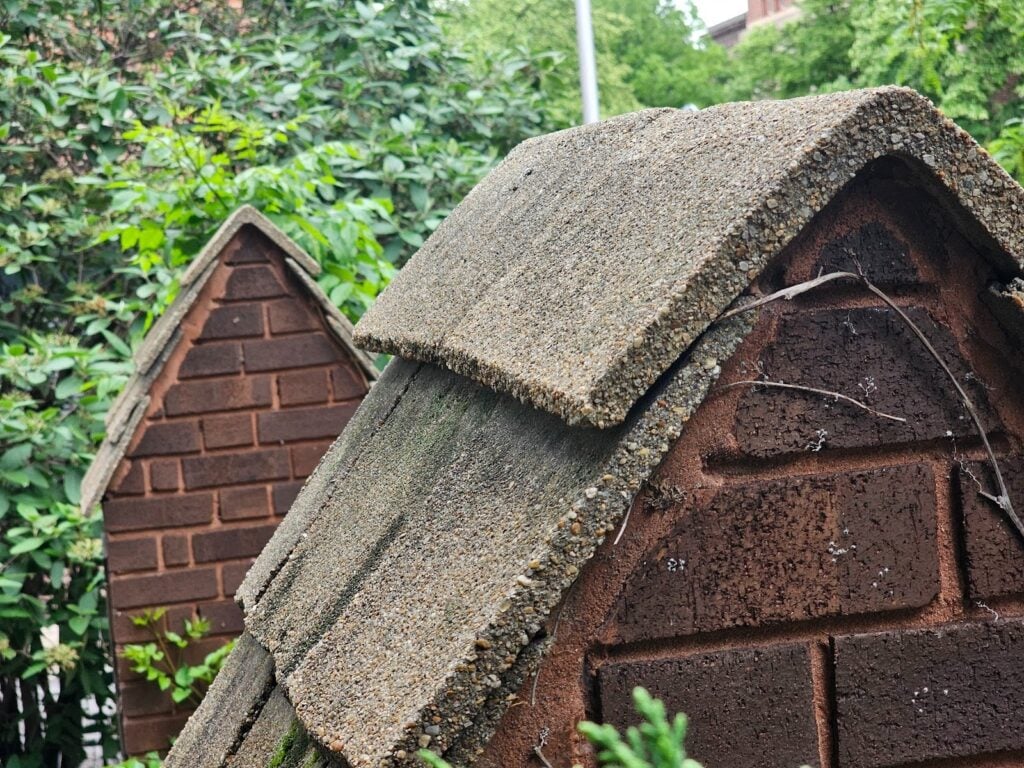
It’s an inherent weakness in concrete. The same type of context supplies to mortars used in bricks and block or stone, and it also applies to these things cement roofing tiles. They aren’t directly related to the work we do. For us, with our focus in historic masonry restoration and historic brick repointing, it helps to understand these things. Here these shingles are so rare though we haven’t come across them before, but they’re very interesting. People didn’t use them prolifically because concrete lacks tensile strength when built in thin pieces.
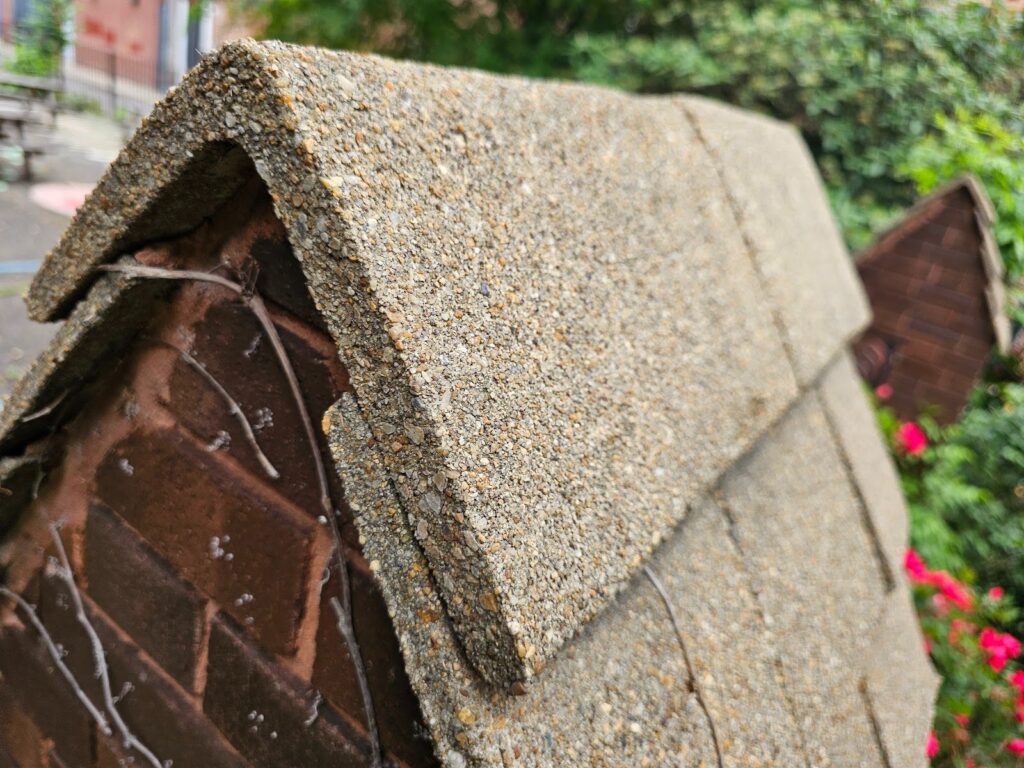
We also think it’s worthwhile to look at the aspects of these unique elements and consider the physical and structural characteristics because it helps us and our reader base to learn more about the elements of historic masonry, cement, and mortars.
We can Help
Our company focuses on historic restoration more than modern building upkeep, maintenance, and construction, but our company understands both types of construction very well and a full picture well-rounded approach is needed in any niche in the construction industry. Although we focus on historic restoration, repointing, tuckpointing and historic brick repair, our company also has technical knowledge and competencies in the areas of modern and contemporary construction as well as we become one of the leaders in that area of the market today. Understanding both historic and modern or contemporary construction is useful because both aspects help understand the challenges and potential solutions for challenges in building science and construction.
We can help with a variety of historic masonry restoration needs and upkeep, from modest tuckpointing and or repointing to complicated and extensive historic masonry restoration. Infinity Design Solutions is a historic restoration specialist contractor specializing in both historic masonry restoration such as tuckpointing our repointing, and brick repair. If you have questions about the architectural details or facade of your historic building in Washington DC, reach out and say hello and if we can help we’ll be glad to assist you. You can email us or call us on the telephone at the following link: contact us here.