
Historic Masonry Mistakes and Proper Repointing – Part II
This past week we looked at examples of masonry that was built with poor quality. The original masonry was probably built with moderate to decent quality, but in the many years after the initial construction, some renovations and changes were done to the building. Those modifications were not done with good quality.
For a time, in the later half of the middle of the 20th century, covering brick with stucco or formstone became popular. It requires less skill and is less tedious than full-scale or wholescale repointing. These buildings really needed full-scale repointing. Instead, sometimes people try to take a shortcut and just apply stucco or a parge coating on top of the brick. When the brick is already significantly aged and has mortar that is already at least partially deteriorated at the surface of the brick joints, this isn’t the right solution. The right thing to do is a full-scale or wholesale repointing.
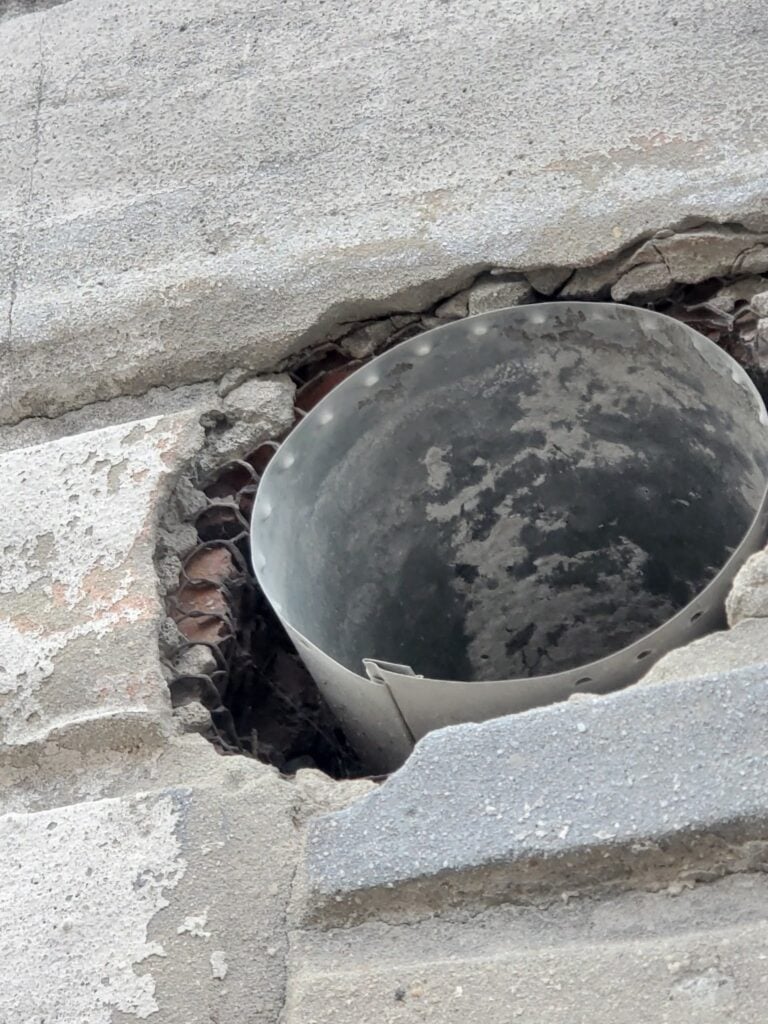
Here, as you can see in the picture above, they relocated interior fixtures and devices and added a dryer on the inside of the building. That dryer requires an exhaust duct and pathway to the exterior. There are a few alternatives to ventilate dryers but they’re not good alternatives. A few manufacturers make dryers that use a condensing cycle to suck the moisture out of the laundry without air venting, but they don’t work well. Some of them take over 4 hours just to dry one load of clothes and they only really accept small loads. That really isn’t a convenient alternative.
Another alternative is to possibly use a lint trap but lint traps don’t really catch all the lint. They end up getting lint all over the place which is a big mess and a pain to clean up. They also put a ton of humidity into the air on the inside of the building. This is also very problematic because it leads to accelerated deterioration on the interior of the building. Moisture just doesn’t work well on the interior of buildings. It causes problems such as mold and deterioration.
The picture below shows a cold joint between a formstone-covered historic brick wall and an original historic brick masonry facade. That historic brick masonry facade needs to be reported in its entirety, we refer to that type of full-scale repointing as wholescale repointing. Wholescale repointing is much more cost effective than spot-repointing. In some cases, when buildings are significantly aged, like this example, wholesale repointing is needed no matter what and if you’re just doing the worst spots at a time you’re paying a much higher price, per square foot, then you would for full-scale reporting.
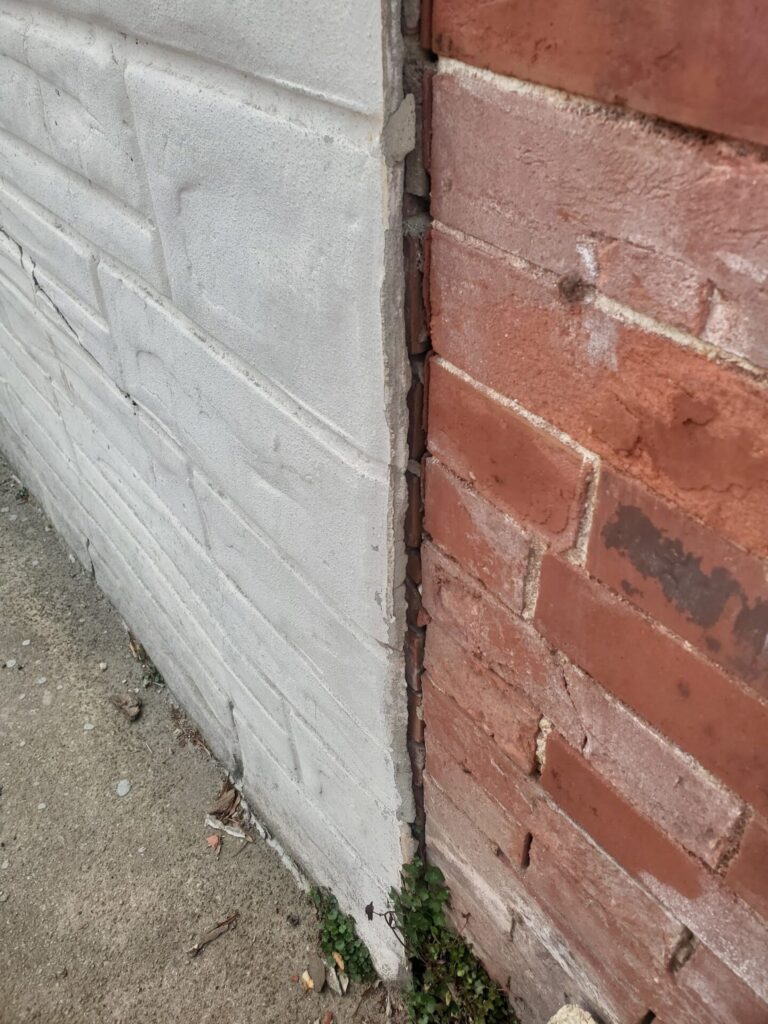
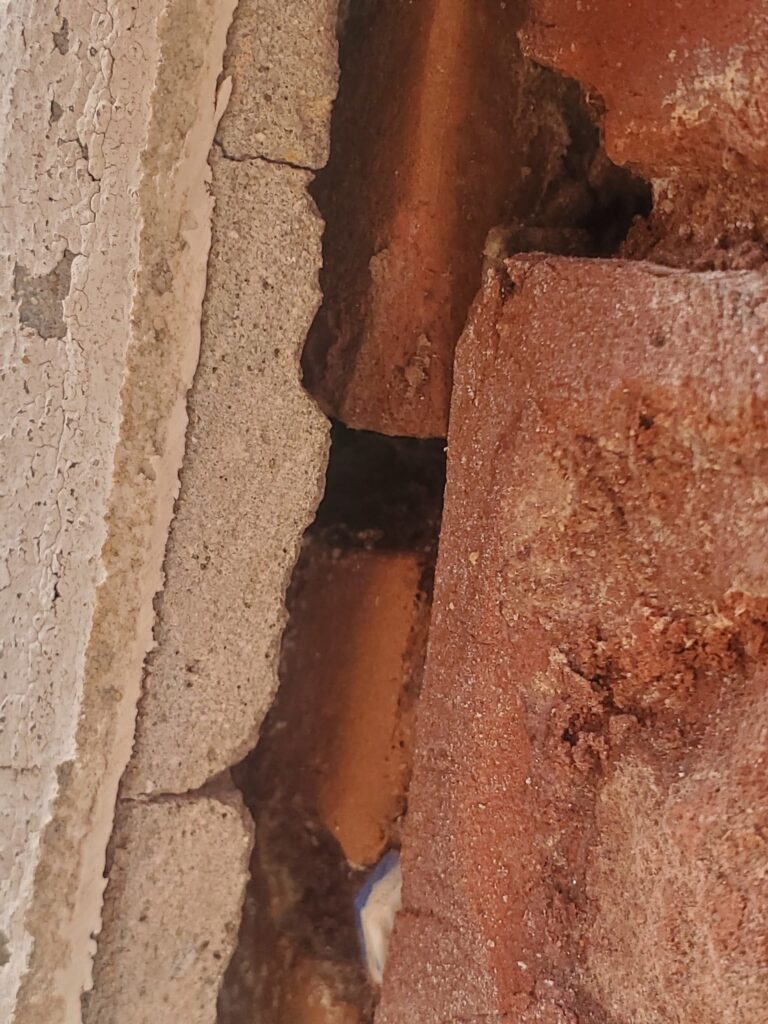
Another big problem at this particular location is that the two buildings meet not at a continuous facade, but at a cold joint. That means that one building was fully built before the other building started and instead of taking out intermediary bricks throughout the entire rise of the wall edge, they just butted up to the existing wall when they ran their new bricks. This method, as expected, led to a gap between the buildings. That bad gap now allows moisture to enter in most cycles of precipitation but that moisture does not evaporate easily or nor does it leave the space by itself. Instead the moisture sits and festers, longer and for more than it should.
To properly maintain, repair, and care for these historic buildings, a knowledge, interest and understanding of historic building principles is required. Here in Washington DC, historic masonry buildings are extremely expensive and the amount of financial loss caused by improper repointing and low quality construction is staggering. However, in addition to the direct financial value of the property, there is also a cultural loss when historic buildings are damaged. By comparison, consider neighboring poor cities, when historic buildings are damaged, it’s not just the loss of value to the property owner, there’s also a loss to all inhabitants and visitors of a city, present and future, who care about architecture, history, and culture.
We encourage all of our clients, and all readers of this article and to our blog in general, to prioritize the historic built environment of Washington DC and neighborhoods such as Capitol Hill, Dupont Circle, and Georgetown and become educated on on the difference between proper historic preservation versus improper work which leads to significant damage to the historic fabric of a building.
From a conservation and preservation perspective, several approaches can be taken to improve conditions related to deteriorated historic brick masonry. Primarily, lime mortar brick joints and low temperature fired soft red clay bricks should be inspected and checked on a routine maintenance schedule, either seasonally or at least annually. If brick masonry is kept in good condition, the life of embedded wood elements can be significantly extended. Hire a professional contractor which specializes, understands and appreciates historic construction elements and buildings.