
Today we’re looking at a particular church that’s an interesting case study from a historic type of near local construction. This particular building is built with an ashlar serpentine green metabasalt stone. The ashlar part of the description is mentioned because this stone, unlike rubble type masonry, in this case, is cut into a rectilinear form before assembly and setting of the stone.
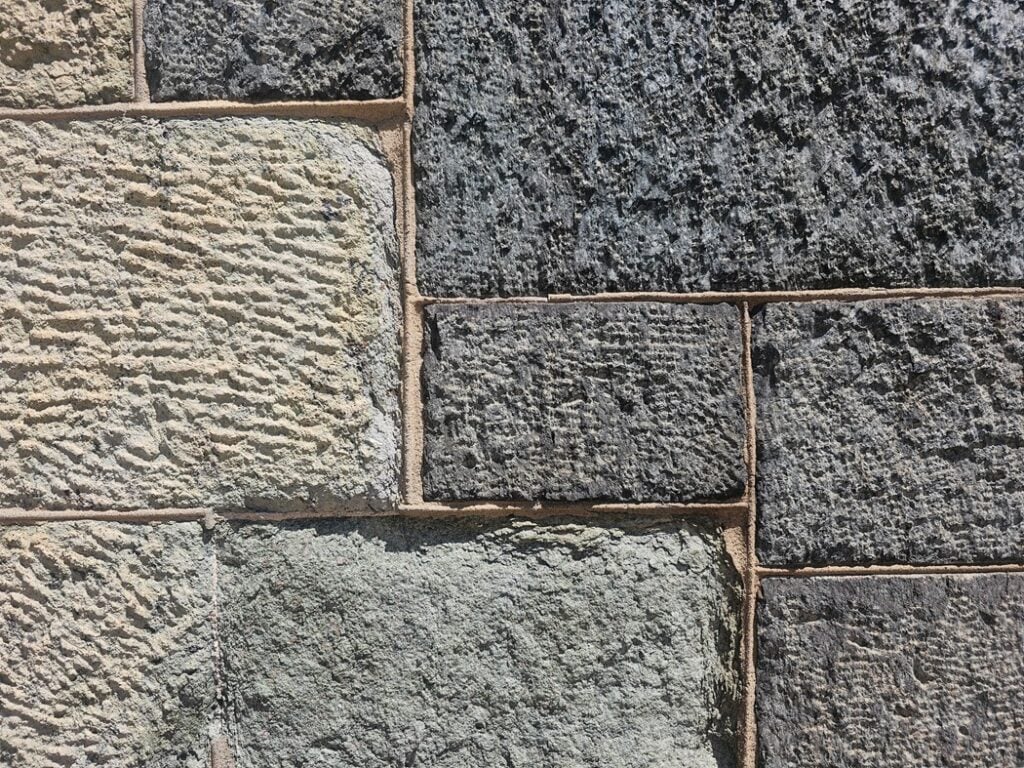
The stone is significantly deteriorated in many locations at the face of the exposed wall. But you can still see the marks left from the original cutting of the stone where the faces were shaped with a pitching chisel, manually by hand with a tedious hammering process.
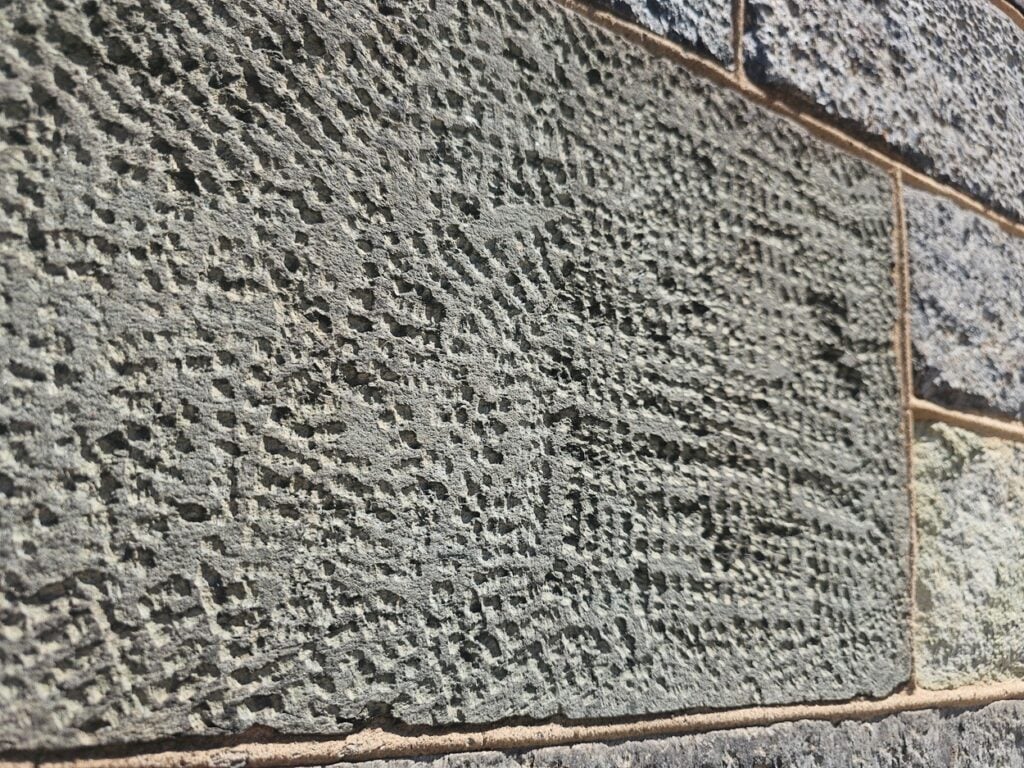
The mortar joint between individual stones is approximately 3/8 inch in width and is formed in a raised grapevine type contour or profile. The mortar color is a light buff, but it looks like this application has been applied after the underlying mortar joint used to set the individual stones. In fact the mortar joint used to set the individual stones looks much more similar to the typical brick mortar found at the common brick and common walls used at the sides and rears of many homes and Washington DC.
A picture of a struck joint still mostly intact follows below. Although this mortar has significantly weathered, the majority of the joint is still in shape, close to its original form, even after 100 years of exposure to the elements.
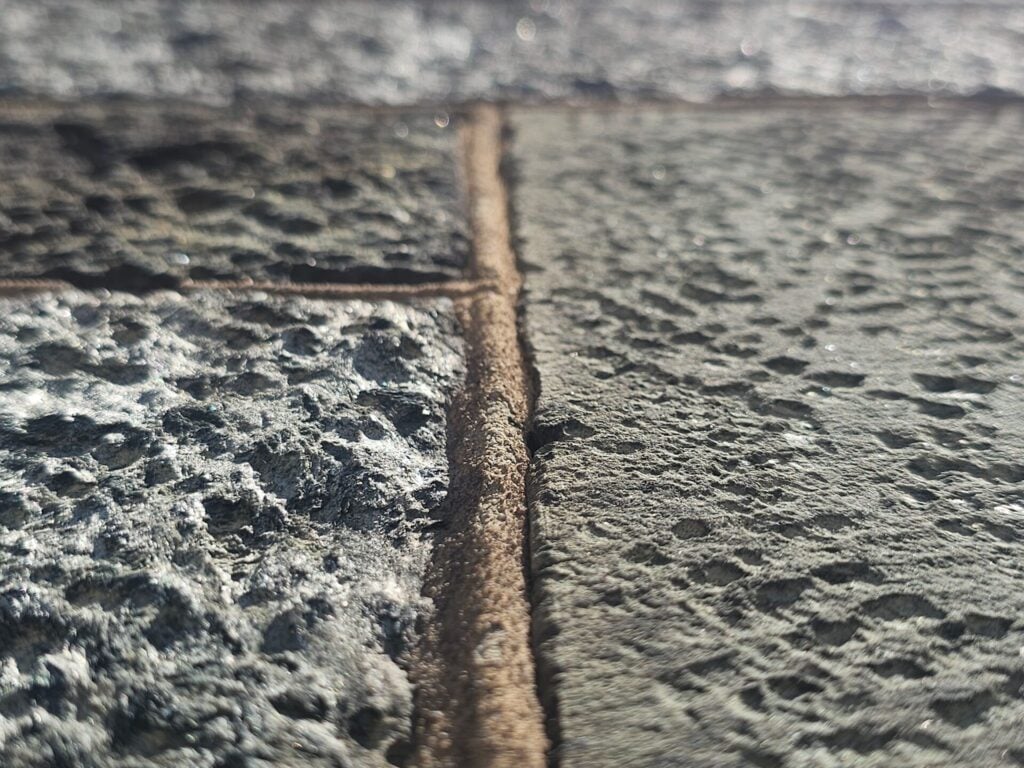
Although the joint shown in the picture above is still in observably good or close to good shape, the picture below shows a joint nearby that is significantly deteriorated. The profile or applied shaping has eroded and the underlying substrate materials are exposed. Here you can see that there are large portions of unslaked lime exposed, as it was used to create the original mortar.
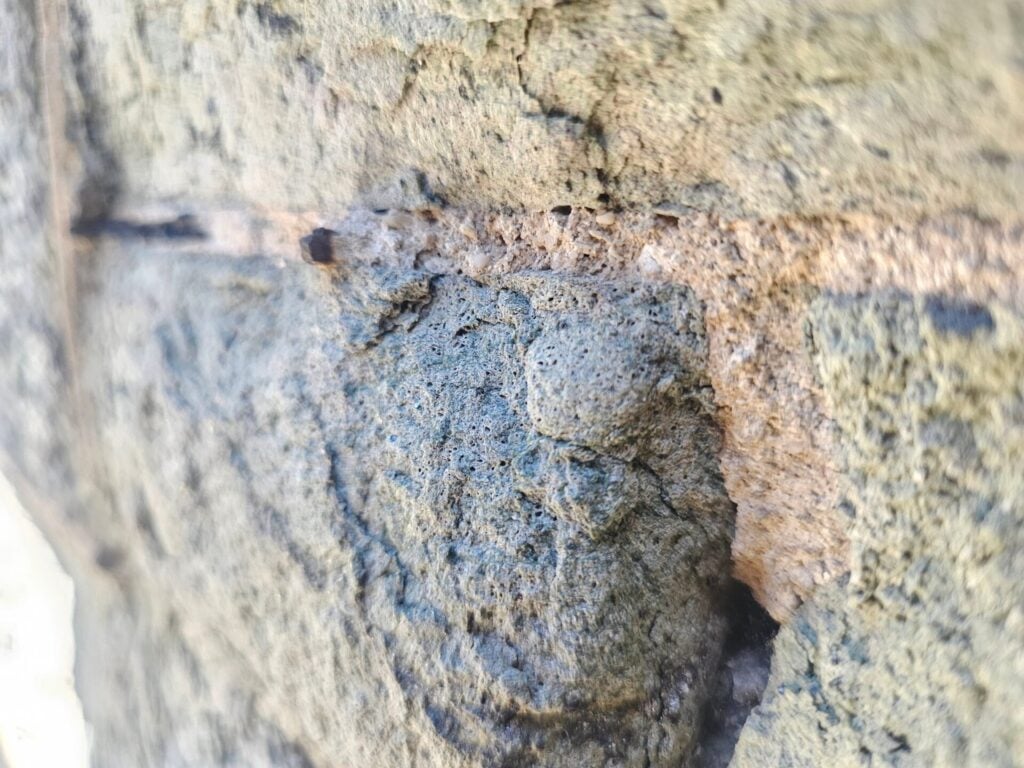
Over the walls are in pretty good shape considering the age, there are still many parts of the exterior facade, where the exposed face of the metabasalt stone is flaking and spalling off the wall. Although this type of deterioration is to be expected, it still can be a bit problematic because it indicates wear and deterioration which will lead to increased wear as time goes on.
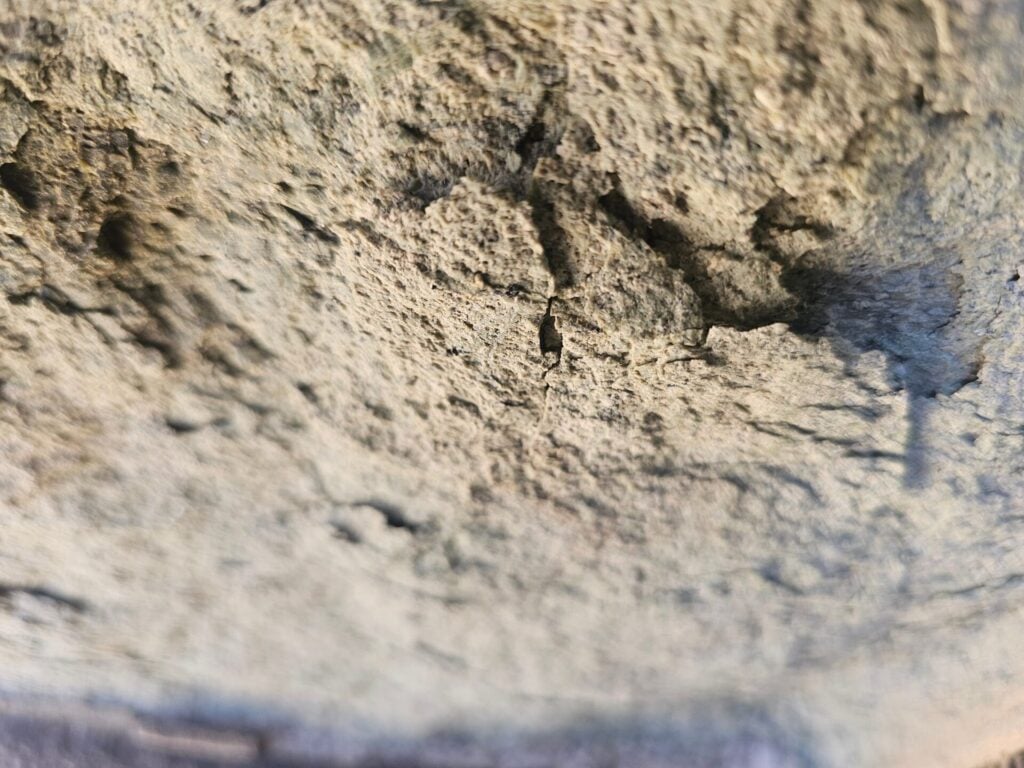
Locations of deterioration like the one shown in the picture above are common throughout almost every area of the facade. The one below shows another location, almost at eye level from the adjacent street where the deterioration has receded deeper into the face of the wall and the remaining fragments of stone look more dramatic with a higher degree of jaggedness.
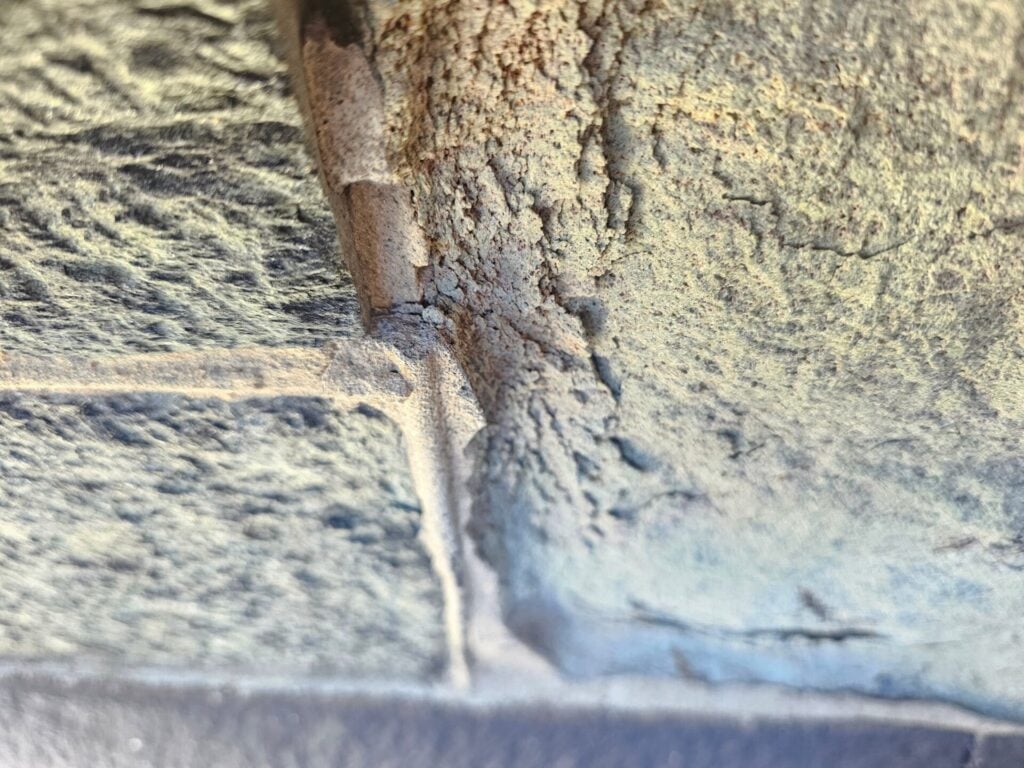
One of the problems with really old buildings, where ownership and custody of care has changed hands over the decades, is that different people do things differently. For example, in the picture below, you can see where some of the original mortar joints still remain at least partially intact. There’s another location where the mortar has been smeared on in a really sloppy type of way.
The old original mortar joints look thin. Historically, thin more joints were a sign of prestige and wealth. It required much more sophisticated higher trained masons to be able to make thin joints. Part of the distinction is simply related to technology. Today, we have diamond blades both with hydraulic, electric, and even gas powered machinery that can make the work much easier and faster.
Imagine the massive difference between manual cutting of large and heavy stones like this versus the modern mechanized machinery. The difference is so extreme that it has literally changed the industry drastically. After the work we came comparatively easier, it led to changes that took a surprising pathway. In general, construction became a job that was still tough but garnered very little respect.
In fact, there were decades were most Americans wouldn’t even consider doing construction because they believed it to be beneath them. That belief system applied to even working class people. The interest in the trades, by the general public is a complex and fascinating subject. We’ll talk more about it in the future, but one of the big takeaways that we see clearly is that there are very few other masonry contractors like ourselves who take this work seriously and specialize proper historic restoration.
To properly maintain, repair, and care for these historic buildings, a knowledge, interest and understanding of historic building principles is required. Here in Washington DC, historic masonry buildings are extremely expensive and the amount of financial loss caused by improper repointing and low quality construction is staggering. However, in addition to the direct financial value of the property, there is also a cultural loss when historic buildings are damaged. By comparison, consider neighboring poor cities, when historic buildings are damaged, it’s not just the loss of value to the property owner, there’s also a loss to all inhabitants and visitors of a city, present and future, who care about architecture, history, and culture.
We encourage all of our clients, and all readers of this article and to our blog in general, to prioritize the historic built environment of Washington DC and neighborhoods such as Capitol Hill, Dupont Circle, and Georgetown and become educated on on the difference between proper historic preservation versus improper work which leads to significant damage to the historic fabric of a building.