
Warm Brutalist Masonry Architecture in Historic Cities
We’re really glad that a lot of the old historic buildings of Washington DC have been preserved instead of being demolished and replaced with more contemporary or modern construction. We happen to personally love the aesthetics of our historic neighborhoods. There are some exceptions though. There’s places where old developments were razed to the ground. Some of them are right here in the heart of our city.
If you happen to think about a lot of the buildings that have grocery stores at the mixed use ground floor levels, those buildings, in many cases, have been completely rebuilt and although they may have elements to harken back to historic design, the classic-looking elements are fake. They lack actual historic character, in most cases.
In many of these cases, it isn’t that people don’t like the historic styles or or aren’t interested in building in that historic way. Instead generally, it’s actually more expensive today to build in a historic way than it was back then. Comparatively, these aspects of economics are really interesting. Economies of scale and methods of production have changed and also values have changed so significantly that it changes what is economical today.
The conversation of economic changes is vast, in itself. America used to be a labor intensive country, and during the time since these buildings were built, about 100+ years ago, we’ve shifted to be a capital intensive country where labor is extremely expensive. For decades, immigration has helped the construction industry populate and fill needed roles. It really wasn’t until pretty recently that we’ve had anti-immigration fervor so intense since the World War II internments of American citizens.
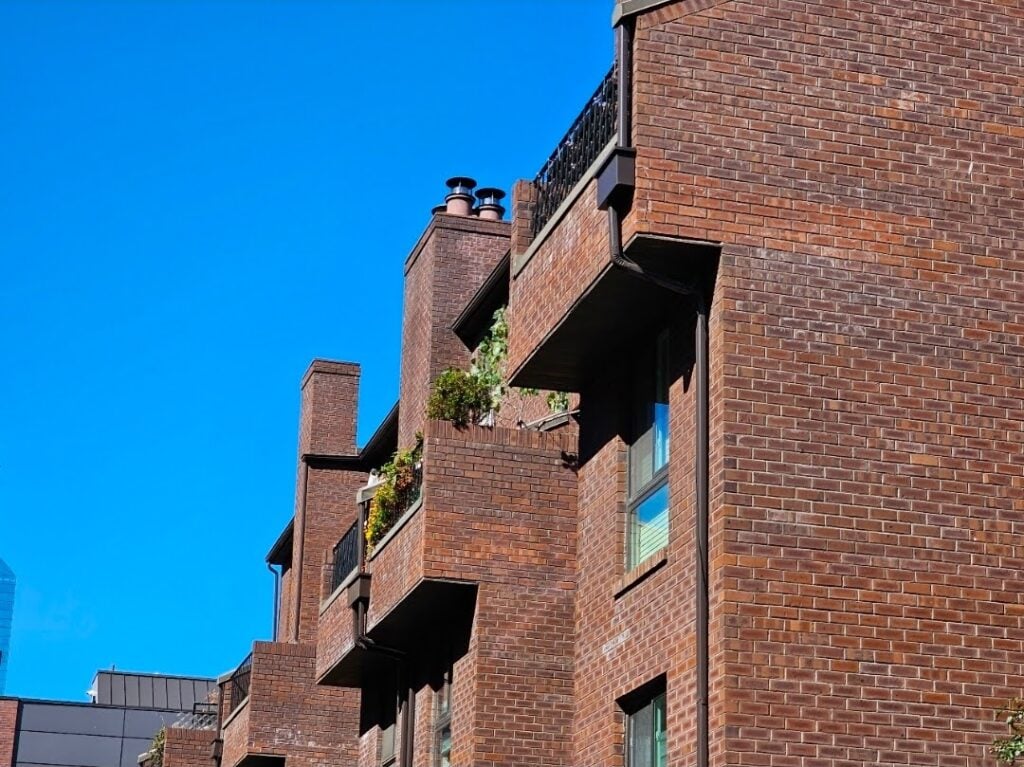
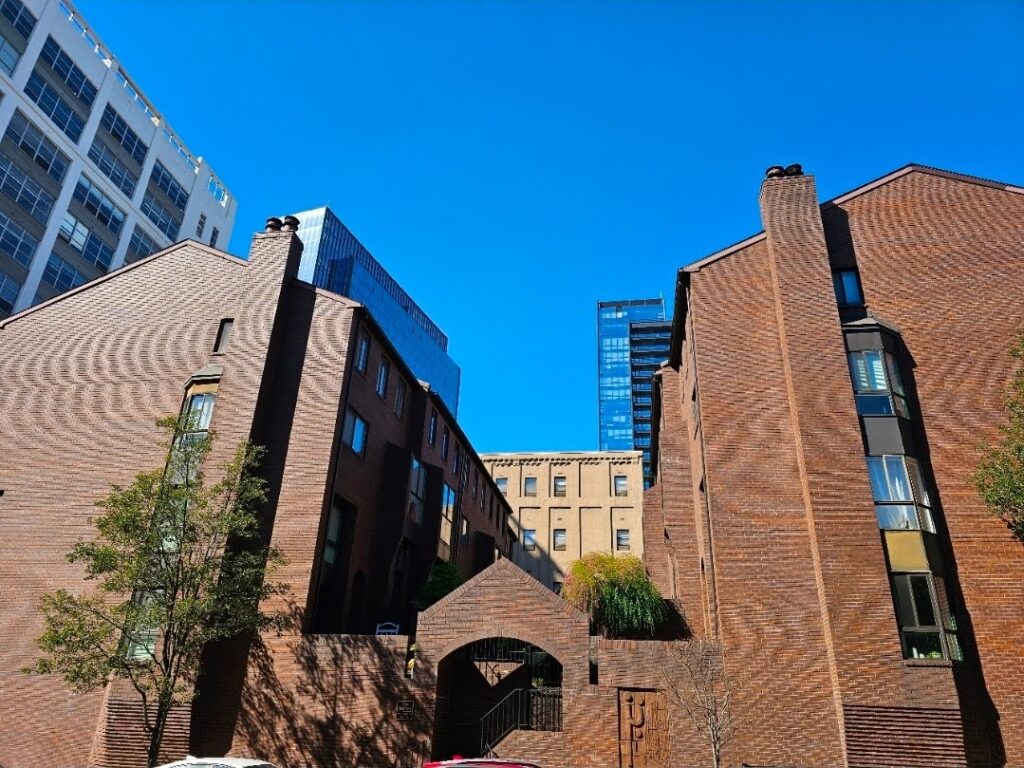
Brutalist architecture has no soft edges. It’s just raw and bare. It doesn’t have the decorative frills and ornature. Here, we call the architecture below warm brutalist, but there’s nothing really warm about it, it just has an earthtone color because the bricks have a high iron content. That iron is oxidized and therefore red, like a wide spectrum of elements from the earth. Brick comes from earthen clay. That clay content is the sole element here that’s a bit warmer than the hard and cold architecture of brutalism. Because of that brick face though, this facade lacks the stark and severe edge of true brutalist architecture.
Aside from the bay tucked behind the protruding chimney, the architecture at the gable side of the building shown in the picture below is mundane. It would look just like a typical garden style apartment. The facade is built almost windowless for a few reasons. In true brutalist architecture, street side facings may have been built without typical openings and fenestration. This allowed for a bit more privacy on the inside of the building so the noise from automobiles on the street didn’t filter directly into the building interior.
Imagining a thoroughfare back when the rest of the historic parts of the city were built, all the noise and commotion was largely produced by horses. Later when cars came to the scene, it made home life less comfortable.
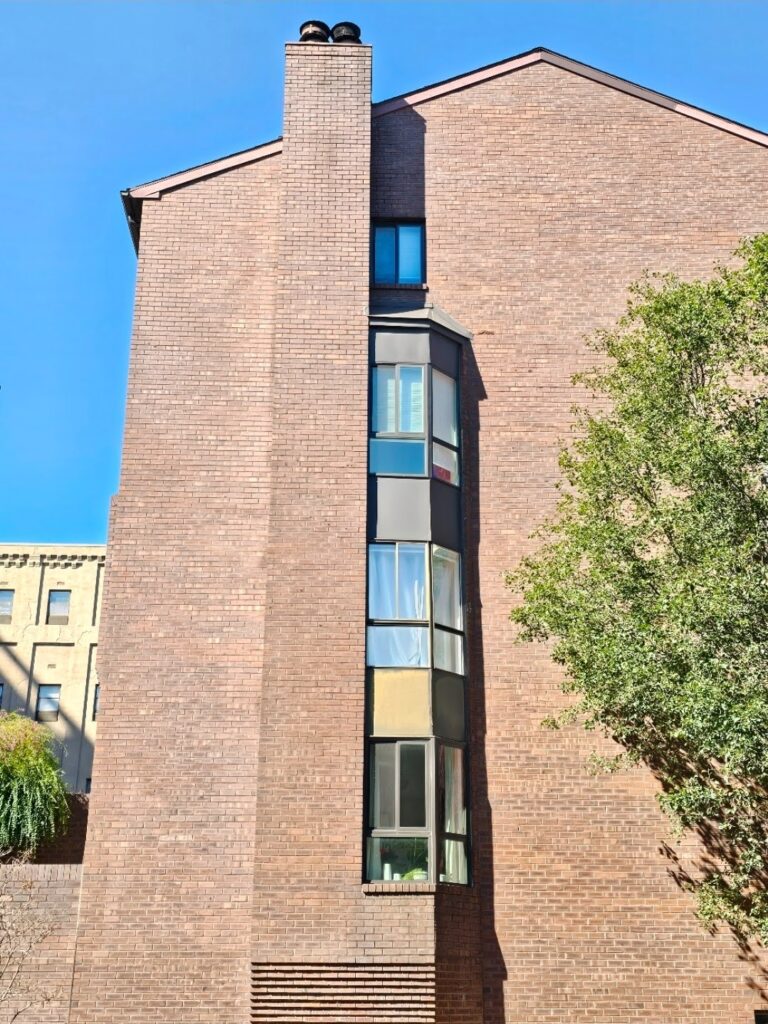
The builders and the architects of the late 1800s and early 20th century missed the future proofing focused insight to predict that level of noise and hustle and bustle. The brutalist architecture came about in the middle of the 20th century though and was in many ways a response to the technology which created all of that inconvenience.
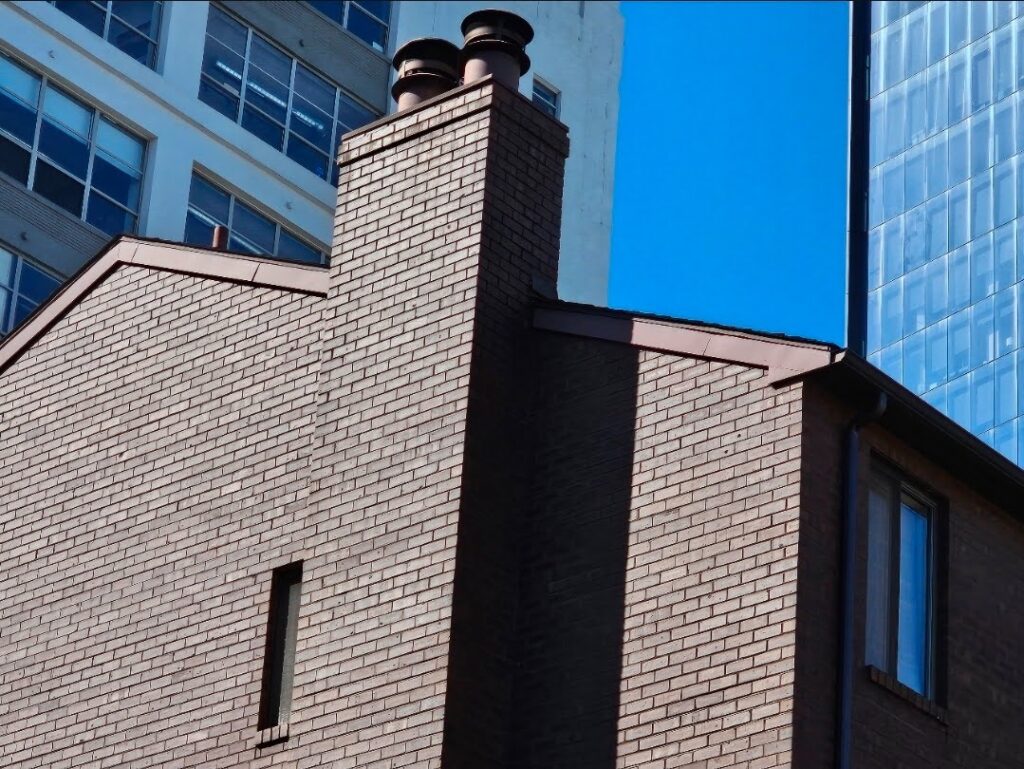
This darker, more plain brick might look basic for an urban environment, but some would argue it looks a lot better than the garden style apartment buildings they’re building now here in Washington DC. They look like trash just like the cheap tract homes you might find in the sprawling suburbs. This at least looks better than the 5-over-1 / podium buildings being built throughout DC today.
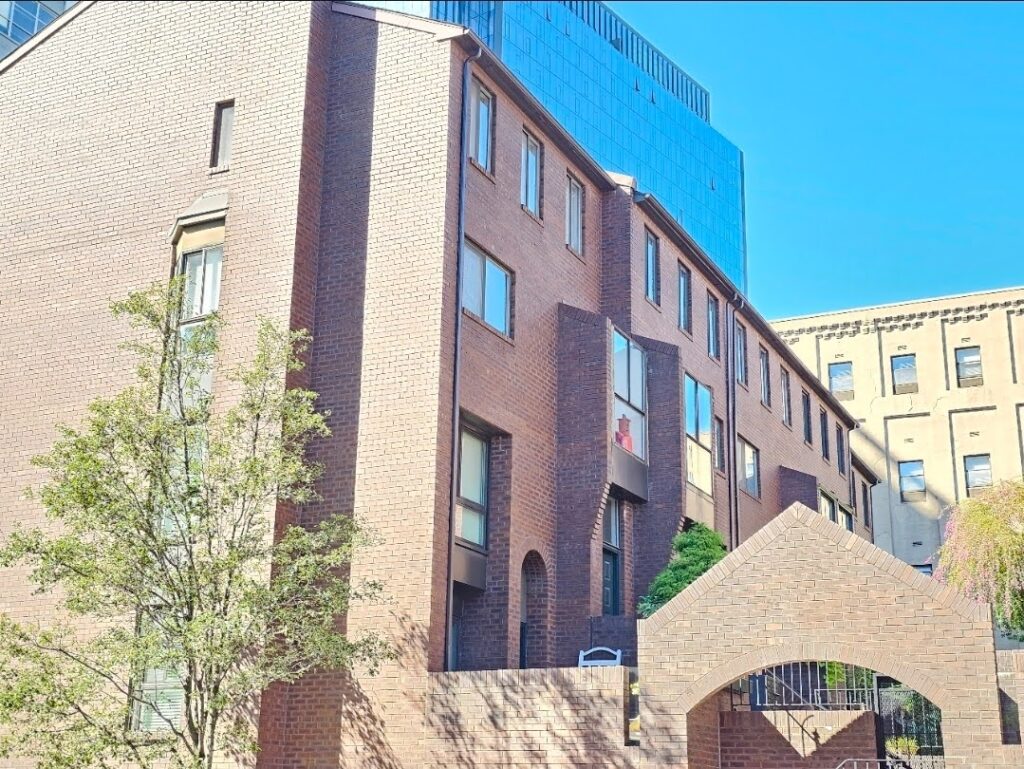
At the side of this building away from the street, you can see here they at least several windows which provides better fenestration.
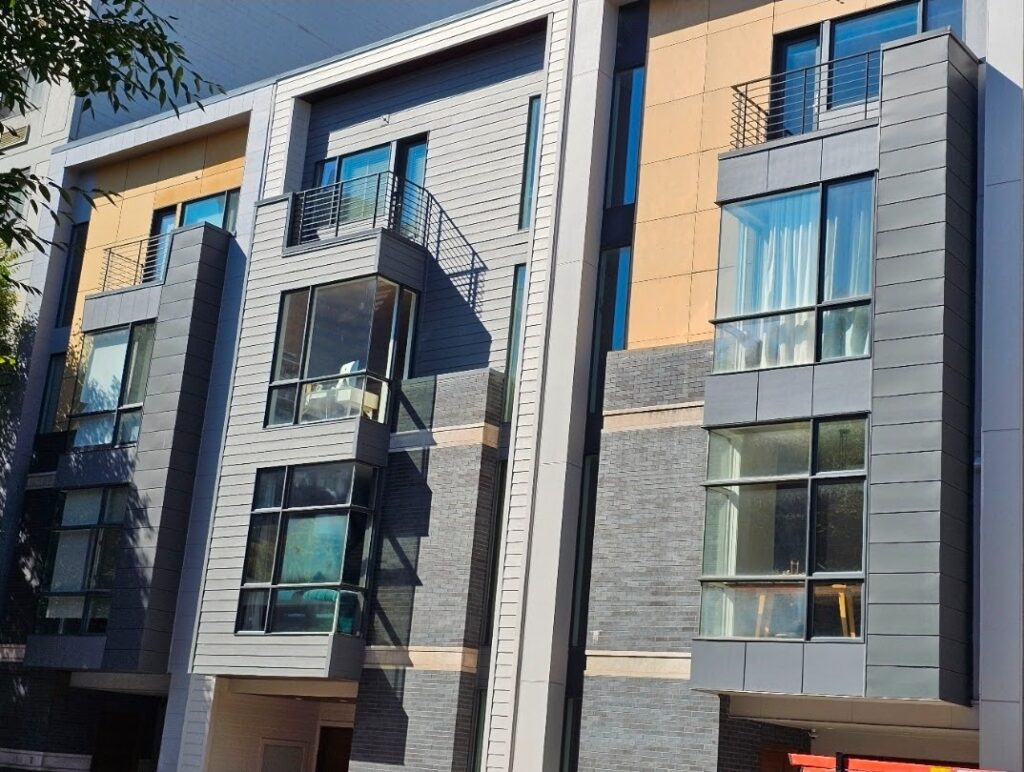
Another one of the common themes in more modern buildings put into historic urban environments might be something like the ones shown below. This is a contemporary modern urban residential style that uses asymmetry mixed with geometric forms. On the surface, the idea of using straight lines and geometric forms might sound like it naturally includes symmetry, but here it’s geometric without symmetry. You’ll notice they have also used some colors and finishes that were not used in more traditional historic masonry buildings.
They’ve used an aluminum cladding but instead of having it be one of the cheap types of aluminum you find commonly used from the 70s through the 90s, they have used anodized aluminum finishes. Like brutalism, at its core, instead of hiding the raw surface, they have chosen to show or highlight this raw element. It isn’t the same as the traditional brutalist style though because the anodized finish used here is manufactured to be consistent throughout. There’s a homogeneity that you wouldn’t find in the raw surfaces associated with the brutalist architectural styles.
To properly maintain, repair, and care for these historic buildings, a knowledge, interest and understanding of historic building principles is required. Here in Washington DC, historic masonry buildings are extremely expensive and the amount of financial loss caused by improper repointing and low quality construction is staggering. However, in addition to the direct financial value of the property, there is also a cultural loss when historic buildings are damaged. By comparison, consider neighboring poor cities, when historic buildings are damaged, it’s not just the loss of value to the property owner, there’s also a loss to all inhabitants and visitors of a city, present and future, who care about architecture, history, and culture.
We encourage all of our clients, and all readers of this article and to our blog in general, to prioritize the historic built environment of Washington DC and neighborhoods such as Capitol Hill, Dupont Circle, and Georgetown and become educated on on the difference between proper historic preservation versus improper work which leads to significant damage to the historic fabric of a building.
From a conservation and preservation perspective, several approaches can be taken to improve conditions related to deteriorated historic brick masonry. Primarily, lime mortar brick joints and low temperature fired soft red clay bricks should be inspected and checked on a routine maintenance schedule, either seasonally or at least annually. If brick masonry is kept in good condition, the life of embedded wood Often we look at the exterior condition of bricks and talk about the requirements for maintenance and upkeep of historic masonry through restoration and repointing. Often, wholesale repointing is needed on historic buildings to keep them in good shape and in the end keep them standing.
They require repointing, only so often. Sometimes buildings can go for many many decades between iterations of repointing. When the motor is highly deteriorated though at the external parts of the building, particularly, the repointing will refresh that masonry facade to help it withstand the deleterious effects of natural weather events.
Most of these buildings here in Washington DC have e exterior elements with life-cycles that can be significantly extended. Hire a professional contractor which specializes, understands and appreciates historic construction elements and buildings.