
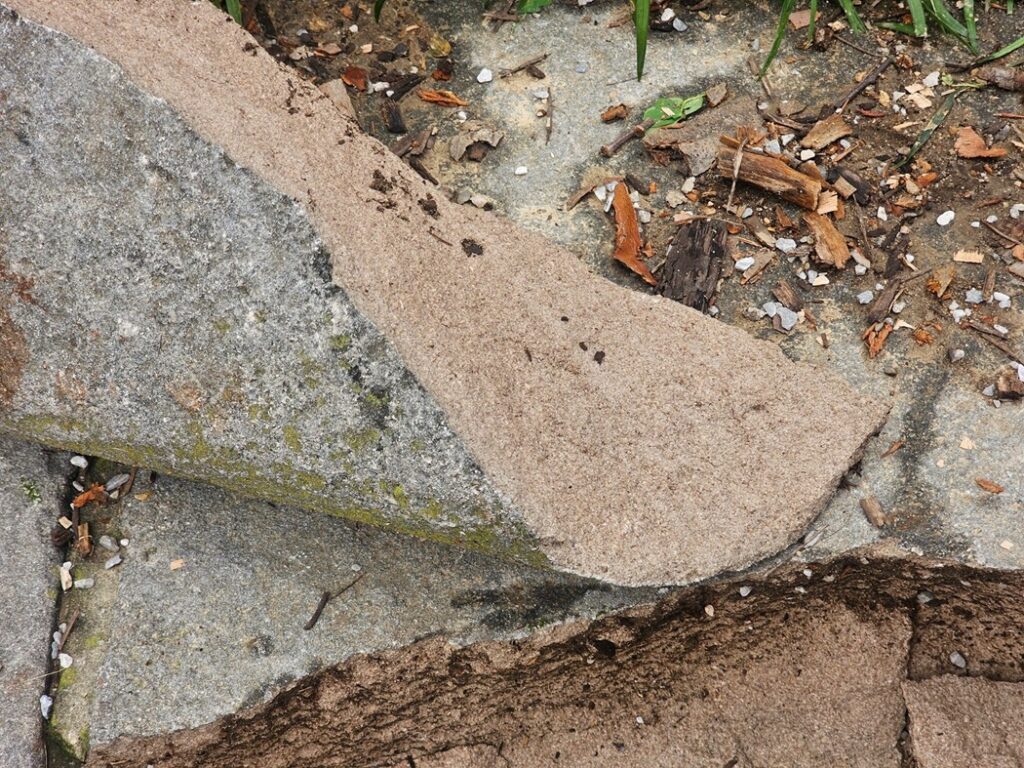
This past week we got to take a look at a particular type of very thick sandstone used as a capstone in a retaining wall. This particular stone fractured from its point of installation. Essentially, this was deterioration that started many decades ago at a natural fracture point, combined with a possible impact. This stone fractured and sheared away from the larger substrate stone.
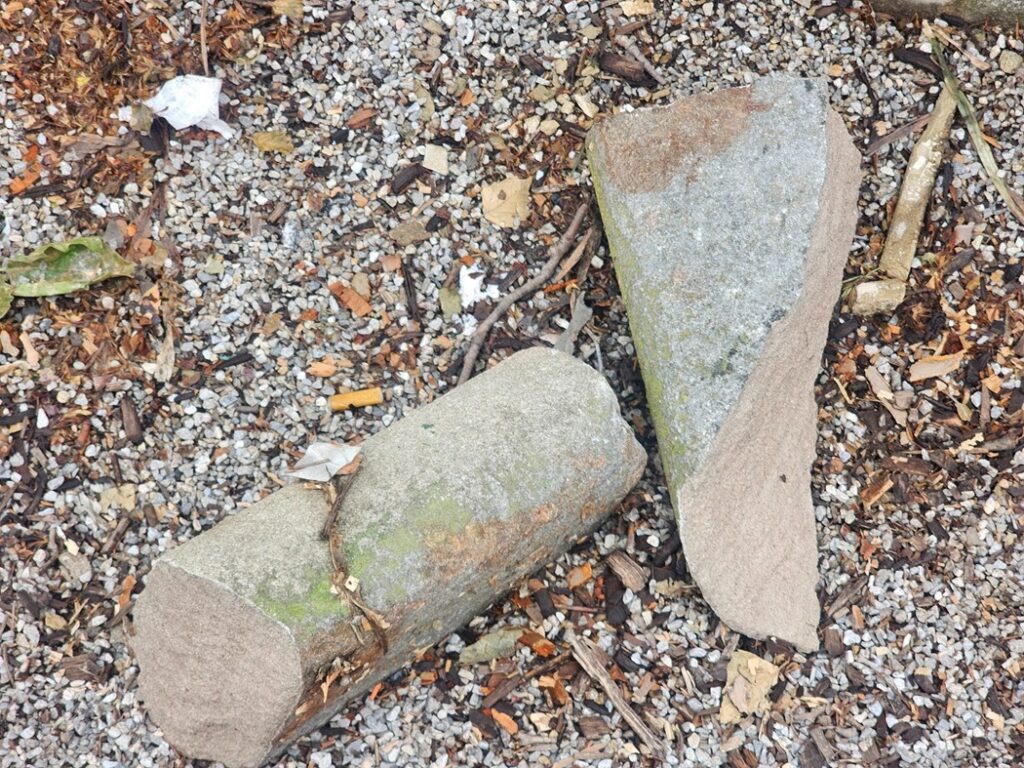
Bedding planes are areas where individual grains within these stones are slowly built by natural deposits over many decades and centuries. Those lines or sheets within the stone often look almost homogeneous, but there are textures of grains within the stone. The stone, there at these bedding planes, can fracture and break.
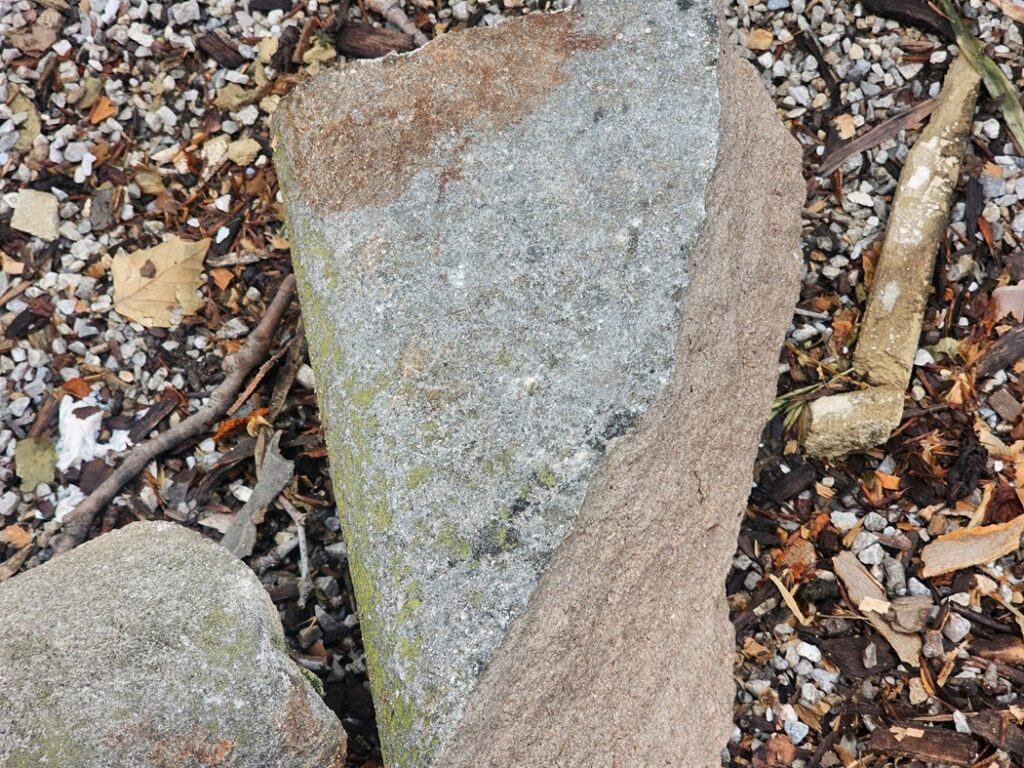
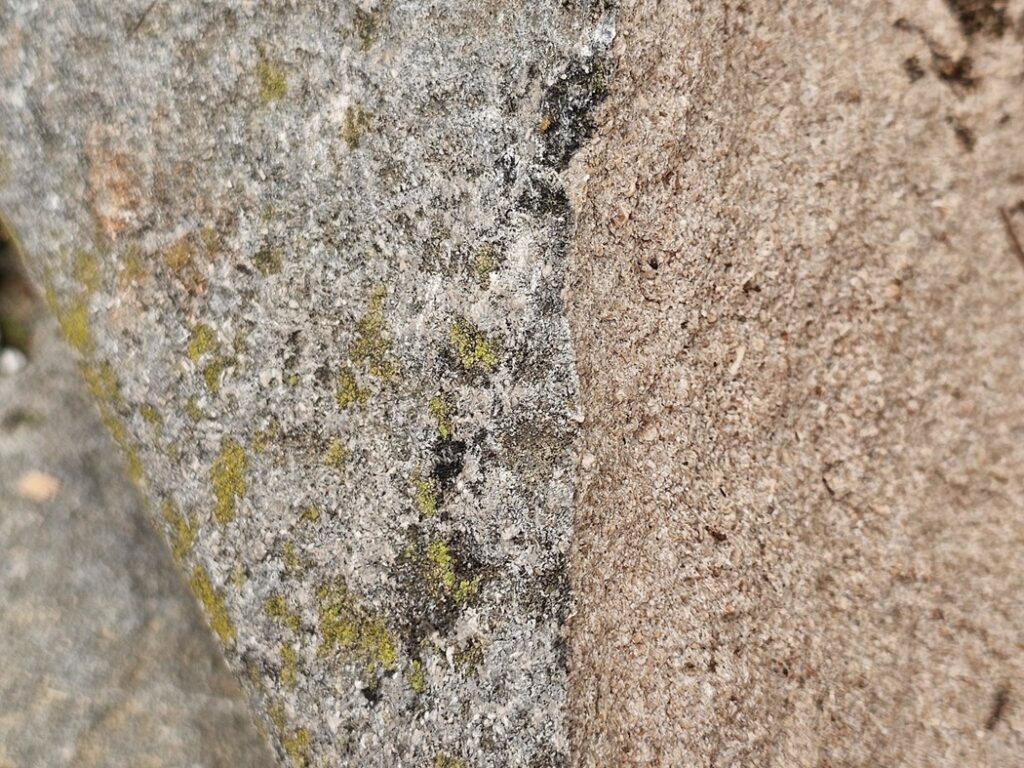
The typical make up of this type of stone includes quartz, silicate clays, and feldspar along with iron which oxidized before formation of the stone. The outer area allowed the looser iron to wash away and expose the gray color substrate materials like quartz, feldspar, and silicate clays.
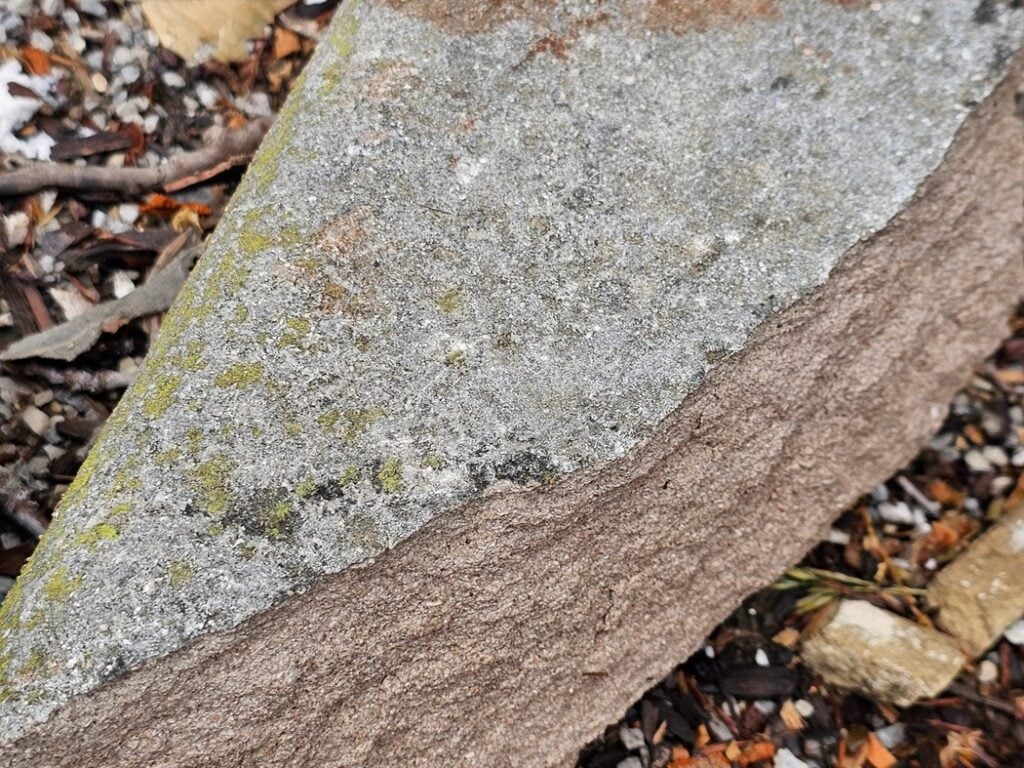
The interior parts of this portion of the stone and all of the sandstone materials used in the construction of this retaining wall are rich in minerals that contain significant portions of iron. Some of the examples of those types of materials are hematite and magnetite. The steel and iron that we commonly use in a vast multitude of manufacturing processes, and even in typical consumer goods, through to commercial and Industrial materials comes from hematite.
The name hematite is also very interesting because the etymology or origin goes back to a shared root in the Greek word for blood. There are medical words that we use in English that share some of the branches of the tree of the etymology of the same root word.
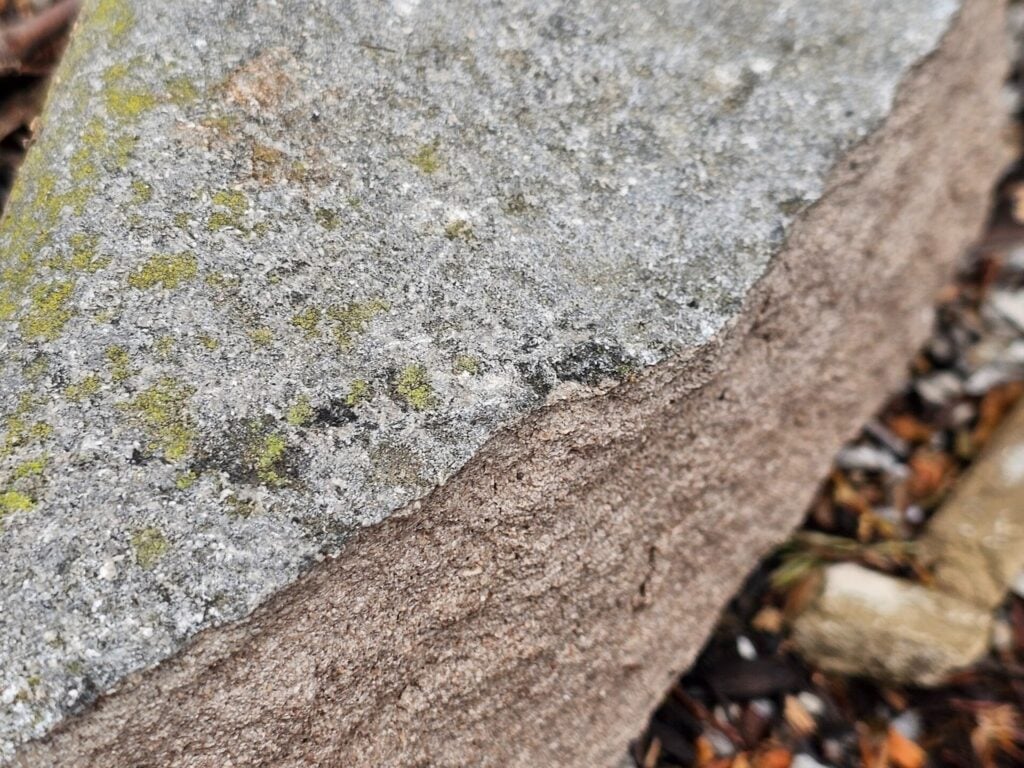
The name hematite is also interesting because the etymology or origin goes back to a shared root in the Greek word for blood. There are medical words that we use in English that share some of the branches of the tree of the etymology of the same root word.
Magnetite is very similar to hematite. One of the big differences is that hematite is not strongly magnetic. Magnetite is very conducive to magnetism. Both are found in many types of stone compositions. In a nutshell, even though both magnetite and hematite have very similar composition on a molecular level, the magnetic fields of hematite are inverted. You could refer to hematite as antiferromagnetic. In itself, this is a complicated subject and we’re only touching the surface here. We just think it’s interesting to look into these topics because in a way they’re related to explaining the things we recognize just through visual observation when talking about historic masonry and historic masonry restoration.
Today, all the stuff we’re talking about really borders on the line between masonry, historic architecture, structural engineering and geology. It might not be clear why it’s important for someone really focused on historic restoration to understand these details, but understanding substrate composition is essential. In our trade, we need to know how masonry works, even down to a molecular level. It matters when charged with the responsibility of maintaining and restoring historic masonry. For example, particularly with brick repointing, bricks are soft and have a relatively low PSI. Sandstone, here, is not entirely different.
The components which make up these elements behave in similar ways but are not exactly the same. Granite, by comparison works very differently and mortars used for restoration and repointing are also different. When doing the job of maintenance and restoration on historic masonry, people need to understand these distinctions.
To properly maintain, repair, and care for these historic buildings, a knowledge, interest and understanding of historic building principles is required. Here in Washington DC, historic masonry buildings are extremely expensive and the amount of financial loss caused by improper repointing and low quality construction is staggering. However, in addition to the direct financial value of the property, there is also a cultural loss when historic buildings are damaged. By comparison, consider neighboring poor cities, when historic buildings are damaged, it’s not just the loss of value to the property owner, there’s also a loss to all inhabitants and visitors of a city, present and future, who care about architecture, history, and culture.
We encourage all of our clients, and all readers of this article and to our blog in general, to prioritize the historic built environment of Washington DC and neighborhoods such as Capitol Hill, Dupont Circle, and Georgetown and become educated on on the difference between proper historic preservation versus improper work which leads to significant damage to the historic fabric of a building.
From a conservation and preservation perspective, several approaches can be taken to improve conditions related to deteriorated historic brick masonry. Primarily, lime mortar brick joints and low temperature fired soft red clay bricks should be inspected and checked on a routine maintenance schedule, either seasonally or at least annually. If brick masonry is kept in good condition, the life of embedded wood elements can be significantly extended. Hire a professional contractor which specializes, understands and appreciates historic construction elements and buildings.
You can learn a lot more on our blog. Feel free to check it out. If you have questions about the historic masonry of your building in Washington DC, fill out the webform and drop us a line. We will be in touch if we can help.