
Plant Growth and Moisture Damage at Brick Recesses
Today we are looking at an interesting element that was added to a historic building. The particular building shown in the picture below has a brick facade. This building was built over 100 years ago. In a pair of the architectural reliefs between the bricks at the corners of the building, a vertical planting device has been installed. This wasn’t custom made for the building, but it happens to fit neatly. There are a few details that we recommend changing though.
We’ll go through some of the recommendations about modifications to preserve the historic masonry facade. In general though, we really think it’s a great idea to add natural live greenery to a building facade. This particular installation happens to be an easy alternative to permanently built landscape or hardscape installations.
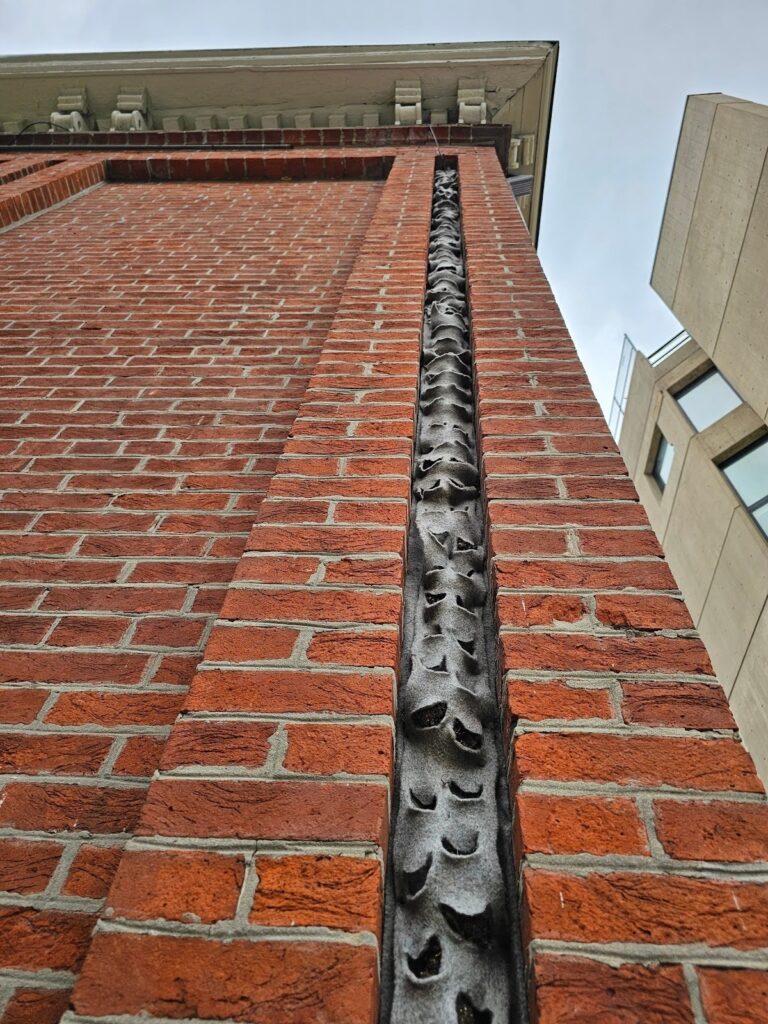
In the original construction of this building, this vertical recess wasn’t necessarily functional. In some cases, a recess like this will be used just to allow a space for a rain leader or rain water downspout to run like a conductor so precipitation can flow to an underground rain leader and then run to the underground waste line. Here, you can tell by looking at the corners, it’s unlikely that this was ever intended to be a functional recess. It was intended as an architectural element, an intentional shadow line to create an accent and more dramatic look to an otherwise relatively simple or plain masonry facade.
A simple recess like this is very effective in creating a visual point of interest. A shadow line like this can be used in all types of different architectural elements at building facades. In the picture above, for example, you can see a corner of the recessed plane of bricks.
These bricks are bounded by the double row of vertical bricks at the building edge on the right and also further to the left, they have another vertical row of bricks that stand proud of the adjacent courses of bricks in the recessed plane. That perimeter border of the vertical plane creates a shadow line that stands out, differently throughout different parts of the day, as the sun makes its daily path across the sky. As the sun moves, the shadows change significantly. At some points of the day they can look muted, in other parts of the day they can look drastic.
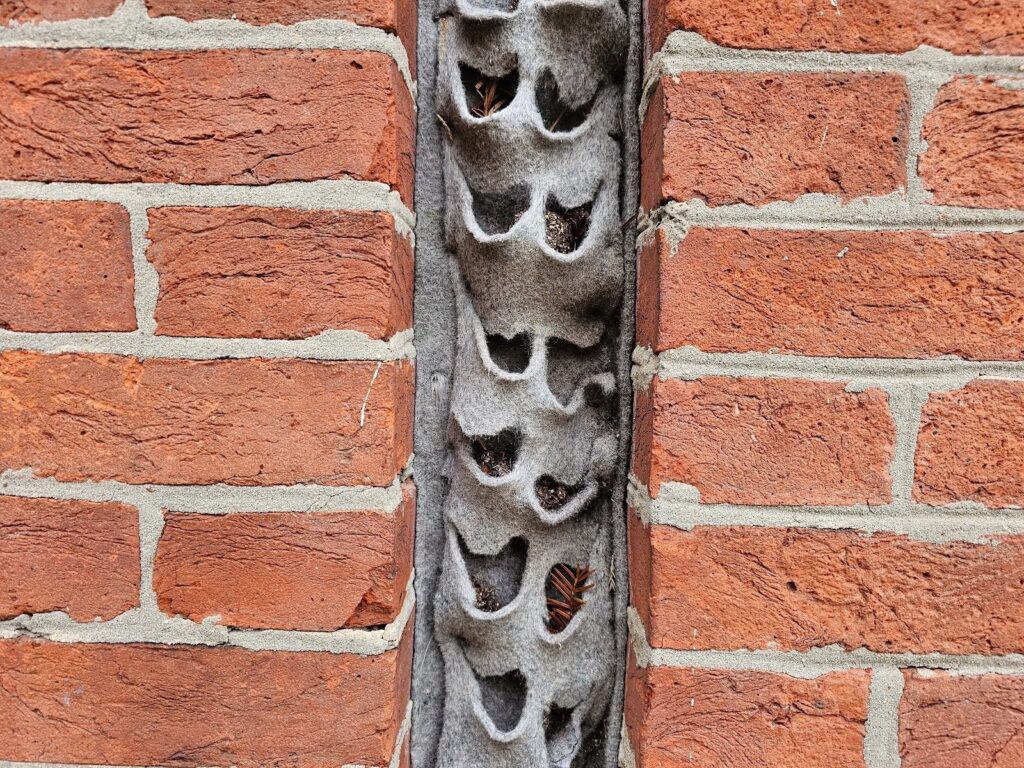
This perforated cloth is used to retain or hold dirt. It holds the dirt in place and then allows plants to grow through the series of holes that run into vertical rows up the length of the cloth material. Here on our website, we’ve looked at several different examples of green walls. We’re going to look at other additional examples as well in the future. There’s many different ways of creating green walls. Here, this type of setup essentially creates a vertical accent that stays minimal yet can really improve the visual aesthetic of a building.
There’s also many other benefits to having plants added to a building. Not only does it create the visual variety, it changes the mood and style of the architecture. It can make an otherwise cold and hard looking building aesthetically change into something that is softer and a bit more welcoming.
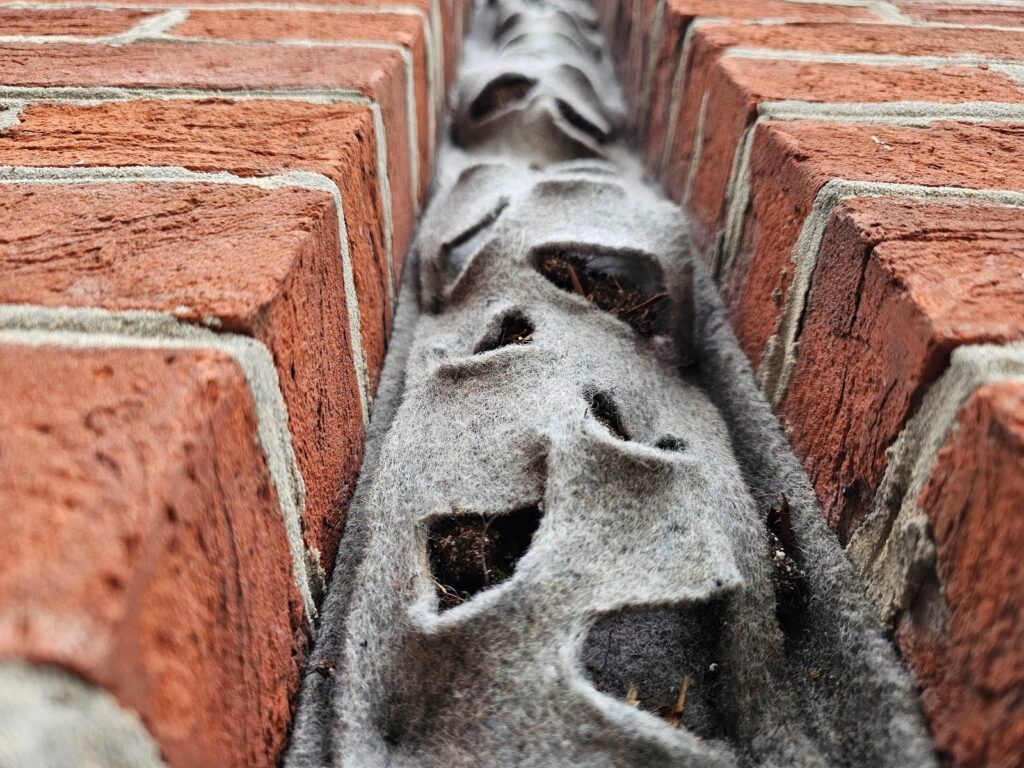
Another particular type of benefit of this product is that it wicks water and remains permeable. That works well for growing plants and propagating root systems. It doesn’t work well for being in for a contact with a historic masonry surface though. Historic masonry is different than modern masonry a few different ways. One of the biggest differences that applies to this scenario is permeability. Historic masonry has a higher degree of permeability then modern masonry and therefore is more susceptible to damage from being a direct contact with an element like this. In this coming week, we’ll talk about some of the issues related to restoration and masonry repointing, aimed at bolstering the longevity of historic masonry facades.
We can Help
Our company focuses on historic restoration more than modern building upkeep, maintenance, and construction, but our company understands both types of construction very well and a full picture well-rounded approach is needed in any niche in the construction industry. Although we focus on historic restoration, repointing, tuckpointing and historic brick repair, our company also has technical knowledge and competencies in the areas of modern and contemporary construction as well as we become one of the leaders in that area of the market today. Understanding both historic and modern or contemporary construction is useful because both aspects help understand the challenges and potential solutions for challenges in building science and construction.
We can help with a variety of historic masonry restoration needs and upkeep, from modest tuckpointing and or repointing to complicated and extensive historic masonry restoration. Infinity Design Solutions is a historic restoration specialist contractor specializing in both historic masonry restoration such as tuckpointing our repointing, and brick repair. If you have questions about the architectural details or facade of your historic building in Washington DC, reach out and say hello and if we can help we’ll be glad to assist you. You can email us or call us on the telephone at the following link: contact us here.