
Formstone is an interesting part of historic row home history here in DC. Formstone is a type of cementitious covering, not entirely different from stucco. This cementitious covering was applied over top of brick facades starting over 100 years ago. It has impressions that make it look a little bit like a natural stone shaped a bit like a tile. This shape and texture is supposed to make it look like the building was built with masonry stones instead of bricks. Functionally, it provided a little bit of additional protection to moisture and water entry through the brick joints and the brick facade.
It didn’t have a whole lot of functional purpose though. Also, today, times have changed a lot. There was a point in time where people may have been more interested in architectural elements that looked fake or manufactured. Even today, some of the political leaders of our country literally prefer fake gold plating on top of hand carved stone statues. In the olden days, for some weird reason, people used to like stuff like that. The idea, to most people with a bit of taste, might seem very juvenile, but some people like it.
About a hundred years ago, based on the architectural record, we can see instances like formstone, where people prefer things that looked comically fake over things that were real. Maybe it is just a lack of sophistication in architectural taste.
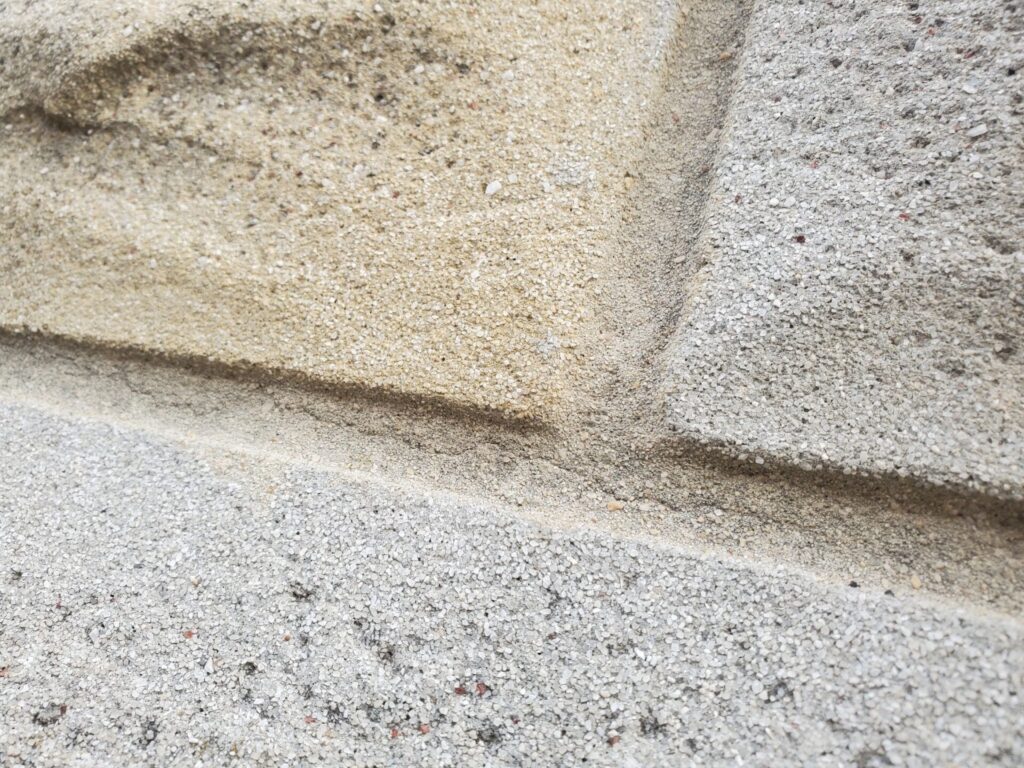
In the picture below, you can see a joint between two different formstone buildings.
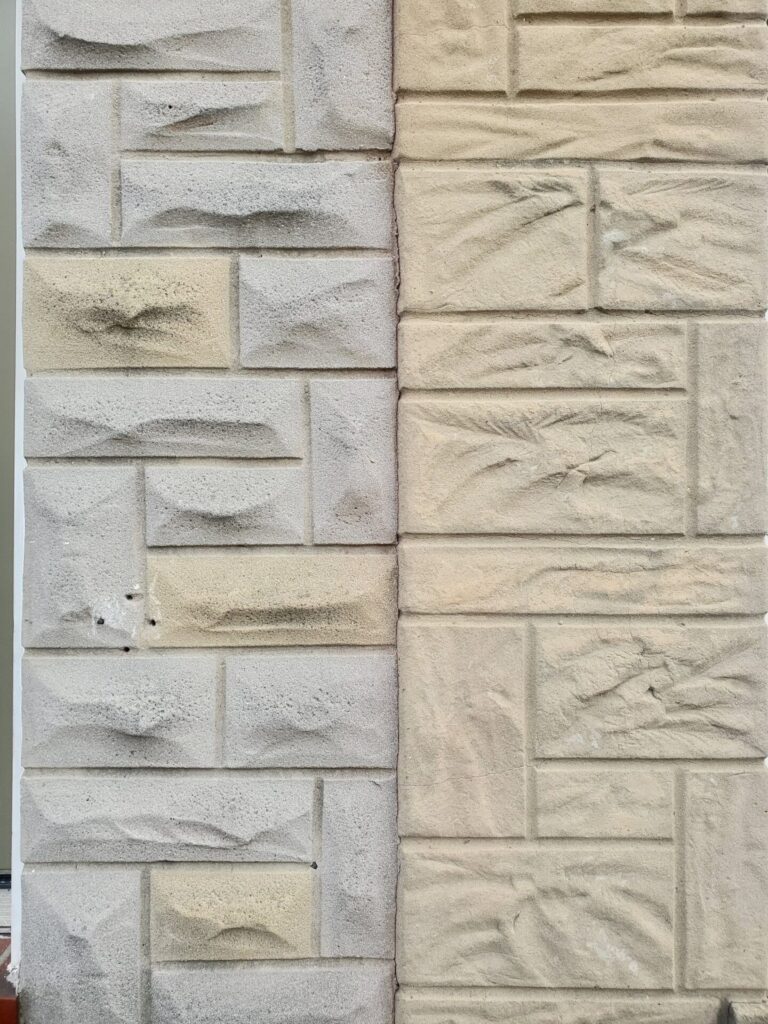
In some cases, the preference over manufactured or fake looking things may stem from the lack of knowledge or education on the methods of construction. You can see some obvious color differences at the surface of the cement facade, at the building to the left. Some of the block looking shapes have a yellow color and other areas of fake blocks have a dull gray cement like color.
At the building to the right, almost all of the blocks have a continuous, more homogenous, tan color. The tan color looks a bit more like an earthtone color, but it doesn’t look real like actual sandstone. When you look at the texture on the surface of the cementitious covering, the ripple type texture made from the mold looks fake. Split face stone has an undressed surface at the outer vertical face of each individual masonry unit. The face is split somewhat raw, even in cases where the remaining parts of the stone are shaped more like an ashlar stone block.
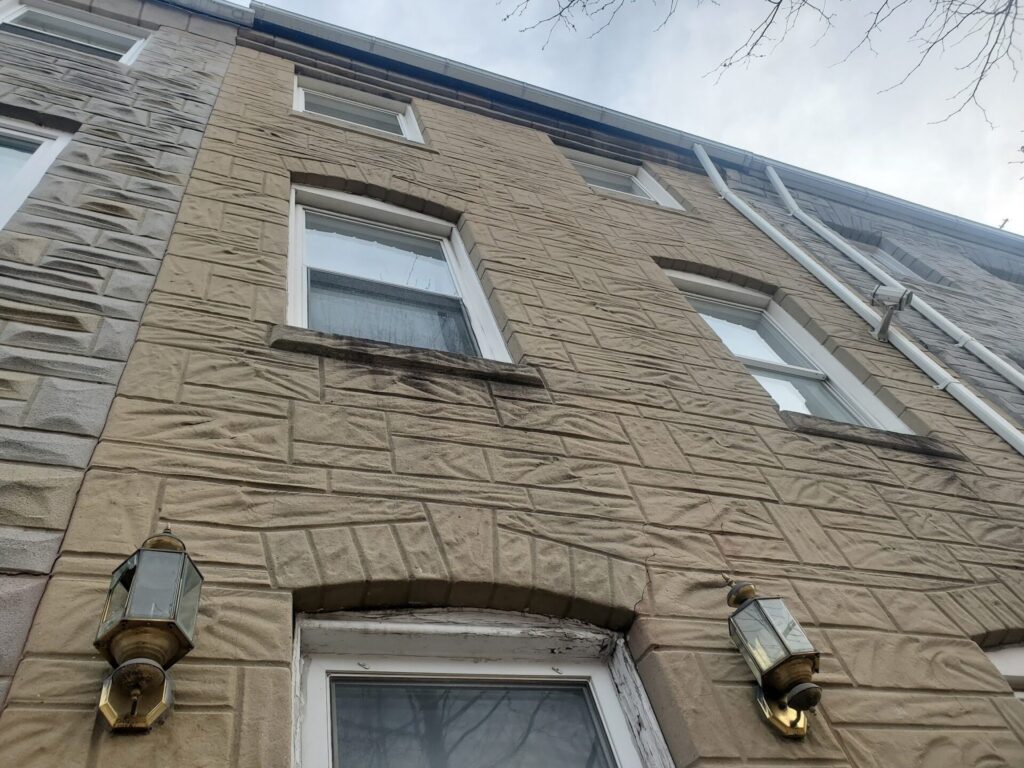
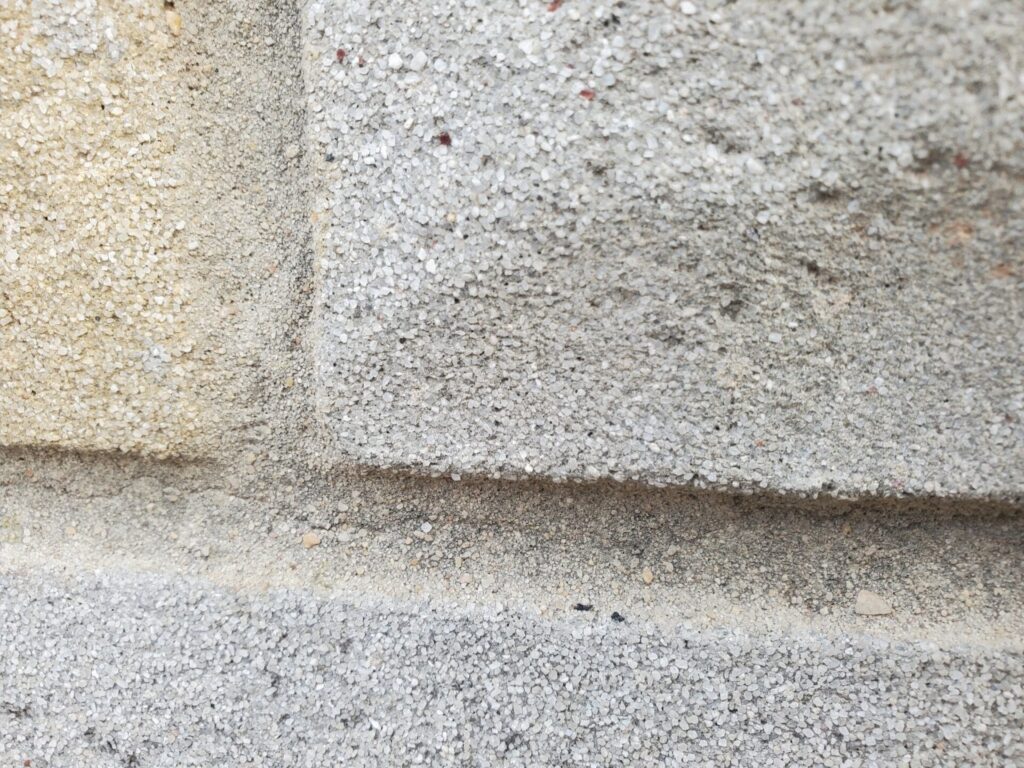
You can see that thick looking texture in the picture below. This particular picture shows the tan color surface at the building to the right in the original picture.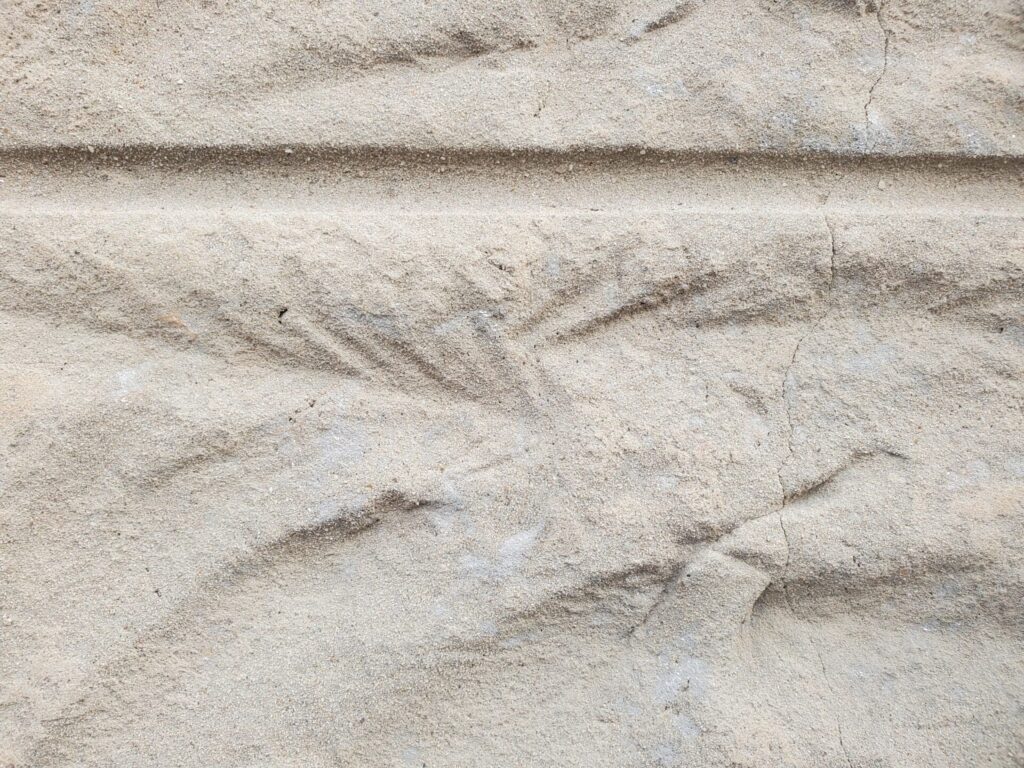
The next picture switches and it looks at a close-up view of the face of the surface of the building to the left, in the original picture. You can see the fake split stone emulating shape at the surface. You can also see pockmarks where the surface cement has worn off over the many decades since its original installation.
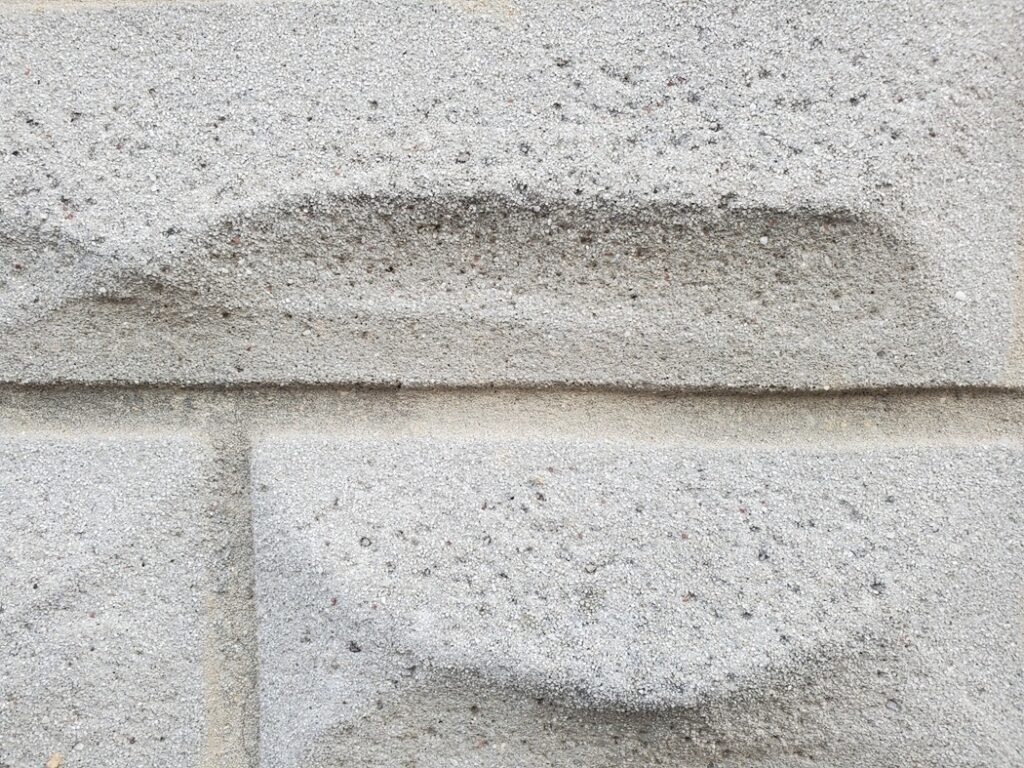
To make it look more realistic the mortar was left a neutral color that’s a bit of a compromise between the gray and the tan color areas of the wall.
People today use cheap alternatives to bypass or work around the requirements of repointing. Where repointing is necessary to refresh the brickwork. It essentially involves removing the surface of the old mortar and replacing it with a historic complimenting mortar. It’s easier and cheaper in some cases to cover the brick with stucco but we recommend against it in almost all cases.
In this coming week’s blog article we will look at additional photos of similar building assembly. Will also look at some alternative attempts to make fake looking masonry coverings. Those masonry coverings emulate masonry units but are really more similar to parge coating and or stuccoing. We will also look at a photo or two that shows a revealing glimpse behind the surface of the formstone covering.
To properly maintain, repair, and care for these historic buildings, a knowledge, interest and understanding of historic building principles is required. Here in Washington DC, historic masonry buildings are extremely expensive and the amount of financial loss caused by improper repointing and low quality construction is staggering. However, in addition to the direct financial value of the property, there is also a cultural loss when historic buildings are damaged. By comparison, consider neighboring poor cities, when historic buildings are damaged, it’s not just the loss of value to the property owner, there’s also a loss to all inhabitants and visitors of a city, present and future, who care about architecture, history, and culture.
We encourage all of our clients, and all readers of this article and to our blog in general, to prioritize the historic built environment of Washington DC and neighborhoods such as Capitol Hill, Dupont Circle, and Georgetown and become educated on on the difference between proper historic preservation versus improper work which leads to significant damage to the historic fabric of a building.
From a conservation and preservation perspective, several approaches can be taken to improve conditions related to deteriorated historic brick masonry. Primarily, lime mortar brick joints and low temperature fired soft red clay bricks should be inspected and checked on a routine maintenance schedule, either seasonally or at least annually.
If brick masonry is kept in good condition, the life of embedded wood elements can be significantly extended. Hire a professional contractor which specializes, understands and appreciates historic construction elements and buildings.