
Extruded Mortar Joints Washington DC
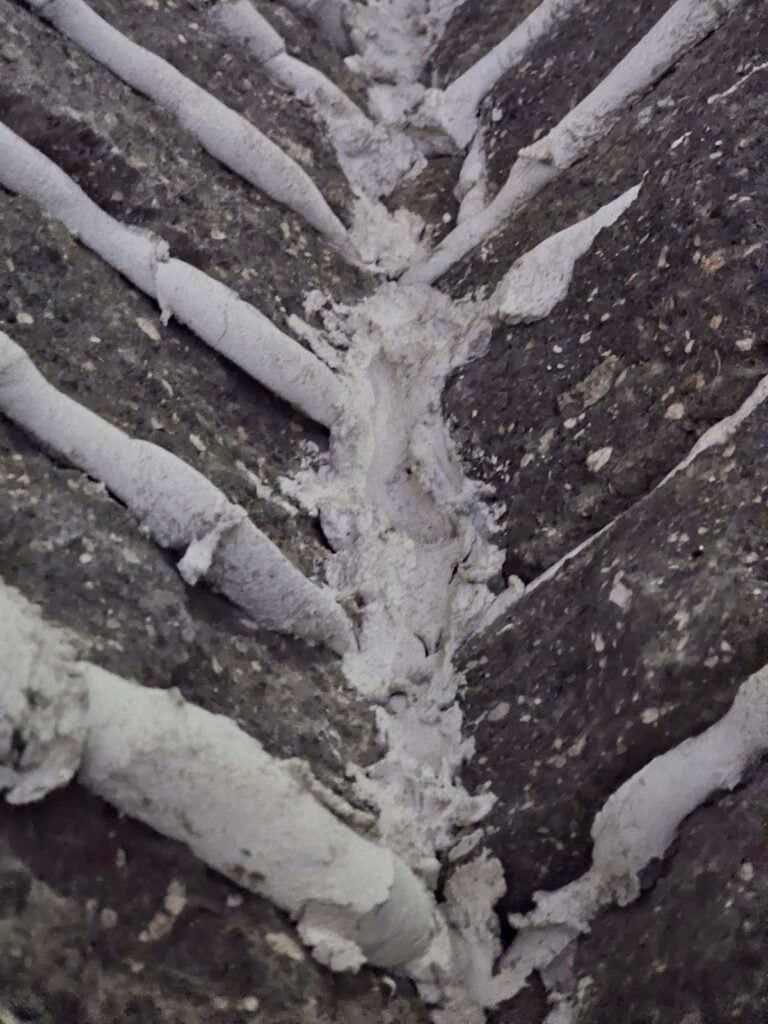
This previous week, we looked at this particular construction with masonry that had an extruded mortar joint. This joint hasn’t been struck to look professional or neat or straight like most types of both historic and contemporary masonry. It was, instead, intended to look more rustic than even real historic mortar and masonry.
One of the interesting things about masonry, not just here in the United States, but even in old world construction, is that fine masonry was made to hide the joints as much as possible. Having thin and less detectable mortar joints was considered a sign of higher skilled masonry and therein considered a sign of prestige and wealth. It seems today, people still regard masonry as being something of higher quality than cheap plastic siding or aluminum siding, but it also seems that people sort of overlook the details.
Here in Washington, DC, building owners might be a bit more aware of those details, but people who are used to living in the great expanses of suburban residential plastic buildings, might not even pick up or detect some of the finer points of masonry quality.
In historic times though, people were cognizant of these details. Living in a well-built brick masonry building with thin joints was a privilege.
It was considered to be near maintenance-free and a solid building. Today, 120 years or so later, some of the maintenance cycles are coming due, but even so, these buildings are still built to last longer than buildings built now in modern times. Even without resetting the clock, an old historic brick building can last longer than a stick frame building built today.
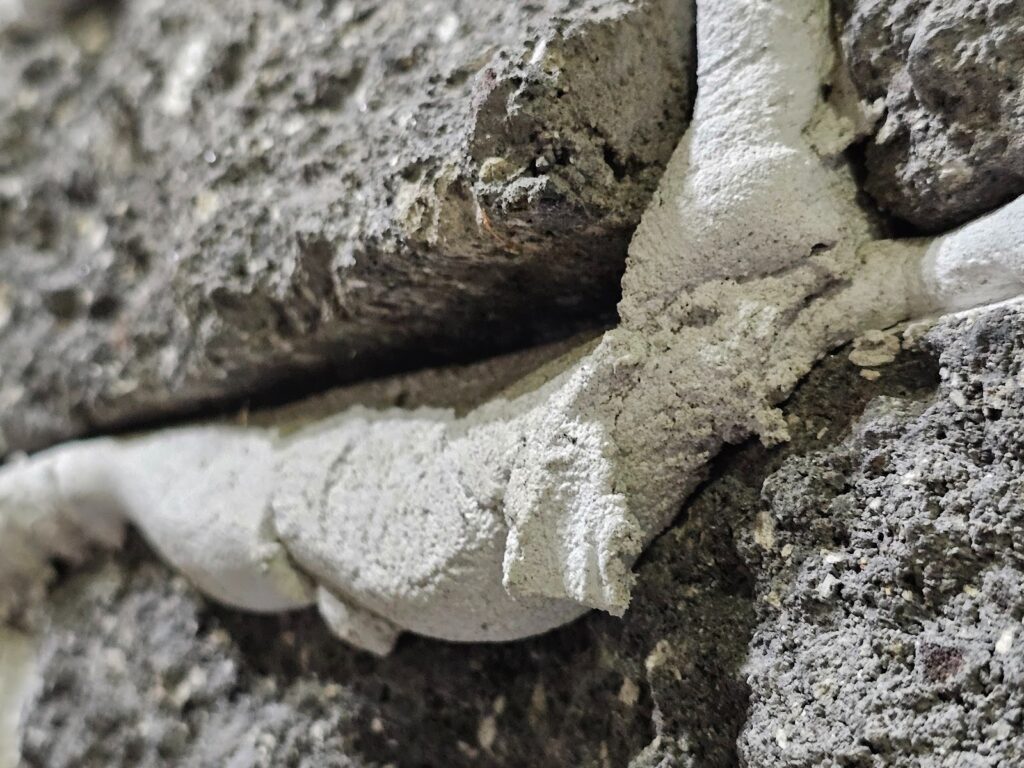
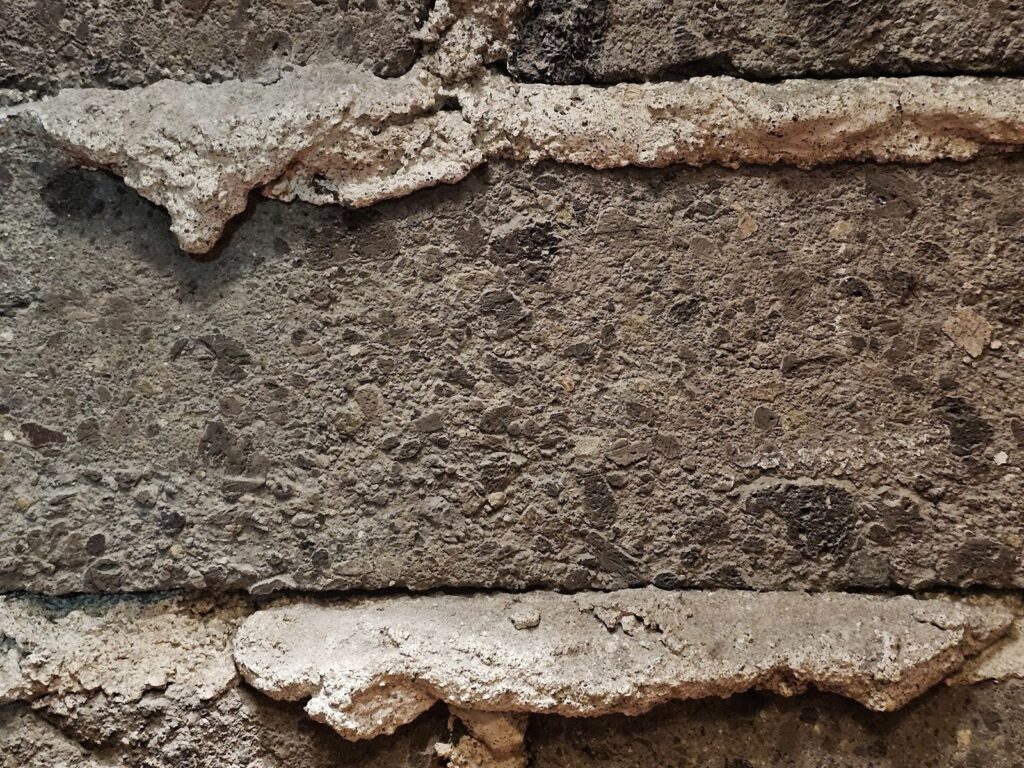
The pictures above and below give you a really close view of the brick mortar. This past week we mentioned that when someone who is really trained and skilled in masonry restoration looks at the mortar itself, they can often just tell the difference between historic versus modern or contemporary mortar. Here, these pictures are a case in point.
You can just look at the mortar in these pictures and tell that this mortar is modern. Having the skill to identify the difference is important in repointing and historic masonry restoration.
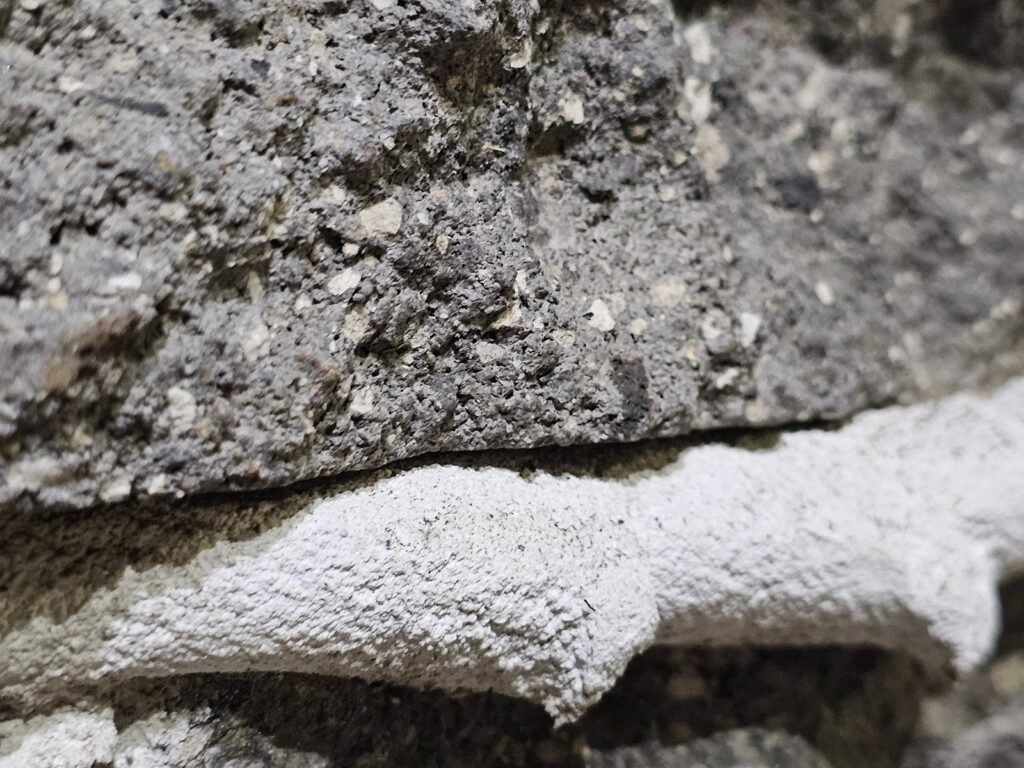
One of the biggest differences between historic mortar and modern mortar, important from a repointing perspective, is that historic mortar generally used chunky bits of lime. In that same mortar, used in historic brick construction, they also had fine elements of lime as well. The finer smaller elements became more mixed into the mortar but the chunkier elements stayed more apparent and visible. Especially after decades of slow deterioration at the outer face of the brick facade, the chunks of lime become even more visually apparent as the smaller granules wear away.
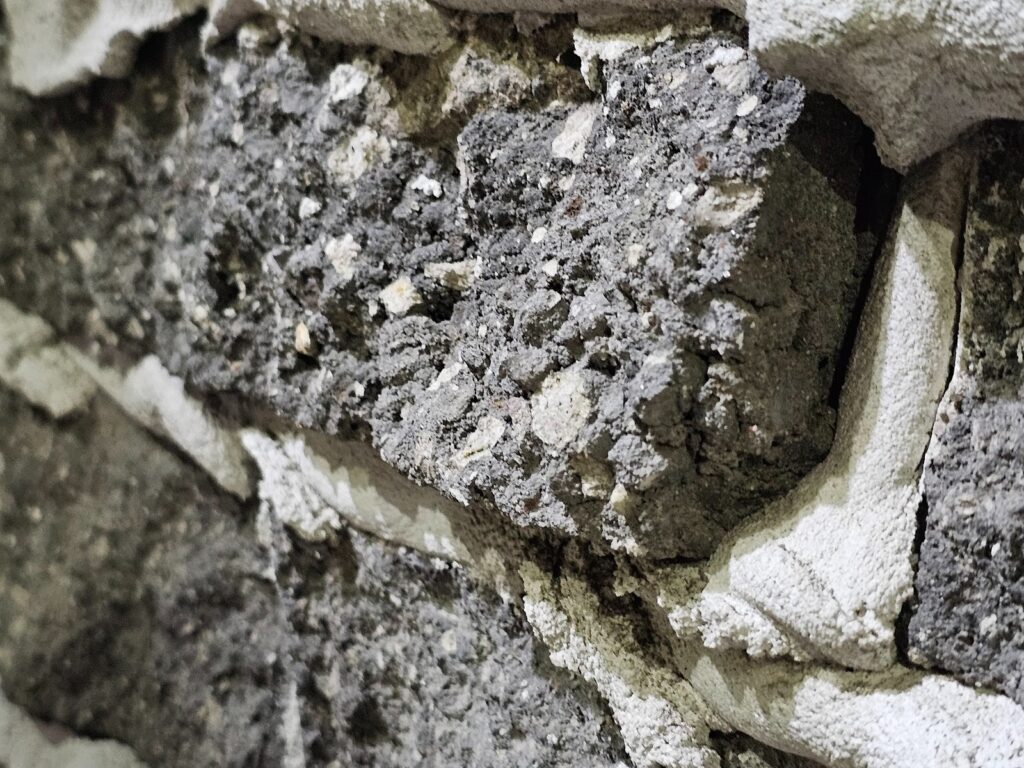
Additional pictures of this rough looking mortar and brickwork follow.
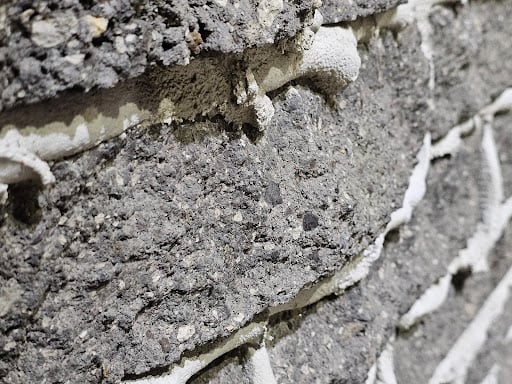
Seams like the corner joints are some of the worst looking areas of all, in in this case Instead of, here, just following the fake rustic motif, they tried to conceal the inside corner joint that was omitted through the absence of a real masonry laying technique. If the joint was created by laying an even bed of mortar and just setting the bricks properly, the inside corner would be filled through the regular brick laying process. Here though, they instead applied much of this mortar after initial masonry setting.
Then afterwards, to apply mortar inside the corner joint, they fed it in the way you would with drywall or plaster instead of masonry set with a head joint. In their attempt to cover up their mistake they applied something similar to what you might find in a process of repointing, but this masonry will never be repointed. None of these joints are true.
They topped the wall with extra long kiln fired clay bricks. These bricks are a bit like Roman Bricks but here they have slightly different dimensions and are much more red because of the higher iron content, than you would find in the Roman bricks here in Washington DC.
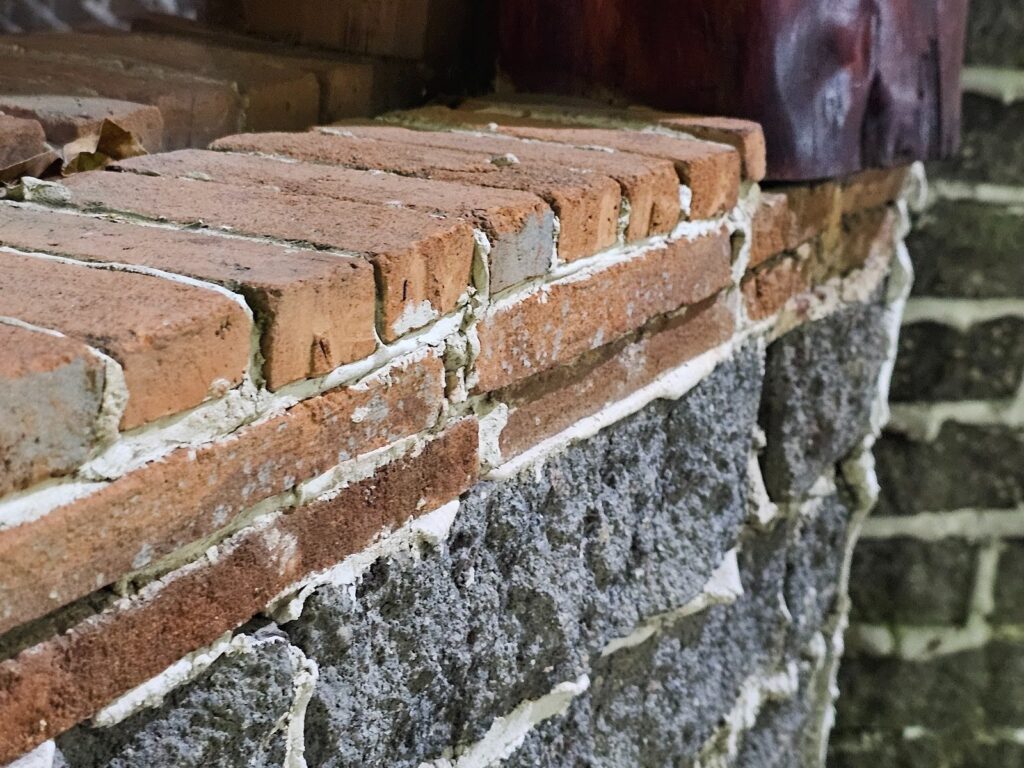
The picture below shows a different type of installation. In contrast, this rough looking mortar and masonry is actually set like a typical masonry facade or wall. Here though, as well, for special effect or embellishment, they’ve also used the oozed joint to make it look more rustic or antiquated.
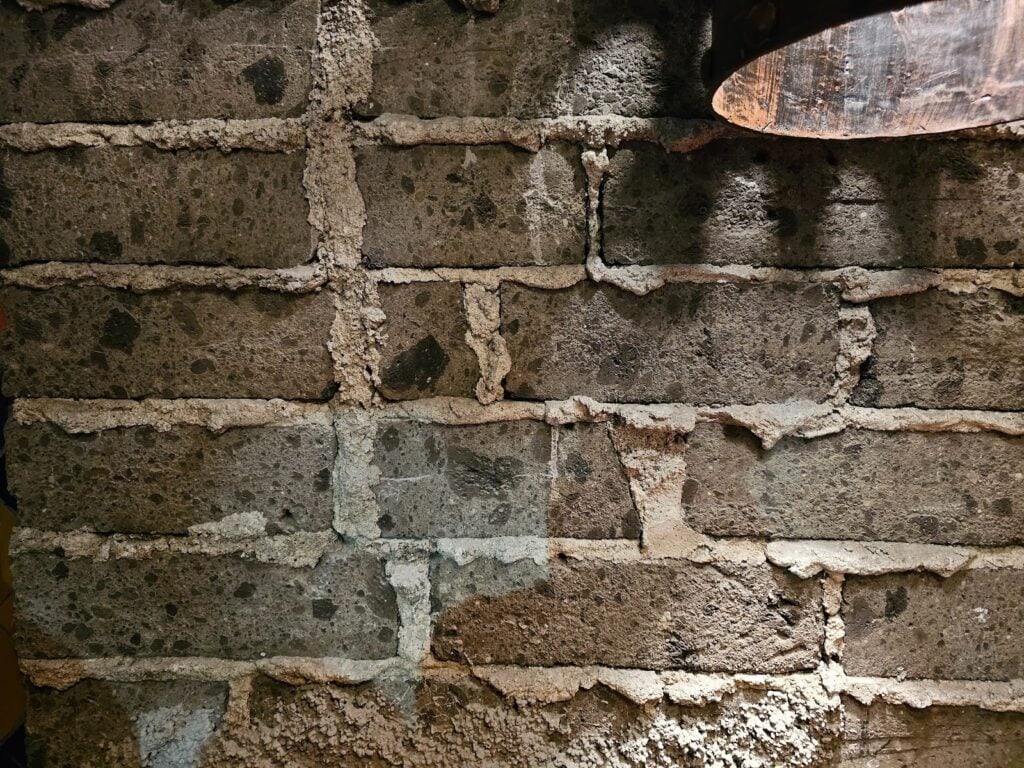
It looks similar to the other masonry we’ve looked at this past week and in the pictures above, but here the joint is continuous.
To properly maintain, repair, and care for these historic buildings, a knowledge, interest and understanding of historic building principles is required. Here in Washington DC, historic masonry buildings are extremely expensive and the amount of financial loss caused by improper repointing and low quality construction is staggering. However, in addition to the direct financial value of the property, there is also a cultural loss when historic buildings are damaged.
By comparison, consider neighboring poor cities, when historic buildings are damaged, it’s not just the loss of value to the property owner, there’s also a loss to all inhabitants and visitors of a city, present and future, who care about architecture, history, and culture.
We encourage all of our clients, and all readers of this article and to our blog in general, to prioritize the historic built environment of Washington DC and neighborhoods such as Capitol Hill, Dupont Circle, and Georgetown and become educated on on the difference between proper historic preservation versus improper work which leads to significant damage to the historic fabric of a building.
From a conservation and preservation perspective, several approaches can be taken to improve conditions related to deteriorated historic brick masonry. Primarily, lime mortar brick joints and low temperature fired soft red clay bricks should be inspected and checked on a routine maintenance schedule, either seasonally or at least annually.
If brick masonry is kept in good condition, the life of embedded wood elements can be significantly extended. Hire a professional contractor which specializes, understands and appreciates historic construction elements and buildings.